What does Luke 16:2 mean?
"And he called him, and said unto him, How is it that I hear this of thee? give an account of thy stewardship; for thou mayest be no longer steward." - Luke 16:2
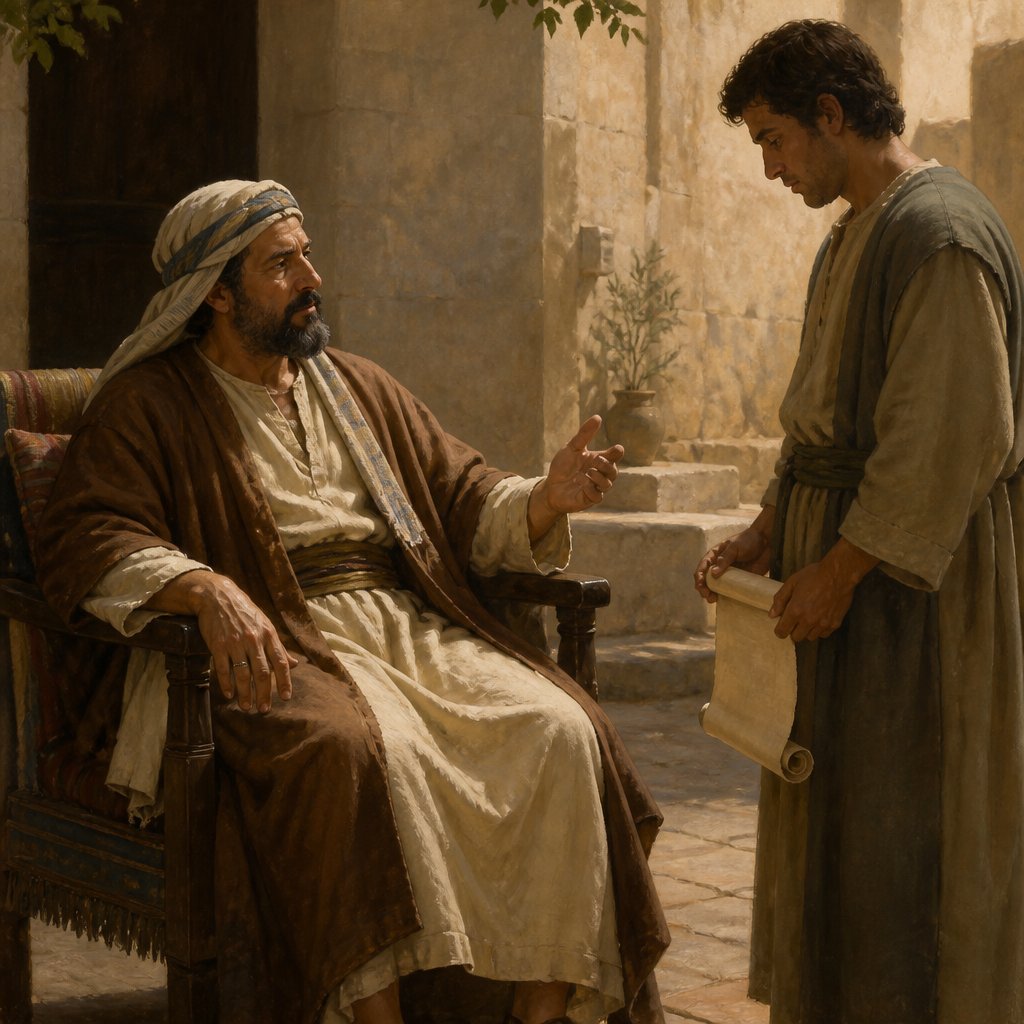
The Bible verse Luke 16:2 from the King James Version (KJV) reads: "And he called him, and said unto him, How is it that I hear this of thee? give an account of thy stewardship; for thou mayest be no longer steward."
This verse is part of a parable that Jesus told to his disciples, known as the Parable of the Unjust Steward. In this parable, Jesus tells the story of a rich man who had a steward who was accused of wasting his possessions. The rich man then calls the steward and asks him to give an account of his stewardship, as he is no longer to be trusted with the responsibilities given to him.
The context of this parable is important to understand the meaning and commentary of Luke 16:2. Jesus often used parables to teach spiritual truths, and in this parable, he is addressing the issue of stewardship and the proper use of wealth and resources. The parable is meant to teach the disciples about the importance of being faithful and responsible in their management of the gifts and resources that God has given to them.
One of the central themes of this verse and the parable as a whole is the concept of stewardship. Stewardship is the act of managing and caring for something that has been entrusted to us by someone else. In the context of this parable, it refers to the responsibility that believers have to manage the resources and blessings that God has given to them. This includes not only material possessions but also spiritual gifts, talents, and time.
The parable also addresses the issue of accountability. The rich man in the parable calls his steward to give an account of his stewardship, implying that there is a responsibility to use resources wisely and to be answerable for how they are managed. This echoes the concept of stewardship and highlights the importance of being accountable for our actions and choices.
Another important theme in this verse is the concept of trustworthiness. The steward in the parable is accused of being wasteful and unfaithful in his management of the rich man's possessions. As a result, he is no longer trusted with his responsibilities. This speaks to the need for believers to be trustworthy and faithful in their management of the resources that God has given to them.
The symbolism in the parable and the verse can also be interpreted in a spiritual sense. The rich man in the parable can be seen as representing God, who has given believers the responsibility of managing his blessings and resources. The steward represents believers, who are called to be faithful and responsible in their management of these gifts. The act of giving an account of stewardship can be seen as a metaphor for believers being called to give an account of their lives and actions before God.
In conclusion, Luke 16:2 and the Parable of the Unjust Steward convey important lessons about stewardship, accountability, and trustworthiness. This verse and the parable as a whole emphasize the importance of being faithful and responsible in the management of the resources and blessings that God has entrusted to us. It serves as a reminder to believers that they will one day have to give an account of their stewardship before God. Ultimately, this verse challenges believers to consider how they are managing the resources and gifts that God has given to them and to strive to be faithful and responsible stewards in all areas of their lives.
Have questions about Luke 16:2?
Dive deeper into this scripture with Bible Chat — an AI-powered tool for exploring God's Word through conversation. Ask questions, get context, and grow in your understanding of the Bible.
Get Our Apps


Luke 16:2 Artwork

Luke 16:2 - "And he called him, and said unto him, How is it that I hear this of thee? give an account of thy stewardship; for thou mayest be no longer steward."
"And he called him, and said unto him, How is it that I hear this of thee? give an account of thy stewardship; for thou mayest be no longer steward." - Luke 16:2

Luke 2:16 - 21

Luke 2:16 - "And they came with haste, and found Mary, and Joseph, and the babe lying in a manger."
"And they came with haste, and found Mary, and Joseph, and the babe lying in a manger." - Luke 2:16

Luke 8:16

luke 4:16

Luke 16:1-13

Create a 16.9 image of the bible verse Luke 2:44

Luke 16:1-1313

Luke 16:22-26

Luke 16:1-13

Luke 16:1-13

Luke 16:16 - "The law and the prophets were until John: since that time the kingdom of God is preached, and every man presseth into it."

Luke 5:16 - "¶ And he withdrew himself into the wilderness, and prayed."

Luke 24:16 - "But their eyes were holden that they should not know him."

Luke 23:16 - "I will therefore chastise him, and release him."

Luke 11:16 - "And others, tempting him, sought of him a sign from heaven."

Luke 1:16 - "And many of the children of Israel shall he turn to the Lord their God."

Luke 6:16 - "And Judas the brother of James, and Judas Iscariot, which also was the traitor."

Luke 16:17 - "And it is easier for heaven and earth to pass, than one tittle of the law to fail."

Luke 16:20 - "And there was a certain beggar named Lazarus, which was laid at his gate, full of sores,"

Luke 16:14 - "And the Pharisees also, who were covetous, heard all these things: and they derided him."

Luke 2:2

Luke 19:16 - "Then came the first, saying, Lord, thy pound hath gained ten pounds."

Luke 17:16 - "And fell down on his face at his feet, giving him thanks: and he was a Samaritan."

Luke 14:16 - "Then said he unto him, A certain man made a great supper, and bade many:"

Luke 16:29 - "Abraham saith unto him, They have Moses and the prophets; let them hear them."

"¶ And he withdrew himself into the wilderness, and prayed." - Luke 5:16

Luke 16:19 - "¶ There was a certain rich man, which was clothed in purple and fine linen, and fared sumptuously every day:"