
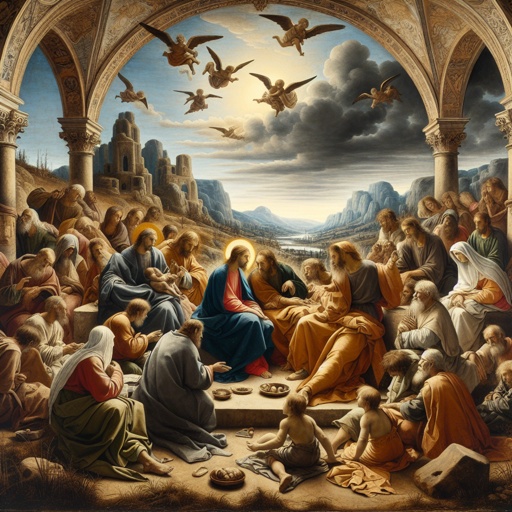
A scene from the biblical passage Luke 16:1-13 interpreted in the artistic style of the Renaissance period, which is known for its detailed, realistic portraiture and emphasis on perspective and spatial depth. The scene is rich in detail and depicts a respectful and devotional scene to Christianity. The scene shows a series of interactions but all of it is devoid of any words or text. It is a stand-alone scene that respects the religious philosophy of Christianity.
Free to use for non-commercial purposes with attribution. See Terms
Luke 16:1-13
And he said also unto his disciples, There was a certain rich man, which had a steward; and the same was accused unto him that he had wasted his goods. And he called him, and said unto him, How is it that I hear this of thee? give an account of thy stewardship; for thou mayest be no longer steward. Then the steward said within himself, What shall I do? for my lord taketh away from me the stewardship: I cannot dig; to beg I am ashamed. I am resolved what to do, that, when I am put out of the stewardship, they may receive me into their houses. So he called every one of his lord’s debtors unto him, and said unto the first, How much owest thou unto my lord? And he said, An hundred measures of oil. And he said unto him, Take thy bill, and sit down quickly, and write fifty. Then said he to another, And how much owest thou? And he said, An hundred measures of wheat. And he said unto him, Take thy bill, and write fourscore. And the lord commended the unjust steward, because he had done wisely: for the children of this world are in their generation wiser than the children of light. And I say unto you, Make to yourselves friends of the mammon of unrighteousness; that, when ye fail, they may receive you into everlasting habitations. He that is faithful in that which is least is faithful also in much: and he that is unjust in the least is unjust also in much. If therefore ye have not been faithful in the unrighteous mammon, who will commit to your trust the true riches? And if ye have not been faithful in that which is another man’s, who shall give you that which is your own? No servant can serve two masters: for either he will hate the one, and love the other; or else he will hold to the one, and despise the other. Ye cannot serve God and mammon.
Renaissance
Luke 16:1-13 Study Resources
Browse Related Art
Get Our Apps
Transform your favorite verses into beautiful art


More from Luke
Discover more inspiring artwork

Luke

Luke

Luke 2.12

Luke 2.12

Luke 6

Luke 2.12
Luke:1

Luke 2.12

Luke 10:5

Luke 10:5

Luke 10:5

Luke 10:18-19

Luke 10:18-19

Luke 10:18-19

Luke 10:17-19

Luke 13:20-21

Luke 13:20-21

Luke 10:18-19

Luke 13:18-19

Luke 13:20-21

Luke 10:18-19

Luke 10:18-19

Luke 13:18-19

Luke 10:17-19

Luke 13:20-21
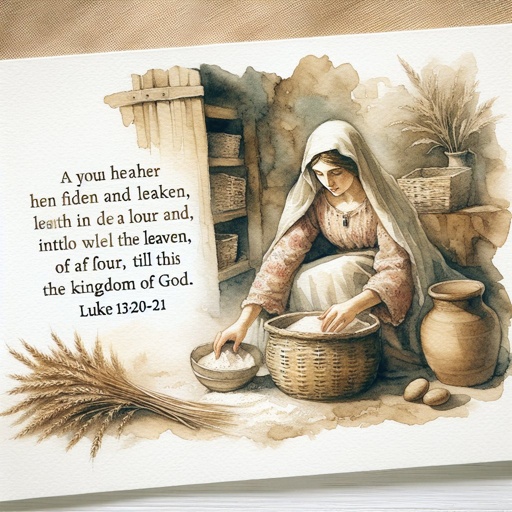
Luke 13:20-21

Luke 1:32

Luke 1:32
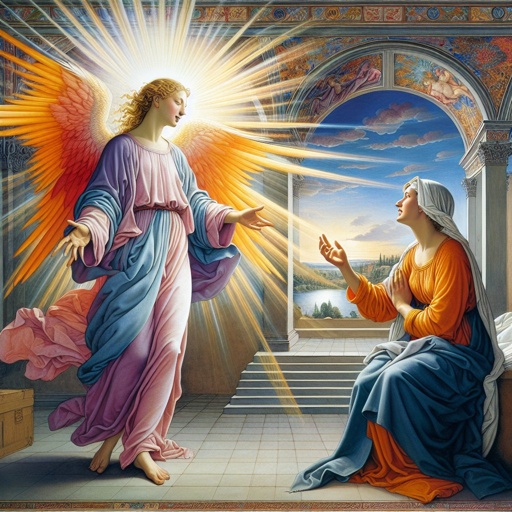
Luke 1:32

Luke 1:32