What does Luke 16:1 mean?
"And he said also unto his disciples, There was a certain rich man, which had a steward; and the same was accused unto him that he had wasted his goods." - Luke 16:1
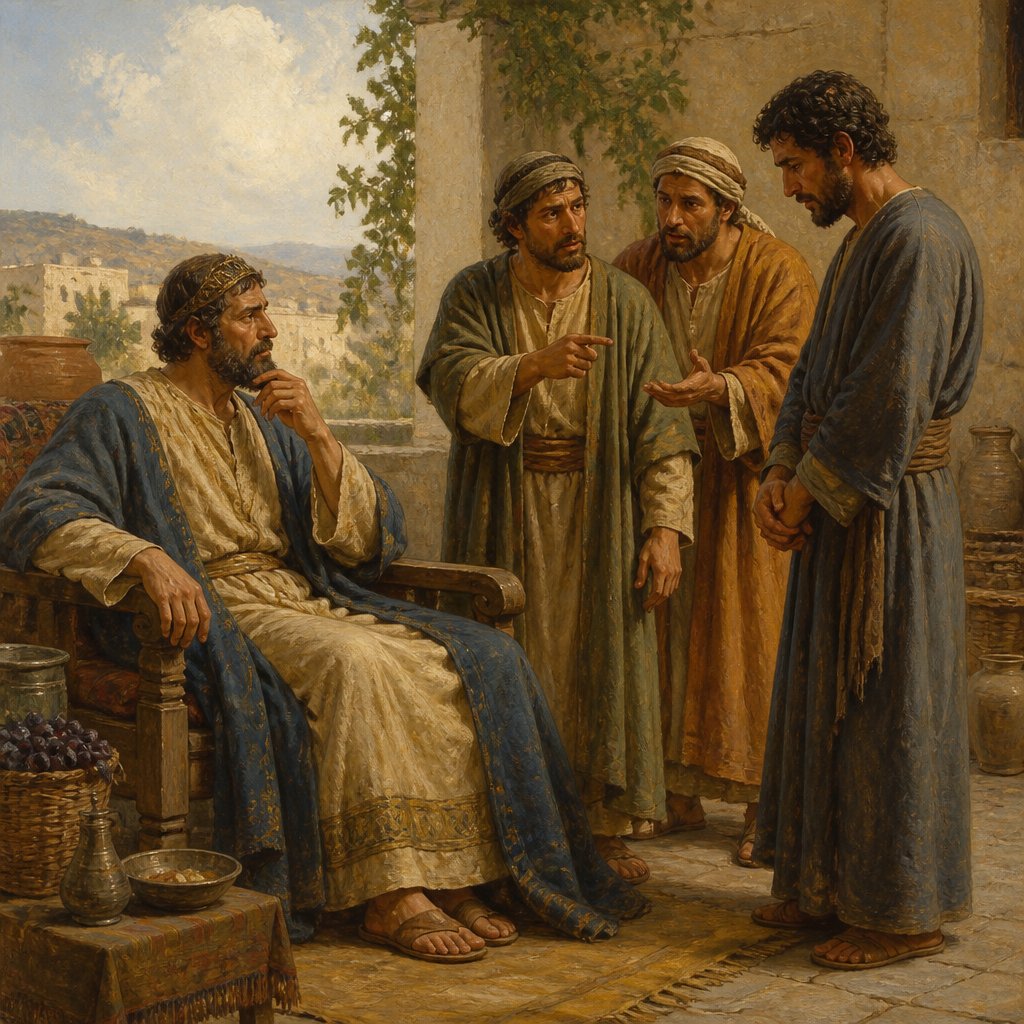
The Bible verse Luke 16:1 from the King James Version (KJV) states, "And he said also unto his disciples, There was a certain rich man, which had a steward; and the same was accused unto him that he had wasted his goods."
This verse is part of a parable that Jesus told to his disciples. The parable is commonly known as the Parable of the Unjust Steward. In this parable, Jesus uses a story about a wealthy man and his steward to teach a valuable lesson about stewardship, accountability, and the proper use of material possessions.
The parable begins by describing a wealthy man who had a steward, or manager, to oversee his affairs. However, this steward was accused of wasting his master's resources. The rich man then calls the steward to give an account of his stewardship, indicating that the steward is being held accountable for his actions. This sets the stage for the central theme of the parable: the steward's shrewdness in facing his impending unemployment and his master's financial scrutiny.
The central theme of this parable is the proper use of material possessions and the importance of wise stewardship. The steward in the parable is facing a crisis – he is about to lose his job and must come up with a plan to ensure his future well-being. He does so by striking deals with his master's debtors, forgiving portions of their debts in exchange for their goodwill. This shrewd and possibly dishonest action shows the steward's cunning ability to secure his own future, but also raises questions about the ethics of his behavior.
One interpretation of this parable is that it is meant to teach about the value of using worldly wealth to make friends, as the parable states, "make to yourselves friends of the mammon of unrighteousness; that, when ye fail, they may receive you into everlasting habitations" (Luke 16:9). This suggests that believers should use their material possessions to benefit others and build relationships, rather than solely for personal gain. Additionally, the parable emphasizes the need for believers to be faithful and wise stewards of the resources that God has entrusted to them.
Another dimension of interpretation relates to the contrasts between the unjust steward's behavior and Jesus' teachings about honesty, integrity, and the accountable use of resources. Many biblical scholars and commentators have grappled with the ethical implications of the steward's actions and have proposed various interpretations of the parable.
In a broader context, this parable reflects the tension between the values of the world and the values of God's kingdom. It challenges believers to consider their priorities and the ways in which they manage their material possessions. By using the example of the shrewd steward, Jesus prompts his disciples to reflect on the implications of their actions in light of eternal values and the coming kingdom of God.
Symbolically, the rich man in the parable can be seen as representing God, while the steward represents humanity, especially those who have been entrusted with resources and responsibilities. The master's financial scrutiny symbolizes divine judgment and accountability, while the steward's actions reflect the human tendency towards self-preservation and seeking personal gain.
In conclusion, Luke 16:1 and the parable of the unjust steward convey important teachings about stewardship, accountability, and the use of material possessions in the light of God's kingdom. It challenges believers to evaluate their priorities, actions, and relationships with regard to the eternal values of the kingdom of God. This parable serves as a thought-provoking lesson that continues to inspire reflection and interpretation within the Christian tradition.
Have questions about Luke 16:1?
Dive deeper into this scripture with Bible Chat — an AI-powered tool for exploring God's Word through conversation. Ask questions, get context, and grow in your understanding of the Bible.
Get Our Apps


Luke 16:1 Artwork

Luke 16:1-13

Luke 16:1-1313

Luke 16:1-13

Luke 16:1-13

Luke 16:1 - "And he said also unto his disciples, There was a certain rich man, which had a steward; and the same was accused unto him that he had wasted his goods."
"And he said also unto his disciples, There was a certain rich man, which had a steward; and the same was accused unto him that he had wasted his goods." - Luke 16:1

Luke 16:1-8 - "Luke 16:1-8 Jesus told his disciples: "There was a rich man whose manager was accused of wasting his possessions. So he called him in and asked him, 'What is this I hear about you? Give an account of your management, because you cannot be manager any longer.' The manager said to himself, 'What shall I do now? My master is taking away my job. I'm not strong enough to dig, and I'm ashamed to beg-- I know what I'll do so that, when I lose my job here, people will welcome me into their houses.' So he called in each one of his master's debtors. He asked the first, 'How much do you owe my master?' 'Nine hundred gallons of olive oil,' he replied. The manager told him, 'Take your bill, sit down quickly, and make it four hundred and fifty.' Then he asked the second, 'And how much do you owe?' 'A thousand bushels of wheat,' he replied. He told him, 'Take your bill and make it eight hundred.' The master commended the dishonest manager because he had acted shrewdly. For the people of this world are more shrewd in dealing with their own kind than are the people of the light."
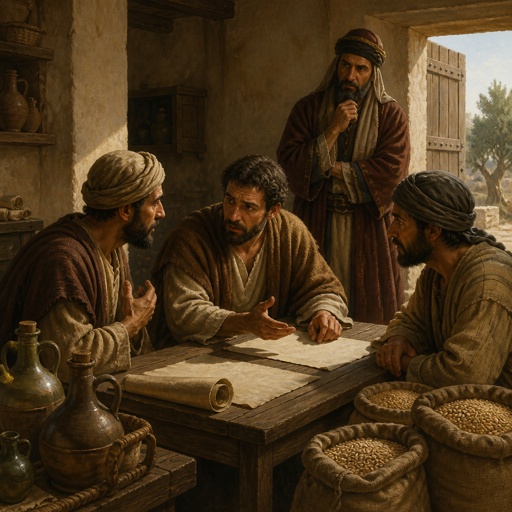
"Luke 16:1-8 Jesus told his disciples: "There was a rich man whose manager was accused of wasting his possessions. So he called him in and asked him, 'What is this I hear about you? Give an account of your management, because you cannot be manager any longer.' The manager said to himself, 'What shall I do now? My master is taking away my job. I'm not strong enough to dig, and I'm ashamed to beg-- I know what I'll do so that, when I lose my job here, people will welcome me into their houses.' So he called in each one of his master's debtors. He asked the first, 'How much do you owe my master?' 'Nine hundred gallons of olive oil,' he replied. The manager told him, 'Take your bill, sit down quickly, and make it four hundred and fifty.' Then he asked the second, 'And how much do you owe?' 'A thousand bushels of wheat,' he replied. He told him, 'Take your bill and make it eight hundred.' The master commended the dishonest manager because he had acted shrewdly. For the people of this world are more shrewd in dealing with their own kind than are the people of the light." - Luke 16:1-8

"Luke 16:1-13 Jesus told his disciples: “There was a rich man whose manager was accused of wasting his possessions. So he called him in and asked him, ‘What is this I hear about you? Give an account of your management, because you cannot be manager any longer.’ “The manager said to himself, ‘What shall I do now? My master is taking away my job. I’m not strong enough to dig, and I’m ashamed to beg— I know what I’ll do so that, when I lose my job here, people will welcome me into their houses.’ “So he called in each one of his master’s debtors. He asked the first, ‘How much do you owe my master?’ ‘Nine hundred gallons of olive oil,’ he replied. The manager told him, ‘Take your bill, sit down quickly, and make it four hundred and fifty.’ “Then he asked the second, ‘And how much do you owe?’ ‘A thousand bushels of wheat,’ he replied. He told him, ‘Take your bill and make it eight hundred.’ “The master commended the dishonest manager because he had acted shrewdly. For the people of this world are more shrewd in dealing with their own kind than are the people of the light. I tell you, use worldly wealth to gain friends for yourselves, so that when it is gone, you will be welcomed into eternal dwellings. “Whoever can be trusted with very little can also be trusted with much, and whoever is dishonest with very little will also be dishonest with much. So if you have not been trustworthy in handling worldly wealth, who will trust you with true riches? And if you have not been trustworthy with someone else’s property, who will give you property of your own? “No one can serve two masters. Either you will hate the one and love the other, or you will be devoted to the one and despise the other. You cannot serve both God and money.”" - Luke 16:1-13

Luke 16:1-13 - "Luke 16:1-13 Jesus told his disciples: “There was a rich man whose manager was accused of wasting his possessions. So he called him in and asked him, ‘What is this I hear about you? Give an account of your management, because you cannot be manager any longer.’ “The manager said to himself, ‘What shall I do now? My master is taking away my job. I’m not strong enough to dig, and I’m ashamed to beg— I know what I’ll do so that, when I lose my job here, people will welcome me into their houses.’ “So he called in each one of his master’s debtors. He asked the first, ‘How much do you owe my master?’ ‘Nine hundred gallons of olive oil,’ he replied. The manager told him, ‘Take your bill, sit down quickly, and make it four hundred and fifty.’ “Then he asked the second, ‘And how much do you owe?’ ‘A thousand bushels of wheat,’ he replied. He told him, ‘Take your bill and make it eight hundred.’ “The master commended the dishonest manager because he had acted shrewdly. For the people of this world are more shrewd in dealing with their own kind than are the people of the light. I tell you, use worldly wealth to gain friends for yourselves, so that when it is gone, you will be welcomed into eternal dwellings. “Whoever can be trusted with very little can also be trusted with much, and whoever is dishonest with very little will also be dishonest with much. So if you have not been trustworthy in handling worldly wealth, who will trust you with true riches? And if you have not been trustworthy with someone else’s property, who will give you property of your own? “No one can serve two masters. Either you will hate the one and love the other, or you will be devoted to the one and despise the other. You cannot serve both God and money.”"

Luke 1:16 - "And many of the children of Israel shall he turn to the Lord their God."

"And many of the children of Israel shall he turn to the Lord their God." - Luke 1:16

Luke 8:16

luke 4:16

Luke 16:22-26

Luke 2:16 - 21

Luke 16:16 - "The law and the prophets were until John: since that time the kingdom of God is preached, and every man presseth into it."

Luke 5:16 - "¶ And he withdrew himself into the wilderness, and prayed."

Luke 24:16 - "But their eyes were holden that they should not know him."

Luke 23:16 - "I will therefore chastise him, and release him."

Luke 11:16 - "And others, tempting him, sought of him a sign from heaven."

Luke 2:16 - "And they came with haste, and found Mary, and Joseph, and the babe lying in a manger."

Luke 6:16 - "And Judas the brother of James, and Judas Iscariot, which also was the traitor."

Luke 16:17 - "And it is easier for heaven and earth to pass, than one tittle of the law to fail."

Luke 16:20 - "And there was a certain beggar named Lazarus, which was laid at his gate, full of sores,"

Luke 16:14 - "And the Pharisees also, who were covetous, heard all these things: and they derided him."

Luke 19:16 - "Then came the first, saying, Lord, thy pound hath gained ten pounds."

Luke 17:16 - "And fell down on his face at his feet, giving him thanks: and he was a Samaritan."

Luke 14:16 - "Then said he unto him, A certain man made a great supper, and bade many:"

Luke 16:29 - "Abraham saith unto him, They have Moses and the prophets; let them hear them."