What does Matthew 21:28-32 mean?
"But what think ye? A certain man had two sons; and he came to the first, and said, Son, go work to day in my vineyard. He answered and said, I will not: but afterward he repented, and went. And he came to the second, and said likewise. And he answered and said, I go, sir: and went not. Whether of them twain did the will of his father? They say unto him, The first. Jesus saith unto them, Verily I say unto you, That the publicans and the harlots go into the kingdom of God before you. For John came unto you in the way of righteousness, and ye believed him not: but the publicans and the harlots believed him: and ye, when ye had seen it, repented not afterward, that ye might believe him." - Matthew 21:28-32
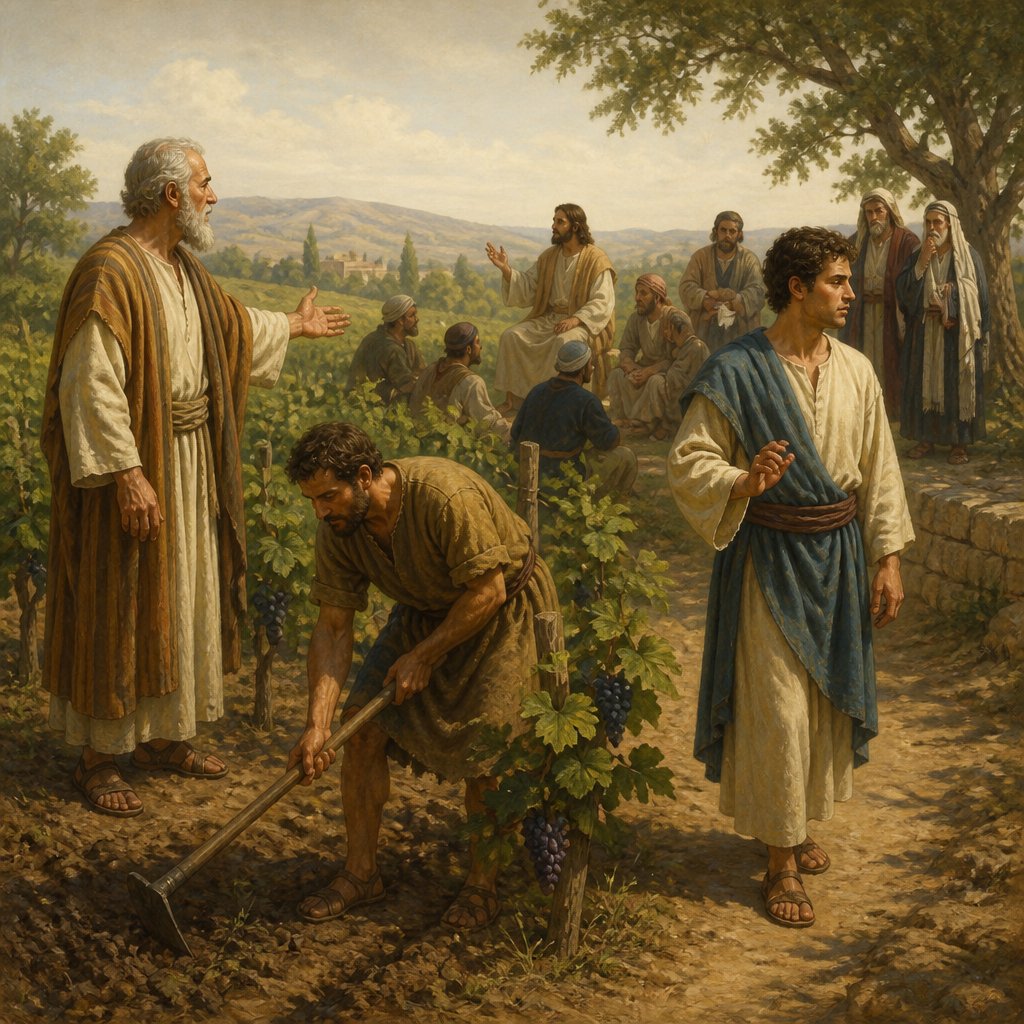
In Matthew 21:28-32, Jesus tells a parable to illustrate the concept of repentance and humility. The parable begins with a man who asks his two sons to go and work in his vineyard. The first son initially refuses, but later changes his mind and goes to work. The second son agrees to go, but ultimately does not follow through. When asked which son did the will of his father, the Chief Priests and elders correctly respond that the first son did.
This parable serves as a powerful lesson in humility and the importance of repentance. The first son represents those who initially refuse to obey God, but later turn away from their disobedience and submit to Him. The second son, on the other hand, represents those who claim to follow God but ultimately fail to do so.
One of the key themes of this passage is the idea of repentance and forgiveness. The parable shows that it is not enough to simply say the words or make promises; true repentance requires action and a change of heart. It is about acknowledging one's disobedience and making the effort to correct it.
Another important theme in this passage is the concept of humility. The first son's change of heart demonstrates a humble attitude of submission and obedience. It is a reminder that true humility involves a willingness to change and admit wrongdoing. In contrast, the second son's failure to follow through with his promise highlights the danger of self-righteousness and pride.
A significant aspect of this passage is the context in which it was spoken. Jesus tells this parable in response to the Chief Priests and elders who question His authority. Through this parable, Jesus is addressing the religious leaders and challenging their hypocrisy. He is highlighting the fact that outward appearances and words are not enough to demonstrate true obedience to God. This rebuke to the religious leaders serves as a warning to all who claim to be followers of God, reminding them to have a genuine faith that is reflected in their actions.
The symbolism in this passage is particularly powerful. The vineyard can be seen as a representation of God's kingdom, and the two sons represent different attitudes towards following God. The father's request symbolizes God's call to His people to work in His kingdom. The first son's initial refusal and later repentance can be seen as a parallel to the story of the prodigal son, illustrating the unconditional love and forgiveness of God. The second son's empty promises represent the danger of hypocrisy and insincere faith.
Overall, Matthew 21:28-32 offers a profound message about the importance of repentance, humility, and true obedience to God. It challenges us to examine our own hearts and actions, and reminds us that mere words and appearances are not enough to demonstrate a genuine faith. It is a call to humbly submit to God's will and strive to live a life that is truly reflective of His love and grace.
Have questions about Matthew 21:28-32?
Dive deeper into this scripture with Bible Chat — an AI-powered tool for exploring God's Word through conversation. Ask questions, get context, and grow in your understanding of the Bible.
Get Our Apps


Matthew 21:28-32 Artwork
"But what think ye? A certain man had two sons; and he came to the first, and said, Son, go work to day in my vineyard. He answered and said, I will not: but afterward he repented, and went. And he came to the second, and said likewise. And he answered and said, I go, sir: and went not. Whether of them twain did the will of his father? They say unto him, The first. Jesus saith unto them, Verily I say unto you, That the publicans and the harlots go into the kingdom of God before you. For John came unto you in the way of righteousness, and ye believed him not: but the publicans and the harlots believed him: and ye, when ye had seen it, repented not afterward, that ye might believe him." - Matthew 21:28-32

Matthew 21:28 - "¶ But what think ye? A certain man had two sons; and he came to the first, and said, Son, go work to day in my vineyard."

Matthew 21:32 - "For John came unto you in the way of righteousness, and ye believed him not: but the publicans and the harlots believed him: and ye, when ye had seen it, repented not afterward, that ye might believe him."

Exodus 32:28

Matthew 8:32

Matthew 8:32

Matthew 8:32
Genesis 21-32

Deuteronomy 32:28 - "For they are a nation void of counsel, neither is there any understanding in them."

matthew 28:19

matthew 28:19

MATTHEW 28: 23

Matthew 23:28

matthew 8:28

Matthew 28:11

Matthew 23:28

Matthew 23:32 - "Fill ye up then the measure of your fathers."

Matthew 14:32 - "And when they were come into the ship, the wind ceased."

Genesis 28-21

Genesis 21:28

Matthew 28:19-20

Matthew 28:19-20

Matthew 28: 19-20

Matthew 28:19-20

Matthew 9:21

Matthew 9:21-22

Matthew 21

Matthew 9:32 - "¶ As they went out, behold, they brought to him a dumb man possessed with a devil."

Matthew 24:28 - "For wheresoever the carcase is, there will the eagles be gathered together."

Job 21:32 - "Yet shall he be brought to the grave, and shall remain in the tomb."