What does Luke 16:27 mean?
"Then he said, I pray thee therefore, father, that thou wouldest send him to my father's house:" - Luke 16:27
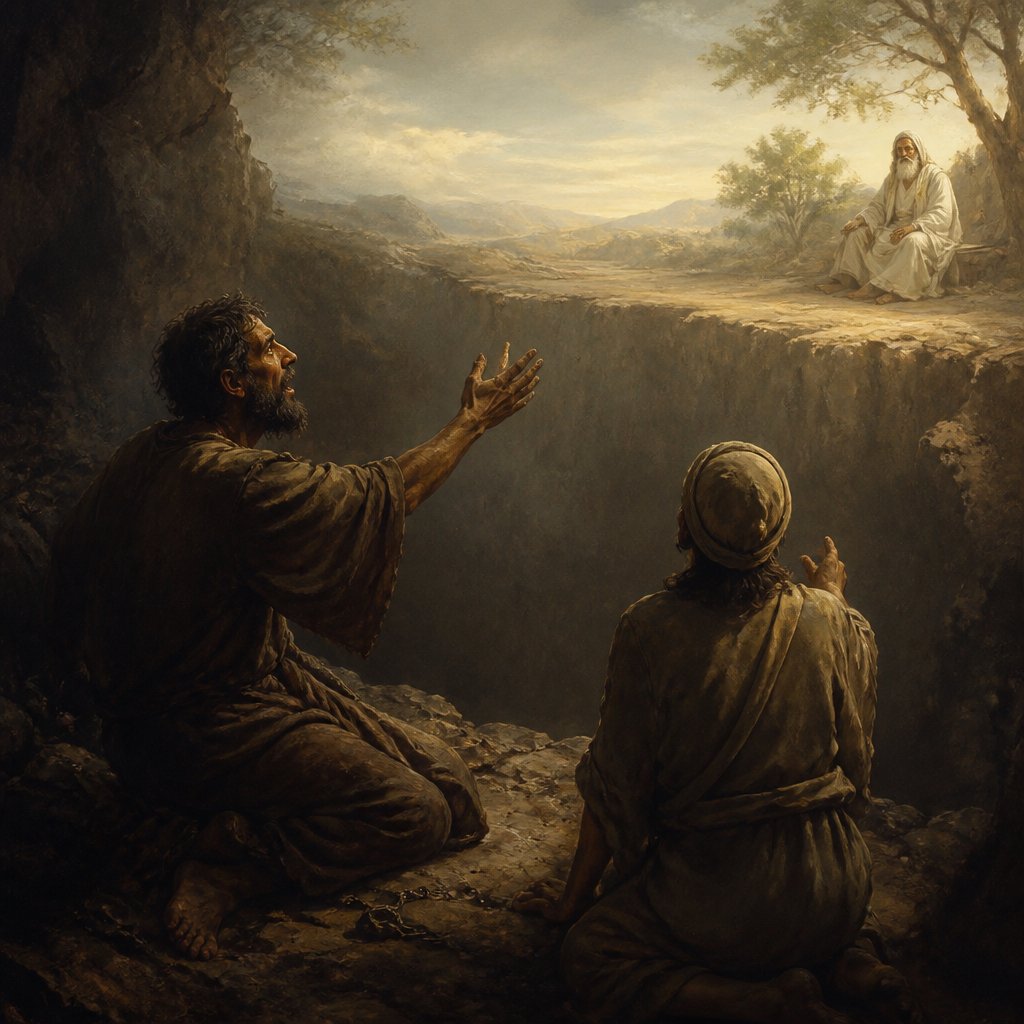
Luke 16:27 from the King James Version (KJV) of the Bible reads, "Then he said, I pray thee therefore, father, that thou wouldest send him to my father's house." This verse is part of the parable of the rich man and Lazarus, which Jesus tells in Luke 16:19-31.
In this parable, Jesus tells the story of a rich man who lived in luxury and a poor beggar named Lazarus who lay at the rich man's gate, longing to eat the scraps that fell from the rich man's table. Both men died, and Lazarus was carried by the angels to Abraham's side, while the rich man was sent to Hades, where he was tormented in flames. The rich man begged Abraham to send Lazarus to his father's house to warn his five brothers so they would not share his fate, but Abraham told him that they had Moses and the Prophets, and if they would not listen to them, they would not be convinced even if someone were to rise from the dead.
The rich man's plea to send Lazarus to his father's house reveals a deep regret and concern for his loved ones who are still living. The urgency and desperation in his request reflect the torment and agony he is experiencing in Hades. This verse highlights the tragic consequences of ignoring the teachings of the prophets and failing to heed the warnings about living a life of luxury and neglecting the poor and marginalized.
The themes presented in this verse and the parable as a whole revolve around the concepts of wealth and poverty, judgment and consequences, and the importance of repentance and heeding the teachings of God. The rich man represents those who are consumed by their wealth and material comforts, neglecting the needs of others, while Lazarus represents the marginalized and oppressed who find comfort and solace in the kingdom of God. The parable emphasizes the reversal of fortune in the afterlife, where the rich are humbled and the poor are exalted.
The context of this verse within the larger parable is significant. Jesus uses this parable to challenge the attitudes and behaviors of the religious leaders and the wealthy elites of his time. The Pharisees, who were lovers of money, were listening to Jesus as he told this parable, and he was addressing their love of wealth and their neglect of the poor. Through the rich man's plea for his brothers, Jesus confronts the Pharisees and warns them of the consequences of their actions and attitudes.
In addition, the symbolism in this verse is profound. The father's house represents the world and the people who are still living and have the opportunity to repent and change their ways. The rich man's request to send Lazarus to his father's house symbolizes the desire for others to avoid the same fate and to learn from his mistakes. This symbolizes the importance of spreading the message of repentance and the consequences of neglecting the poor and marginalized.
In conclusion, Luke 16:27 from the King James Version of the Bible presents a powerful and sobering message about the consequences of a life lived in neglect of the poor and marginalized. The urgency and desperation in the rich man's plea to send Lazarus to his father's house highlights the profound regret and concern for his loved ones who are still living. This verse serves as a warning to all who hear it, emphasizing the importance of repentance, heeding the teachings of God, and caring for those in need.
Have questions about Luke 16:27?
Dive deeper into this scripture with Bible Chat — an AI-powered tool for exploring God's Word through conversation. Ask questions, get context, and grow in your understanding of the Bible.
Get Our Apps


Luke 16:27 Artwork

Luke 16:27 - "Then he said, I pray thee therefore, father, that thou wouldest send him to my father's house:"
"Then he said, I pray thee therefore, father, that thou wouldest send him to my father's house:" - Luke 16:27

luke 1:27

luke 6: 27

Luke 10:27

Luke 6: 27-38

Luke 6:27-38

Luke 13:28-27

Luke 13:28-27

Luke 13:28-27

Proverbs 27:16

Matthew 27:16 - "And they had then a notable prisoner, called Barabbas."

Luke 18:27 - "And he said, The things which are impossible with men are possible with God."

Luke 8:16

luke 4:16

Luke 21:27 - "And then shall they see the Son of man coming in a cloud with power and great glory."

Luke 16:1-13

Luke 20:27 - "¶ Then came to him certain of the Sadducees, which deny that there is any resurrection; and they asked him,"

Luke 20:27-38. All people of color.

Luke 16:1-1313

Luke 16:22-26

Luke 16:1-13

Luke 16:1-13

Luke 2:16 - 21

Luke 23:27 - "¶ And there followed him a great company of people, and of women, which also bewailed and lamented him."

Luke 14:27 - "And whosoever doth not bear his cross, and come after me, cannot be my disciple."

Luke 16:16 - "The law and the prophets were until John: since that time the kingdom of God is preached, and every man presseth into it."

Luke 1:27 - "To a virgin espoused to a man whose name was Joseph, of the house of David; and the virgin's name was Mary."

Romans 16:27 - "To God only wise, be glory through Jesus Christ for ever. Amen."

1 Chronicles 16:27 - "Glory and honour are in his presence; strength and gladness are in his place."