What does Luke 14:16 mean?
"Then said he unto him, A certain man made a great supper, and bade many:" - Luke 14:16
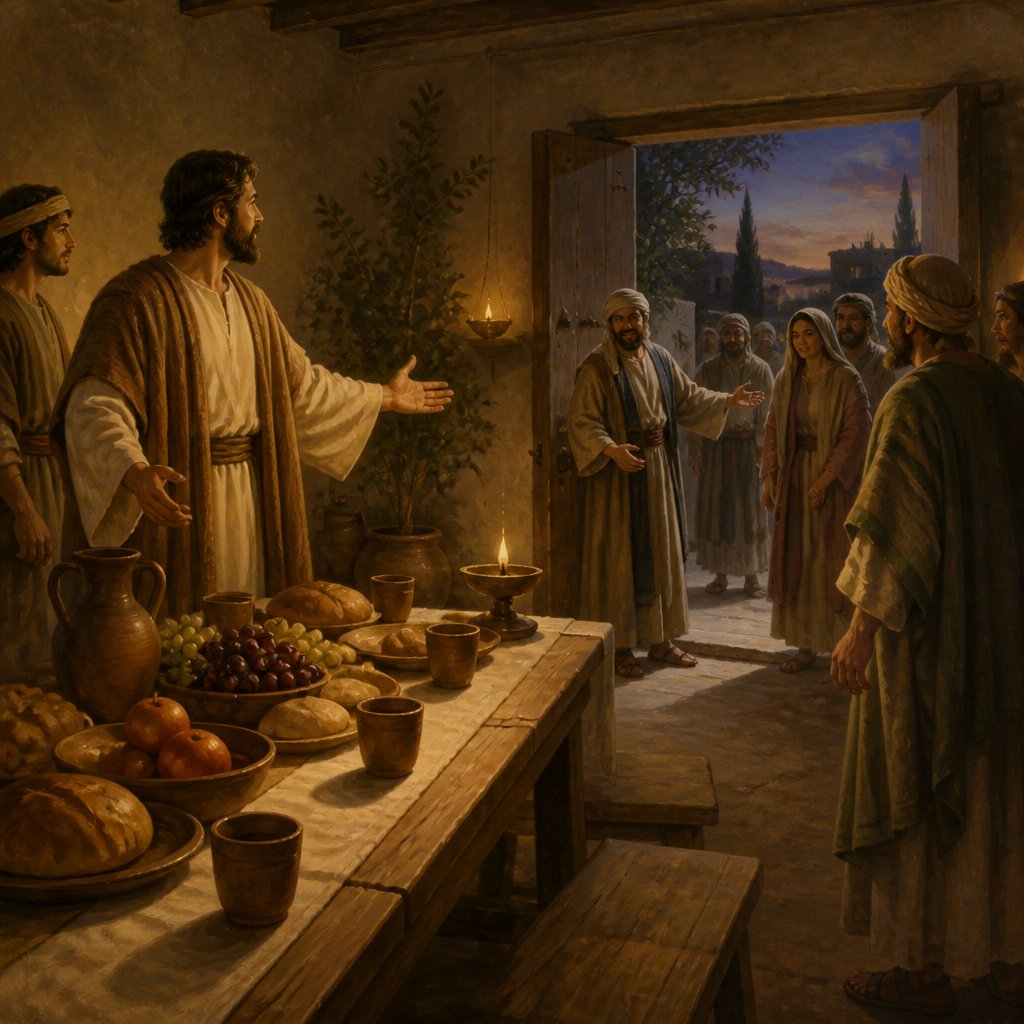
Luke 14:16 (KJV) reads: "Then said he unto him, A certain man made a great supper, and bade many."
This verse is part of a parable that Jesus tells in the book of Luke. The parable of the great feast, also known as the great banquet, is focused on the theme of the kingdom of God and the invitation to enter into it. The parable begins with a man who is hosting a great feast and has invited many people. However, those who were invited make excuses for not attending the banquet, so the host instructs his servant to invite others, including the poor, the maimed, the lame, and the blind.
The parable of the great feast has both historical and eschatological significance. Historically, it was a rebuke to the religious leaders of the time, who often rejected Jesus' message and refused to enter the kingdom of God. The parable shows that those who were first invited (representing the religious leaders) rejected the invitation, so the invitation was extended to others who were considered unworthy by society's standards.
At the same time, the parable has eschatological significance, as it points to the future kingdom of God and the invitation for all to enter it. The host of the feast represents God, and the great banquet symbolizes the eternal kingdom of heaven. The original guests who rejected the invitation represent those who reject the message of salvation, while the new guests who are invited represent those who are welcomed into the kingdom despite their social status or past sins.
In a broader context, this parable addresses the theme of God's inclusive love and the universality of salvation. It highlights the idea that God's kingdom is open to all, regardless of their social status, past mistakes, or religious background. The parable challenges the exclusivity and elitism that often characterize human society and religious institutions, emphasizing that God's invitation is open to everyone.
The parable also encourages a spirit of generosity and hospitality. The host of the feast is depicted as being generous and inclusive, inviting not only the wealthy and powerful but also the marginalized and disadvantaged. This can be seen as a call for Christians to embody this same spirit of inclusivity and to reach out to those who are often overlooked or disregarded by society.
The symbolism in this verse is powerful and multifaceted. The "certain man" who made a great supper represents God, who prepares a lavish feast for all who accept His invitation. The supper itself represents the kingdom of God, with its abundance and joy. The act of "bidding many" reflects God's universal call to salvation, reaching out to all people without discrimination.
Overall, the parable of the great feast in Luke 14:16 carries profound messages about the nature of God's kingdom, the inclusivity of God's love, and the importance of responding to God's invitation. It challenges us to examine our own attitudes towards others and our willingness to accept God's call, as well as our commitment to extending God's invitation to all.
Have questions about Luke 14:16?
Dive deeper into this scripture with Bible Chat — an AI-powered tool for exploring God's Word through conversation. Ask questions, get context, and grow in your understanding of the Bible.
Get Our Apps


Luke 14:16 Artwork

Luke 14:16 - "Then said he unto him, A certain man made a great supper, and bade many:"

Luke 14:16 Then He said to him, “A certain man gave a great supper and invited many,
"Then said he unto him, A certain man made a great supper, and bade many:" - Luke 14:16

Luke 16:14 - "And the Pharisees also, who were covetous, heard all these things: and they derided him."
"And the Pharisees also, who were covetous, heard all these things: and they derided him." - Luke 16:14

Luke 8:16

luke 4:16

Luke 16:1-13

Luke 16:1-1313

Luke 16:22-26

Luke 16:1-13

Luke 16:1-13

Luke 2:16 - 21

Luke 14:14 - "And thou shalt be blessed; for they cannot recompense thee: for thou shalt be recompensed at the resurrection of the just."

Luke 11:14-15

Luke 18:9-14

Luke 11:1-14

Luke 14:25 - 33

Luke 11:1-14

Luke 2:13-14

Luke 18: 9-14

Luke 2:13-14

Luke 16:16 - "The law and the prophets were until John: since that time the kingdom of God is preached, and every man presseth into it."

Luke 5:16 - "¶ And he withdrew himself into the wilderness, and prayed."

Genesis 16:14

John 14:16

Luke 14:6 - "And they could not answer him again to these things."

Luke 24:16 - "But their eyes were holden that they should not know him."

Luke 23:16 - "I will therefore chastise him, and release him."

Colossians 4:14 - "Luke, the beloved physician, and Demas, greet you."