What does Genesis 9:1 mean?
"And God blessed Noah and his sons, and said unto them, Be fruitful, and multiply, and replenish the earth." - Genesis 9:1
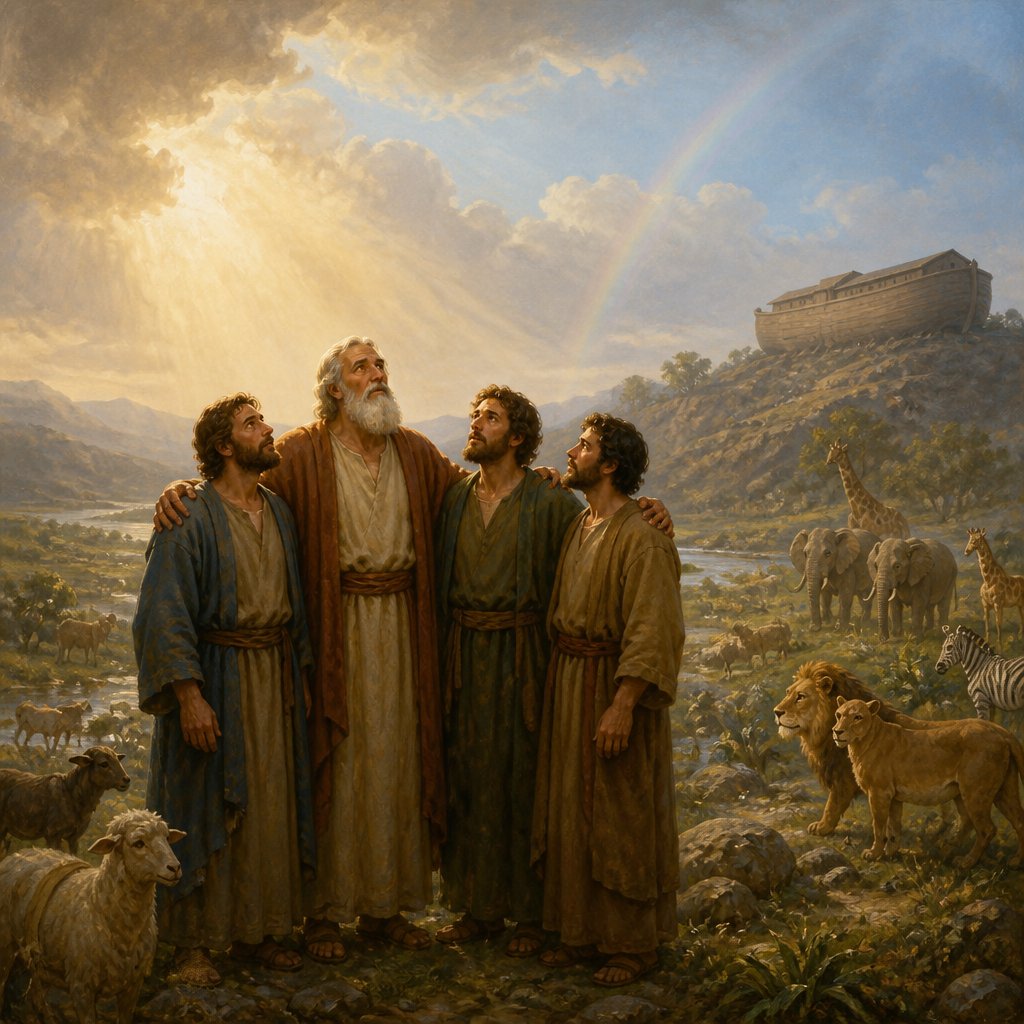
Genesis 9:1 (KJV): And God blessed Noah and his sons, and said unto them, Be fruitful, and multiply, and replenish the earth.
This verse is a continuation of the story of Noah, who was chosen by God to build an ark and save his family and two of every kind of animal from a great flood that would cover the earth. After the flood, God made a covenant with Noah, promising to never again destroy the earth with a flood and giving him a sign of the rainbow as a reminder of this covenant. In this verse, God blesses Noah and his sons, Shem, Ham, and Japheth, and instructs them to be fruitful, multiply, and replenish the earth.
The theme of this verse is the importance of procreation and the continuation of life. After the catastrophic flood, God wants humanity to thrive and fill the earth once again. It is a call to Noah and his sons to fulfill the purpose of their existence by reproducing and populating the earth. This command echoes the original mandate given to Adam and Eve in Genesis 1:28 to "be fruitful, and multiply, and replenish the earth."
The context of this verse is crucial to understanding its significance. After the flood waters had receded and Noah and his family, along with the animals, had disembarked from the ark, they were starting afresh, given a second chance at life. This verse comes at a pivotal moment in the narrative of humanity's survival and the beginning of a new era. The earth was essentially being "replenished" with life, and God's blessing was a validation of this process.
This verse also reflects God's grace and faithfulness. Despite the wickedness of humanity that led to the flood, God did not give up on His creation. Instead, He chose to start anew with Noah and his family, showing His mercy and willingness to give humanity another chance. The blessing bestowed upon Noah and his sons signifies God's favor and provision for their future, as well as His commitment to seeing His creation thrive once again.
The symbolism in this verse is profound. The act of being "fruitful" and "multiplying" represents the fundamental nature of life and the continuation of the human race. It conveys the idea of abundance, growth, and the fulfillment of God's plan for humanity. Additionally, the phrase "replenish the earth" indicates the restoration and renewal of the earth after the devastation of the flood. It emphasizes the responsibility of humanity to care for and nurture the world around them.
Overall, Genesis 9:1 is a verse that encapsulates the hope and promise of a new beginning. It emphasizes the value of life, the significance of God's blessings, and the continuation of His divine plan for humanity. It serves as a reminder of God's faithfulness and His desire for His creation to flourish and thrive. This verse also holds relevance in contemporary times, as it speaks to the importance of stewardship of the earth and the fulfillment of God's purpose for each individual.
Have questions about Genesis 9:1?
Dive deeper into this scripture with Bible Chat — an AI-powered tool for exploring God's Word through conversation. Ask questions, get context, and grow in your understanding of the Bible.
Get Our Apps


Genesis 9:1 Artwork

Genesis 9:1 - "And God blessed Noah and his sons, and said unto them, Be fruitful, and multiply, and replenish the earth."
"And God blessed Noah and his sons, and said unto them, Be fruitful, and multiply, and replenish the earth." - Genesis 9:1

Genesis 49:9

Genesis 1:9 - "¶ And God said, Let the waters under the heaven be gathered together unto one place, and let the dry land appear: and it was so."

Genesis 22-9

Genesis 16:9

Genesis 15:9

Genesis 9:13

Genesis 2:9

Genesis 20:9

Genesis 18-9

Genesis 23-9

Genesis 19-9

Genesis 25-9

Genesis 22-9

Genesis 24-9

Genesis 21:9

Genesis 26:9

Genesis 17:9

Genesis 9:9 - "And I, behold, I establish my covenant with you, and with your seed after you;"

Genesis 9:24-25

Genesis 18:9-14

Genesis 46:9 - "And the sons of Reuben; Hanoch, and Phallu, and Hezron, and Carmi."

Genesis 12:9 - "And Abram journeyed, going on still toward the south."

Genesis 5:9 - "¶ And Enos lived ninety years, and begat Cainan:"

Genesis 36:9 - "¶ And these are the generations of Esau the father of the Edomites in mount Seir:"

Genesis 9:20 - "And Noah began to be an husbandman, and he planted a vineyard:"

Genesis 9:19 - "These are the three sons of Noah: and of them was the whole earth overspread."

Genesis 9:28 - "¶ And Noah lived after the flood three hundred and fifty years."

Genesis 9:8 - "¶ And God spake unto Noah, and to his sons with him, saying,"