What does Genesis 37:36 mean?
"And the Midianites sold him into Egypt unto Potiphar, an officer of Pharaoh's, and captain of the guard." - Genesis 37:36
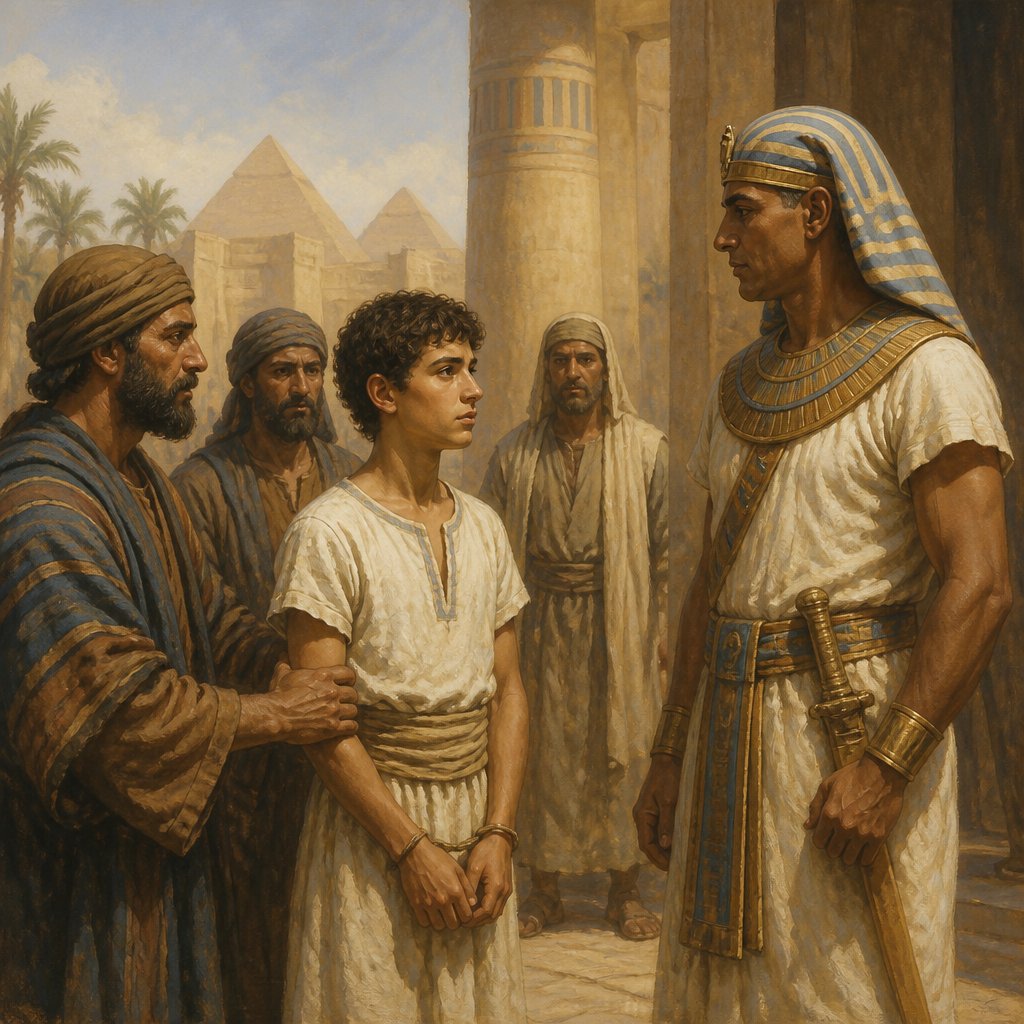
Genesis 37:36 from the King James Version of the Bible reads: "And the Midianites sold him into Egypt unto Potiphar, an officer of Pharaoh's, and captain of the guard." This verse comes at the end of the story of Joseph, the son of Jacob, who was sold into slavery by his jealous brothers.
The story of Joseph is one of the most well-known and influential in the Bible, and it is rich with themes of jealousy, betrayal, forgiveness, and divine providence. In this verse, we see the culmination of the jealousy and betrayal of Joseph's brothers as they sell him into slavery.
The context of this verse is important for understanding its significance. Joseph was the favored son of Jacob, which made his brothers jealous. To make matters worse, Joseph had dreams in which he saw himself ruling over his brothers, which further incited their jealousy. In their bitterness, the brothers plotted against Joseph and ultimately sold him to the Midianites, who in turn sold him to Potiphar in Egypt.
This verse speaks to the theme of providence and the fact that even in the midst of hardship and betrayal, God is still at work. Despite the actions of Joseph's brothers, God had a plan for him that would ultimately save his entire family. This theme of divine providence is a comforting and powerful one, reminding believers that even in the darkest of times, God is still in control and working all things for the good of those who love Him (Romans 8:28).
The symbolism in this verse is significant as well. The fact that Joseph is sold into Egypt, a place of great power and influence, foreshadows the important role he will play in the history of the nation. It also symbolizes the suffering and trials that Joseph will endure before he ultimately rises to power.
Furthermore, the character of Potiphar plays a significant role in the story. As an officer of Pharaoh and captain of the guard, Potiphar is a powerful and influential figure in Egypt. His role in purchasing Joseph as a slave sets the stage for the next chapter in Joseph's life. Potiphar's household becomes the setting for further trials and tribulations for Joseph, as well as the place where he ultimately rises to a position of authority.
The story of Joseph is ultimately one of redemption and forgiveness. Despite the betrayal and suffering he endures, Joseph never loses his faith in God, and ultimately, through a series of remarkable events, he is able to save his family and rise to a position of great influence in Egypt. The story of Joseph serves as a powerful example of how God can use even the darkest moments in our lives to bring about His purposes and ultimately bring about redemption and reconciliation.
In conclusion, Genesis 37:36 is a pivotal verse in the story of Joseph, and it is rich with themes of providence, betrayal, and redemption. The story of Joseph serves as a reminder that even in the midst of suffering and hardship, God is still at work, and His plans for us are ultimately for our good. The symbolism in this verse speaks to the trials and triumphs that Joseph will experience, as well as the important role he will play in the history of Israel. Overall, this verse and the story of Joseph as a whole are powerful reminders of God's faithfulness and the potential for redemption even in the most difficult circumstances.
Have questions about Genesis 37:36?
Dive deeper into this scripture with Bible Chat — an AI-powered tool for exploring God's Word through conversation. Ask questions, get context, and grow in your understanding of the Bible.
Get Our Apps


Genesis 37:36 Artwork

Genesis 37:36 - "And the Midianites sold him into Egypt unto Potiphar, an officer of Pharaoh's, and captain of the guard."

"And the Midianites sold him into Egypt unto Potiphar, an officer of Pharaoh's, and captain of the guard." - Genesis 37:36
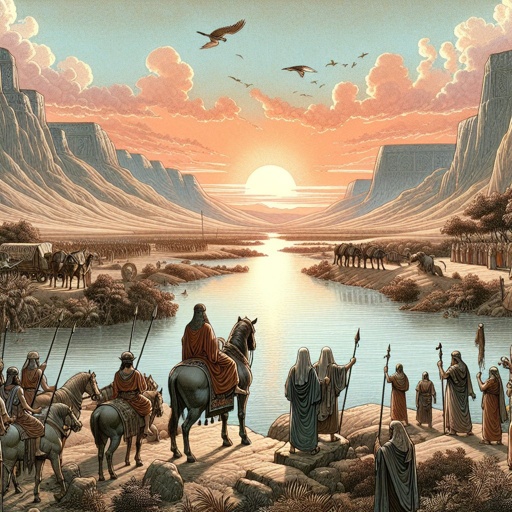
Genesis 36:37 - "And Samlah died, and Saul of Rehoboth by the river reigned in his stead."

"And Samlah died, and Saul of Rehoboth by the river reigned in his stead." - Genesis 36:37

Matthew 12:36-37

matthew 12:36-37

Mark 4:36-37

Mark 9:36-37

Mark 4:36-37

Matthew 12:36-37

1 Corinthians 14:36-37

Genesis 36:36 - "And Hadad died, and Samlah of Masrekah reigned in his stead."

genesis 37

Exodus 36:37 - "¶ And he made an hanging for the tabernacle door of blue, and purple, and scarlet, and fine twined linen, of needlework;"

Genesis 24:36

Genesis 19-37

Genesis 24-37

Genesis 37:2

Psalms 37:36 - "Yet he passed away, and, lo, he was not: yea, I sought him, but he could not be found."

Genesis 19-36

Genesis 36:28 - "The children of Dishan are these; Uz, and Aran."

"And Hadad died, and Samlah of Masrekah reigned in his stead." - Genesis 36:36

Ezekiel 36:37 - "Thus saith the Lord GOD; I will yet for this be enquired of by the house of Israel, to do it for them; I will increase them with men like a flock."

Genesis 36:27 - "The children of Ezer are these; Bilhan, and Zaavan, and Akan."

Genesis 36:3 - "And Bashemath Ishmael's daughter, sister of Nebajoth."

Genesis 36:19 - "These are the sons of Esau, who is Edom, and these are their dukes."

Genesis 36:1 - "Now these are the generations of Esau, who is Edom."

Genesis 36:26 - "And these are the children of Dishon; Hemdan, and Eshban, and Ithran, and Cheran."

Genesis 36:42 - "Duke Kenaz, duke Teman, duke Mibzar,"

Genesis 36:9 - "¶ And these are the generations of Esau the father of the Edomites in mount Seir:"