What does Genesis 36:4 mean?
"And Adah bare to Esau Eliphaz; and Bashemath bare Reuel;" - Genesis 36:4
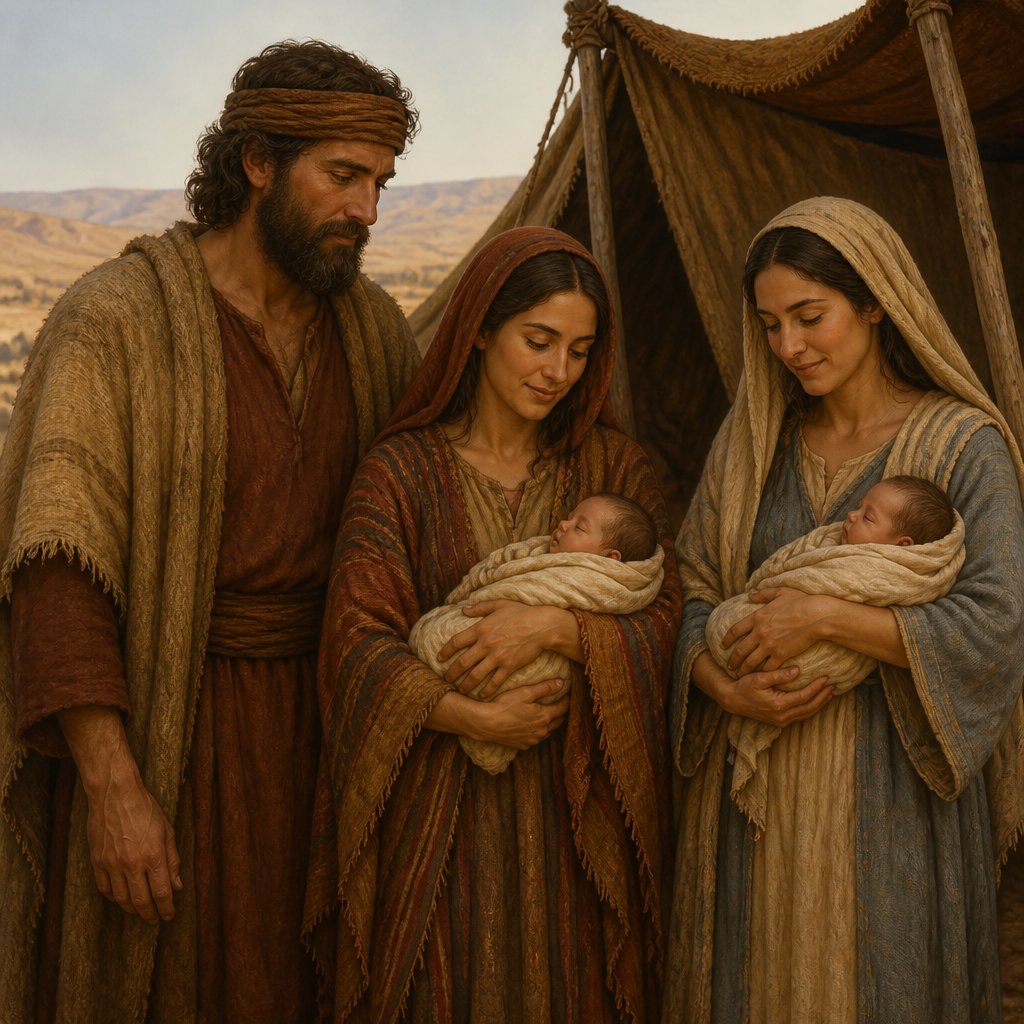
Genesis 36:4 (KJV) reads, "And Adah bare to Esau Eliphaz; and Bashemath bare Reuel." This verse is part of the genealogy of Esau, the elder son of Isaac and the twin brother of Jacob, in the book of Genesis. The verses leading up to this one give a detailed account of Esau's descendants, including his wives, children, and their offspring.
The genealogy of Esau is significant in understanding the history and lineage of the Israelites as a whole. Esau's descendants are known as the Edomites, and their history is closely intertwined with that of the Israelites. This genealogy is crucial in tracing the fulfillment of God's promises to Abraham and his descendants, as well as in understanding the political and cultural landscape of the ancient Near East.
The names mentioned in Genesis 36:4 - Adah, Eliphaz, Bashemath, and Reuel - carry significance in their meanings and symbolic connotations. Adah bore Eliphaz, whose name means "God of gold," reflecting the wealth and prosperity associated with precious metals. Bashemath bore Reuel, whose name means "friend of God," emphasizing a close relationship with the divine. These names hint at the spiritual and material blessings that Esau's descendants received, as well as their connection to the covenant with God.
The theme of lineage and inheritance is central to this verse, reflecting the importance of family ties and the passing down of blessings from one generation to the next. In the ancient Near East, genealogies were crucial in establishing legitimacy, authority, and social status. Esau's lineage, as outlined in this passage, serves to affirm his place in history and to validate the promises made to his forefathers.
Furthermore, the genealogy of Esau carries symbolic significance in the broader biblical narrative. Esau and Jacob, as twin brothers, represent contrasting archetypes - Esau as the rugged outdoorsman and Jacob as the crafty deceiver. Their rivalry and eventual reconciliation symbolize the complex dynamics of human relationships, as well as the themes of forgiveness, redemption, and the fulfillment of divine purpose.
The mention of wives in this verse also highlights the role of women in preserving and shaping the lineage of the patriarchs. Adah and Bashemath, as mothers of Esau's children, played a crucial role in the continuation of their family line. This underscores the importance of women in the biblical narrative and emphasizes their agency in fulfilling God's plans for his people.
In a broader theological context, the genealogy of Esau in Genesis 36 reaffirms the universality of God's covenant and the inclusion of diverse peoples in his redemptive plan. While Esau and his descendants may have been distinct from the line of Jacob, they were nonetheless part of God's larger purpose for humanity. This reflects the biblical theme of God's sovereignty over all nations and his desire for reconciliation and restoration across ethnic and cultural boundaries.
In conclusion, Genesis 36:4 provides a rich tapestry of historical, symbolic, and theological themes that contribute to a deeper understanding of the biblical narrative. It underscores the importance of lineage, inheritance, and the role of women in preserving family heritage. Furthermore, it sheds light on the complex relationship between Esau and Jacob, as well as the broader significance of their descendants in the unfolding of God's redemptive plan. This verse serves as a reminder of the interconnectedness of all people in God's divine purpose and the enduring relevance of biblical genealogies in shaping the identity and destiny of his chosen people.
Have questions about Genesis 36:4?
Dive deeper into this scripture with Bible Chat — an AI-powered tool for exploring God's Word through conversation. Ask questions, get context, and grow in your understanding of the Bible.
Get Our Apps


Genesis 36:4 Artwork

Genesis 36:4 - "And Adah bare to Esau Eliphaz; and Bashemath bare Reuel;"
"And Adah bare to Esau Eliphaz; and Bashemath bare Reuel;" - Genesis 36:4

Genesis 36:36 - "And Hadad died, and Samlah of Masrekah reigned in his stead."

Genesis 24:36

Genesis 19-36

Genesis 36:28 - "The children of Dishan are these; Uz, and Aran."

"And Hadad died, and Samlah of Masrekah reigned in his stead." - Genesis 36:36

Genesis 36:27 - "The children of Ezer are these; Bilhan, and Zaavan, and Akan."

Genesis 36:19 - "These are the sons of Esau, who is Edom, and these are their dukes."

Genesis 36:3 - "And Bashemath Ishmael's daughter, sister of Nebajoth."

Genesis 36:1 - "Now these are the generations of Esau, who is Edom."

Genesis 36:26 - "And these are the children of Dishon; Hemdan, and Eshban, and Ithran, and Cheran."

Genesis 36:42 - "Duke Kenaz, duke Teman, duke Mibzar,"

Genesis 36:9 - "¶ And these are the generations of Esau the father of the Edomites in mount Seir:"

Genesis 36:41 - "Duke Aholibamah, duke Elah, duke Pinon,"

Genesis 19:36 - "Thus were both the daughters of Lot with child by their father."

Genesis 36:8 - "Thus dwelt Esau in mount Seir: Esau is Edom."

Genesis 36:25 - "And the children of Anah were these; Dishon, and Aholibamah the daughter of Anah."

Genesis 36:11 - "And the sons of Eliphaz were Teman, Omar, Zepho, and Gatam, and Kenaz."

Genesis 36:23 - "And the children of Shobal were these; Alvan, and Manahath, and Ebal, Shepho, and Onam."

Genesis 36:34 - "And Jobab died, and Husham of the land of Temani reigned in his stead."

Genesis 36:22 - "And the children of Lotan were Hori and Hemam; and Lotan's sister was Timna."
Genesis 36:37 - "And Samlah died, and Saul of Rehoboth by the river reigned in his stead."

Genesis 36:33 - "And Bela died, and Jobab the son of Zerah of Bozrah reigned in his stead."

Genesis 36:38 - "And Saul died, and Baal-hanan the son of Achbor reigned in his stead."

Mark 4:36-37

Mark 4:36-37

Genesis 36:21 - "And Dishon, and Ezer, and Dishan: these are the dukes of the Horites, the children of Seir in the land of Edom."

Genesis 36:32 - "And Bela the son of Beor reigned in Edom: and the name of his city was Dinhabah."

"The children of Dishan are these; Uz, and Aran." - Genesis 36:28