What does Genesis 36:38 mean?
"And Saul died, and Baal-hanan the son of Achbor reigned in his stead." - Genesis 36:38
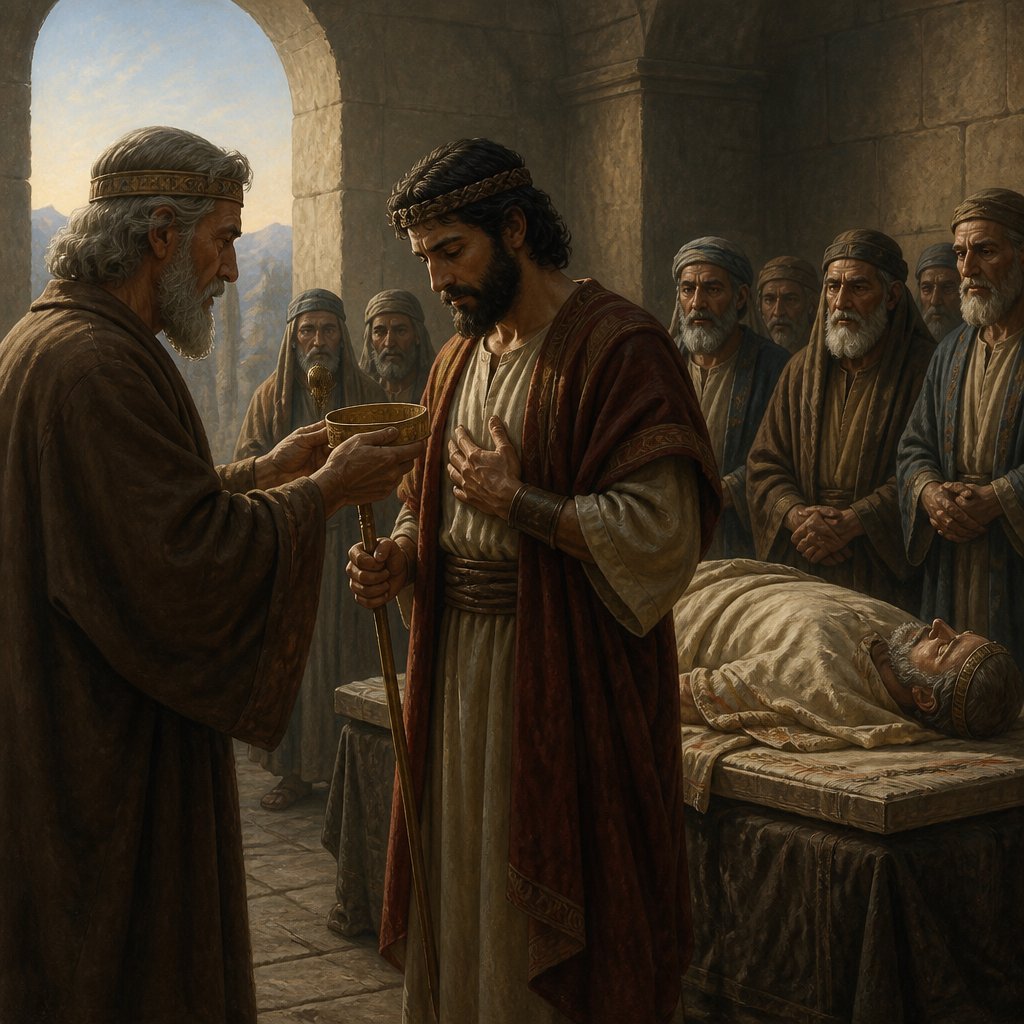
Genesis 36:38 in the King James Version reads, "And Shaul died, and Baalhanan the son of Achbor reigned in his stead." This verse is part of the genealogy of the descendants of Esau, listing the chiefs who ruled in the land of Edom before there were kings in Israel.
To fully understand the significance of this verse, it is important to consider the broader context of the book of Genesis and the specific context of the genealogy of Esau. In the Bible, genealogies are often used to establish a sense of continuity and lineage, as well as to record the passing of generations. The genealogy of Esau is significant because it helps to establish the ancestry of the Edomites, a neighboring nation to Israel with whom they had a complicated relationship.
The verse itself is relatively straightforward, recounting the death of Shaul and the ascension of Baalhanan as his successor. In the broader context of the genealogy, this verse serves to document the transition of power and leadership within the Edomite nation. It is a reminder of the transient nature of human authority and the passing of generations.
One theme that can be drawn from this verse and the surrounding genealogy is the concept of legacy and succession. The passing of leadership from one chief to another represents a continuation of the Edomite lineage, and it underscores the importance of ancestral heritage in the ancient world. In the broader context of the Bible, this theme of legacy and succession is woven throughout the narrative, as God's promises and covenants are passed down through generations.
Another theme that can be drawn from this verse is the sovereignty of God. While the genealogy of Esau may seem like a dry list of names and rulers, it is a reminder that God is at work in the world, orchestrating the rise and fall of nations and rulers. Even in the mundane details of succession within a small nation like Edom, God's hand is at work, fulfilling His purposes and plans.
The specific names mentioned in this verse can also be seen as symbolic. Shaul, whose death is recorded, may represent the old guard or the previous generation of leadership. His death paves the way for the rise of Baalhanan, who represents the new generation and the future of the Edomite nation. This transition can be seen as a symbolic changing of the guard, with each chief representing the broader themes of succession and continuity.
In the broader context of the Bible, the names themselves can carry deeper significance. "Shaul" means "desired" or "asked for," which may symbolize the aspirations and longings of the previous generation. "Baalhanan" means "Baal is gracious," possibly pointing to a shift in religious or cultural values within the Edomite society.
Ultimately, Genesis 36:38, while seemingly a simple verse in a long list of genealogical records, holds deeper themes of legacy, succession, and the sovereignty of God. It is a reminder that even in the most mundane details of human history, God's hand is at work, shaping the course of nations and generations. By studying and reflecting on these verses, we can gain a deeper appreciation for the overarching narrative of God's redemptive plan throughout history.
Have questions about Genesis 36:38?
Dive deeper into this scripture with Bible Chat — an AI-powered tool for exploring God's Word through conversation. Ask questions, get context, and grow in your understanding of the Bible.
Get Our Apps


Genesis 36:38 Artwork

Genesis 36:38 - "And Saul died, and Baal-hanan the son of Achbor reigned in his stead."
"And Saul died, and Baal-hanan the son of Achbor reigned in his stead." - Genesis 36:38

Job 38:36

Job 38:36

Job 38:36

Job 38:36

Elijah in the scene 1 Kings 18:36–38

Job 38:36 - "Who hath put wisdom in the inward parts? or who hath given understanding to the heart?"

Genesis 36:36 - "And Hadad died, and Samlah of Masrekah reigned in his stead."

Exodus 36:38 - "And the five pillars of it with their hooks: and he overlaid their chapiters and their fillets with gold: but their five sockets were of brass."

Genesis 19-38

Genesis 24-38

Genesis 24:36

Genesis 19-36

Genesis 36:28 - "The children of Dishan are these; Uz, and Aran."

"And Hadad died, and Samlah of Masrekah reigned in his stead." - Genesis 36:36

Genesis 36:27 - "The children of Ezer are these; Bilhan, and Zaavan, and Akan."

Genesis 36:3 - "And Bashemath Ishmael's daughter, sister of Nebajoth."

Genesis 36:19 - "These are the sons of Esau, who is Edom, and these are their dukes."

Genesis 36:1 - "Now these are the generations of Esau, who is Edom."

Ezekiel 36:38 - "As the holy flock, as the flock of Jerusalem in her solemn feasts; so shall the waste cities be filled with flocks of men: and they shall know that I am the LORD."

Genesis 36:26 - "And these are the children of Dishon; Hemdan, and Eshban, and Ithran, and Cheran."

Genesis 36:42 - "Duke Kenaz, duke Teman, duke Mibzar,"

Genesis 36:9 - "¶ And these are the generations of Esau the father of the Edomites in mount Seir:"

Genesis 36:41 - "Duke Aholibamah, duke Elah, duke Pinon,"

Job 38:36 (KJV) Who hath put wisdom in the inward parts? or who hath given understanding to the heart?

Genesis 36:8 - "Thus dwelt Esau in mount Seir: Esau is Edom."

Genesis 19:36 - "Thus were both the daughters of Lot with child by their father."

Genesis 36:25 - "And the children of Anah were these; Dishon, and Aholibamah the daughter of Anah."

Genesis 36:4 - "And Adah bare to Esau Eliphaz; and Bashemath bare Reuel;"