What does Exodus 28:4 mean?
"And these are the garments which they shall make; a breastplate, and an ephod, and a robe, and a broidered coat, a mitre, and a girdle: and they shall make holy garments for Aaron thy brother, and his sons, that he may minister unto me in the priest's office." - Exodus 28:4
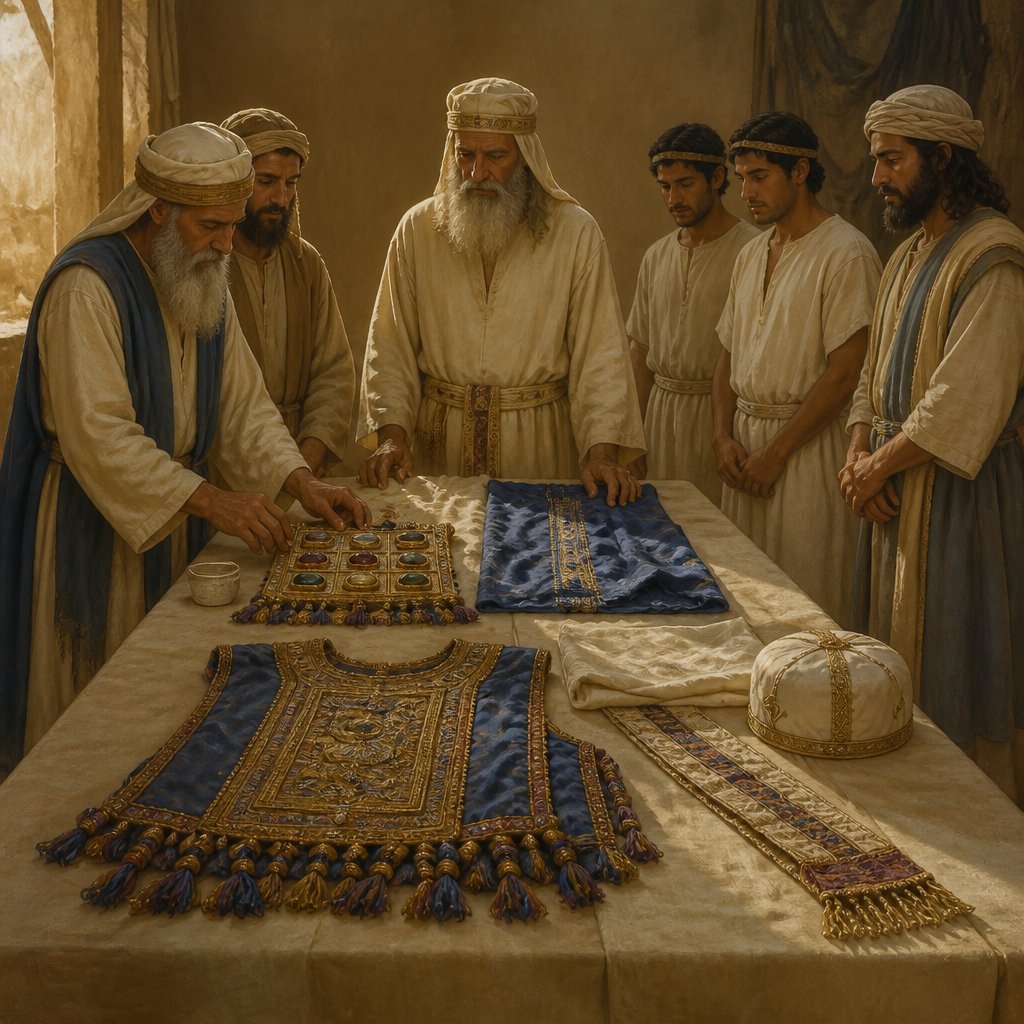
Exodus 28:4 (KJV) says, "And these are the garments which they shall make; a breastplate, and an ephod, and a robe, and a broidered coat, a mitre, and a girdle: and they shall make holy garments for Aaron thy brother, and his sons, that he may minister unto me in the priest's office."
This verse from the book of Exodus is part of the instructions given to Moses by God for the creation of the sacred garments that the priests of Israel were to wear when ministering in the tabernacle. The verse emphasizes the importance of the priesthood and the need for the priests to be properly attired in holy garments when carrying out their duties.
The garments listed in this verse have both practical and symbolic significance. The breastplate, ephod, robe, broidered coat, mitre, and girdle were all to be made of specific materials and adorned with precious stones and elaborate embroidery. These garments were designed to set the priests apart and emphasize their role as mediators between God and the people of Israel.
The breastplate, for example, was to be made with twelve precious stones, each representing one of the twelve tribes of Israel, symbolizing the priest's role in carrying the people close to his heart as he interceded for them before God. The ephod, a sleeveless garment worn over the robe, was meant to be a reminder of the priest's responsibility to bear the burdens of the people and seek God's wisdom and guidance on their behalf.
The robe, broidered coat, mitre, and girdle were all intricately designed to emphasize the priest's role as a holy servant of God. These garments were to be a symbol of the priest's consecration and dedication to the service of the Lord. They were also meant to be a visual representation of the priest's authority and dignity as they carried out their sacred duties.
The symbolism of the priestly garments extends beyond their physical appearance. They serve as a reminder of the holiness and purity required of those who serve in the presence of God. The careful craftsmanship and specific materials used in creating these garments reflect the need for reverence and respect in approaching God. The priests were not to come before God in just any clothing; they were to be adorned in holy garments befitting their privileged position as representatives of the people before the Almighty.
Furthermore, the priestly garments serve as a foreshadowing of the ultimate High Priest, Jesus Christ. In the New Testament, Jesus is referred to as our great High Priest, who intercedes for us before God. The symbolism of the priestly garments in Exodus 28 points to the purity and righteousness of Christ, who was without sin and able to mediate between God and humanity, bridging the gap between the sacred and the profane.
The context of this verse within the book of Exodus is significant as well. The Israelites had recently been delivered from slavery in Egypt, and God was establishing a covenant relationship with them. The construction of the tabernacle and the establishment of the priesthood were key elements in the Israelites' religious and cultural identity. The priestly garments were a tangible expression of God's presence and the need for holiness in approaching Him.
In conclusion, Exodus 28:4 highlights the importance of the priesthood and the symbolism of the priestly garments in the book of Exodus. These garments were not simply articles of clothing but were infused with deep symbolic meaning, representing the priest's role as a mediator, servant, and representative of the people before God. The priestly garments also point to Christ as the ultimate High Priest, who intercedes for us and embodies the holiness and righteousness required to stand before God. This verse serves as a reminder of the reverence and respect that is due in approaching the Almighty and the privilege of serving in His presence.
Have questions about Exodus 28:4?
Dive deeper into this scripture with Bible Chat — an AI-powered tool for exploring God's Word through conversation. Ask questions, get context, and grow in your understanding of the Bible.
Get Our Apps


Exodus 28:4 Artwork

Exodus 28:4

Exodus 28:4

Exodus 28:4

Exodus 28:4

Exodus 28:4 - "And these are the garments which they shall make; a breastplate, and an ephod, and a robe, and a broidered coat, a mitre, and a girdle: and they shall make holy garments for Aaron thy brother, and his sons, that he may minister unto me in the priest's office."
"And these are the garments which they shall make; a breastplate, and an ephod, and a robe, and a broidered coat, a mitre, and a girdle: and they shall make holy garments for Aaron thy brother, and his sons, that he may minister unto me in the priest's office." - Exodus 28:4

Exodus 4:28 - "And Moses told Aaron all the words of the LORD who had sent him, and all the signs which he had commanded him."

Exodus 22:28

Exodus 22:28

Exodus 23:28

Exodus 32:28

Exodus 22:28

Exodus 22:28

Exodus 22:28

exodus 28 ephod

Exodus 22:28

Exodus 22:28

Exodus 22:28

Exodus 22:28

Exodus 22:28

Exodus 22:28

Exodus 23:28

Exodus 22:28

Exodus 22:28

Exodus 22:28

Exodus 28:30-43

Exodus 28:31-43

Exodus 28:31-34

Exodus 23:27-28

Exodus 28:15-30