What does 1 Corinthians 13:13 mean?
"And now abideth faith, hope, charity, these three; but the greatest of these is charity." - 1 Corinthians 13:13
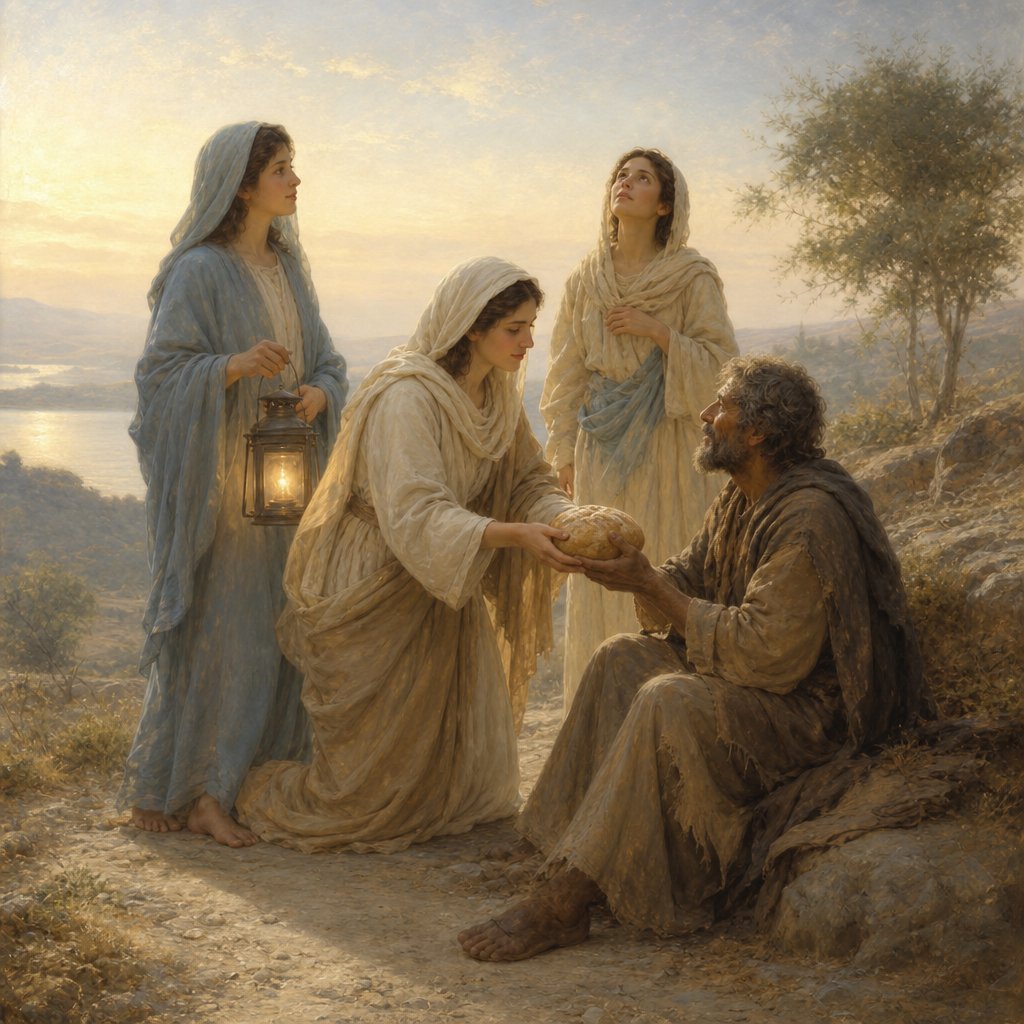
“And now abideth faith, hope, charity, these three; but the greatest of these is charity.”
In this closing sentence of 1 Corinthians 13, the Apostle Paul gathers the whole chapter into a single, steady conclusion. The chapter has been speaking about what lasts and what does not last, about what is truly “excellent” in the life of the church, and about the difference between gifts that can dazzle for a moment and a grace that endures. When Paul says, “And now abideth,” he is drawing attention to what remains standing when everything temporary has passed away. Earlier in the chapter he has said, “Charity never faileth,” and he has contrasted charity with things that will cease or vanish away; so this final verse functions like a summary verdict: when the noise of spiritual display is over, what continues is not the show of power but the life of God formed in the heart.
The immediate context is Paul’s correction of a church marked by division, rivalry, and pride, especially in their use of spiritual gifts. 1 Corinthians addresses disorders in worship and conduct, and chapter 12 speaks of the diversity of gifts within “one body.” Chapter 13 then interrupts the conversation about gifts to insist that without charity the gifts are emptied of their value. The famous descriptions—“Charity suffereth long, and is kind,” “seeketh not her own,” “is not easily provoked,” “rejoiceth not in iniquity, but rejoiceth in the truth”—are not sentimental poetry divorced from real conflict; they are Paul’s direct remedy for a community that needed more than ability. With “And now abideth,” Paul is saying that even if gifts have a legitimate place, the bedrock virtues that sustain life with God and life together are faith, hope, and charity.
Faith, in this verse, is not presented as a passing impulse but as an abiding posture toward God. It is that settled trust by which a believer receives what God has spoken and rests on what God has done. It is not mere religious optimism; it is reliance. In the larger chapter, Paul has already suggested that impressive acts without charity are nothing, which means faith’s true shape is not simply power but fidelity—confidence in God expressed in a life aligned with Him. Faith abides because the believer’s relationship to God is not meant to be a momentary spark but a continuing dependence.
Hope is likewise described as something that “abideth,” something that stays. Hope looks forward; it lives in the promises of God and waits for what has not yet appeared in fullness. In the flow of Paul’s argument, hope stands in contrast to childishness and partial sight: earlier he has said, “For now we see through a glass, darkly; but then face to face.” Hope belongs to that “now,” the present time of partial understanding and patient expectation. It is the virtue that keeps the church from collapsing into despair or settling into complacency, because it orients the heart toward the coming completion of what God has begun.
Then Paul names “charity,” the KJV word that carries more than the modern sense of giving alms. In 1 Corinthians 13, charity is the active, self-giving love that seeks the good of another, bears burdens, endures wrongs, refuses envy and pride, and rejoices with the truth. It is not merely an emotion; it is a moral and spiritual force that shapes speech, thought, and action. Paul has already said, “Though I give my body to be burned, and have not charity, it profiteth me nothing.” Even the most costly sacrifice can be hollow if it is not animated by this love. Charity is therefore not one virtue among others as a personal preference; it is the very life-breath of Christian obedience.
When Paul concludes, “but the greatest of these is charity,” he is not dismissing faith and hope; he is ranking them in terms of ultimate significance and permanence. Charity is greatest because it most fully reflects the nature of God as He deals with His people: patient, kind, not self-seeking, enduring, rejoicing in truth. Charity is also greatest because it is the virtue that most directly governs how the church functions as one body. Gifts can be used to exalt the self; charity cannot, because by definition it “seeketh not her own.” In a community tempted to compete, charity is the corrective that turns power into service and knowledge into edification.
There is also a quiet symbolism in Paul’s triad. Faith, hope, and charity are often spoken of as foundational Christian graces because they reach in three directions at once. Faith lays hold of God; hope stretches toward what God will yet reveal; charity pours out toward others in the present. Together they describe a whole life: trusting, waiting, loving. Yet charity is called “greatest” because it is the most Godlike and the most enduring in its character. Paul has emphasized that certain things are temporary and partial, bound up with the present age and the church’s growing stage. Charity, however, “never faileth,” and so it stands as the clearest sign of maturity—what a believer is meant to become, and what a divided church is meant to practice.
So 1 Corinthians 13:13 is not merely a poetic ending; it is a theological and practical conclusion meant to reorder priorities. It teaches that the Christian life is not measured first by giftedness, eloquence, knowledge, or outward sacrifice, but by what abides when all the passing things are stripped away. In that light, faith and hope are precious and necessary, but charity is greatest because it is the crowning grace that makes faith fruitful, makes hope patient, and makes the life of the church a true reflection of Christlike holiness.
Have questions about 1 Corinthians 13:13?
Dive deeper into this scripture with Bible Chat — an AI-powered tool for exploring God's Word through conversation. Ask questions, get context, and grow in your understanding of the Bible.
Get Our Apps


1 Corinthians 13:13 Artwork
![1 Corinthians 13:13
1 Corinthians 13:13
[13] So now faith, hope, and love abide, these three; but the greatest of these is love. (ESV)](https://media.bible.art/3da57222-9f49-4158-a2a3-7a49b5dc4437-thumbnail.jpg)
1 Corinthians 13:13 1 Corinthians 13:13 [13] So now faith, hope, and love abide, these three; but the greatest of these is love. (ESV)

1 Corinthians 13 :13

1 Corinthians 13:13

1 Corinthians 13:13 - "And now abideth faith, hope, charity, these three; but the greatest of these is charity."
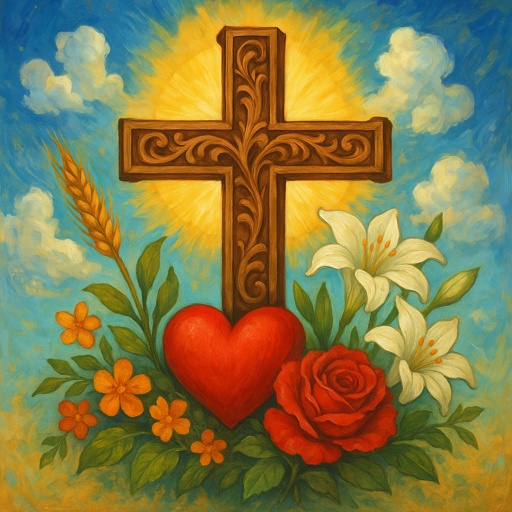
"And now abideth faith, hope, charity, these three; but the greatest of these is charity." - 1 Corinthians 13:13
"And now abideth faith, hope, charity, these three; but the greatest of these is charity." - 1 Corinthians 13:13

Une interprétation artistique numérique de 1 Corinthiens 13:13 : 'Et maintenant demeurent la foi, l'espérance, l'amour, ces trois ; mais la plus grande de ces choses est l'amour.' L'image illustre ces trois concepts abstraits sous forme de repères visuels tangibles, entrelacés et accompagnés de couleurs chaudes et vibrantes. Au milieu d'eux, l'amour est mis en avant, se distinguant comme l'élément le plus éclatant et le plus grand de la composition.

1 Corinthians 13:4-6

1 Corinthians 13:4-6

1 Corinthians 13:4-6

1 Corinthians 13:4-6

1 Corinthians 13:4-6

1 Corinthians 13:4-6

1 Corinthians 13:4-6

1 Corinthians 13:4-6

1 Corinthians 13

1 Corinthians 10:13

1 Corinthians 10:13

1 Corinthians 10:13

1 Corinthians 15:13 - "But if there be no resurrection of the dead, then is Christ not risen:"

1 Corinthians 13:6 - "Rejoiceth not in iniquity, but rejoiceth in the truth;"

1 Corinthians 12:12-13

1 Corinthians 12:3-13

1 Corinthians 13:4-7

1 Corinthians 13:4-7

1 Corinthians 13:4-7

1 Corinthians 13:4-7

1 Corinthians 13:9 - "For we know in part, and we prophesy in part."

1 Corinthians 1:13 - "Is Christ divided? was Paul crucified for you? or were ye baptized in the name of Paul?"

2 Corinthians 13:13 - "All the saints salute you."