The Kings of Edom: A Study of Leadership and Legacy
"¶ And these are the kings that reigned in the land of Edom, before there reigned any king over the children of Israel." - Genesis 36:31
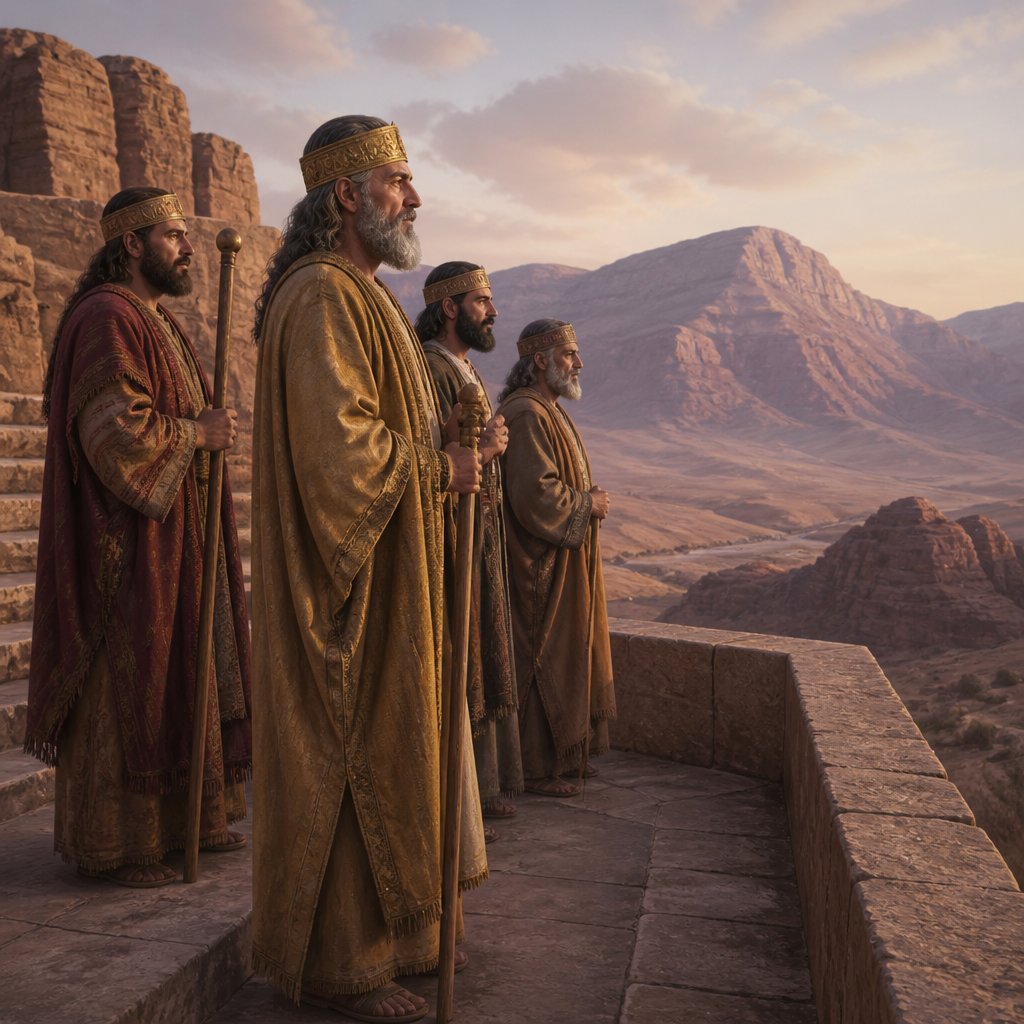
As we delve into Genesis 36:31, *"And these are the kings that reigned in the land of Edom, before there reigned any king over the children of Israel,"* we discover a verse that offers a profound exploration into the themes of leadership, legacy, and the significance of God's chosen people.
The verse illuminates a critical moment in the history of God's unfolding plan. It refers to the lineage of kings in Edom, a neighboring territory to Israel, long before the monarchy was ever established in Israel. This juxtaposition of rulers raises interesting reflections on sovereignty, divine purpose, and what it means to lead.
Edom, the land of Esau, exhibits a vibrant yet tumultuous legacy. The reign of its kings symbolizes both human ambition and earthly authority. At a surface level, we glean a historical account—an intriguing listing of rulers who governed before Israel's monarchy was instated. Kings came and went in Edom, marked by their temporal influence. Yet, what true value does this bring to our spiritual understanding today?
Leadership in itself is a complex concept. The kings of Edom were likely powerful and influential leaders in their society. They wielded authority, made decisions, and impacted the lives of their citizens. However, biblically speaking, we must consider how true leadership is defined not merely by power, but by faithfulness to God’s covenant and purpose. The distinction here is significant. The kings of Edom may have ruled with worldly wisdom, but their reign lacked the divine anointing and purpose that God granted to Israel’s kings.
It’s crucial to note that God had a plan for Israel that was centered around His divine kingship. The future kings of Israel—like Saul, David, and Solomon—would be governed by the laws and covenant established with God. They were to serve as both leaders and reflections of God’s governance on earth. In contrast, the Edomite kings, while politically potent, existed in a realm removed from that divine covenant, which ultimately constrains and shapes what true leadership looks like from a biblical perspective.
In our current society, we often find ourselves under various forms of leadership—political, spiritual, and even familial. Similar to the kings of Edom, many leaders today may prioritize their ambition over the divine truths of humility, servanthood, and sacrifice that God calls us to embody in our leadership roles. This comparison leads us to introspect: Are we emulating the leadership style of the kings of Edom, ruled by the fleeting priorities of this world, or are we striving to reflect the heart of God in how we lead others?
This weighs heavily in both our personal lives and communities. Whether you are a parent, a business leader, or a community organizer, the essence of leadership is rooted in how closely we align ourselves with God's will and how we serve those entrusted to our care. This calls us to engage not just in high-level decision-making, but also in nurturing relationships, demonstrating integrity, and reflecting the character of Christ in every interaction.
Moreover, the period of reign before Israel’s kings invites us to recognize that God’s appointed times are in essence ultimate. He had plans for Israel, but the process required patience and preparation. As we navigate the seasons of our lives and lead in various contexts, we should remember that God’s timing and purposes will always prevail, even when human leadership seems to take precedence.
As you meditate on Genesis 36:31, consider how you can align your leadership style with God’s Word. What does it mean to lead with integrity and faithfulness? How can we ensure our actions reflect the love and justice of God? Let us continuously seek to reign in our hearts under King Jesus, who exemplifies the perfect model of leadership—a leader who serves, loves, and sacrifices for the good of His people.
Want to reflect more on Genesis 36:31?
Continue your spiritual journey with Bible Chat — an AI-powered tool for exploring God's Word through conversation. Ask questions, discover connections, and deepen your understanding.
Get Our Apps


Genesis 36:31 Artwork

Genesis 36:31 - "¶ And these are the kings that reigned in the land of Edom, before there reigned any king over the children of Israel."
"¶ And these are the kings that reigned in the land of Edom, before there reigned any king over the children of Israel." - Genesis 36:31

Genesis 31:36 - "¶ And Jacob was wroth, and chode with Laban: and Jacob answered and said to Laban, What is my trespass? what is my sin, that thou hast so hotly pursued after me?"

Genesis 36:36 - "And Hadad died, and Samlah of Masrekah reigned in his stead."

Job 36:31 - "For by them judgeth he the people; he giveth meat in abundance."

Genesis 24:36

Genesis 19-36

Job 31:36 - "Surely I would take it upon my shoulder, and bind it as a crown to me."

Exodus 36:31 - "¶ And he made bars of shittim wood; five for the boards of the one side of the tabernacle,"

Genesis 36:28 - "The children of Dishan are these; Uz, and Aran."

"And Hadad died, and Samlah of Masrekah reigned in his stead." - Genesis 36:36

Genesis 36:27 - "The children of Ezer are these; Bilhan, and Zaavan, and Akan."

Genesis 36:3 - "And Bashemath Ishmael's daughter, sister of Nebajoth."

Genesis 36:19 - "These are the sons of Esau, who is Edom, and these are their dukes."

Genesis 36:1 - "Now these are the generations of Esau, who is Edom."

Genesis 21-31

Genesis 18-31

Genesis 31:35

Genesis 36:26 - "And these are the children of Dishon; Hemdan, and Eshban, and Ithran, and Cheran."

Genesis 36:42 - "Duke Kenaz, duke Teman, duke Mibzar,"

Genesis 36:9 - "¶ And these are the generations of Esau the father of the Edomites in mount Seir:"

Genesis 19-31

Genesis 24-31

Genesis 36:41 - "Duke Aholibamah, duke Elah, duke Pinon,"

Genesis 36:8 - "Thus dwelt Esau in mount Seir: Esau is Edom."

Genesis 19:36 - "Thus were both the daughters of Lot with child by their father."
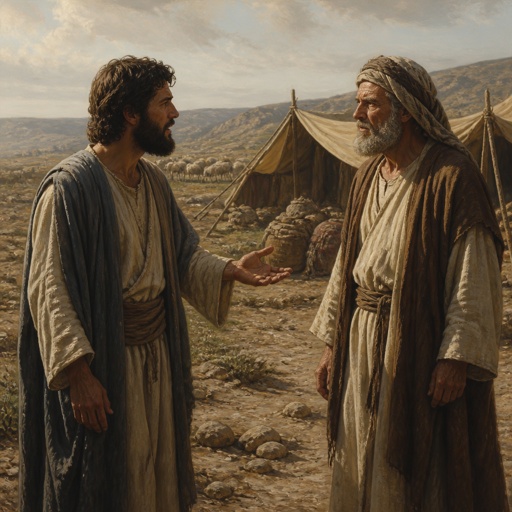
"¶ And Jacob was wroth, and chode with Laban: and Jacob answered and said to Laban, What is my trespass? what is my sin, that thou hast so hotly pursued after me?" - Genesis 31:36

Genesis 36:25 - "And the children of Anah were these; Dishon, and Aholibamah the daughter of Anah."

Genesis 36:4 - "And Adah bare to Esau Eliphaz; and Bashemath bare Reuel;"

Genesis 36:11 - "And the sons of Eliphaz were Teman, Omar, Zepho, and Gatam, and Kenaz."