Carved in Stone: A Reflection on Identity and Heritage
"And thou shalt take two onyx stones, and grave on them the names of the children of Israel:" - Exodus 28:9
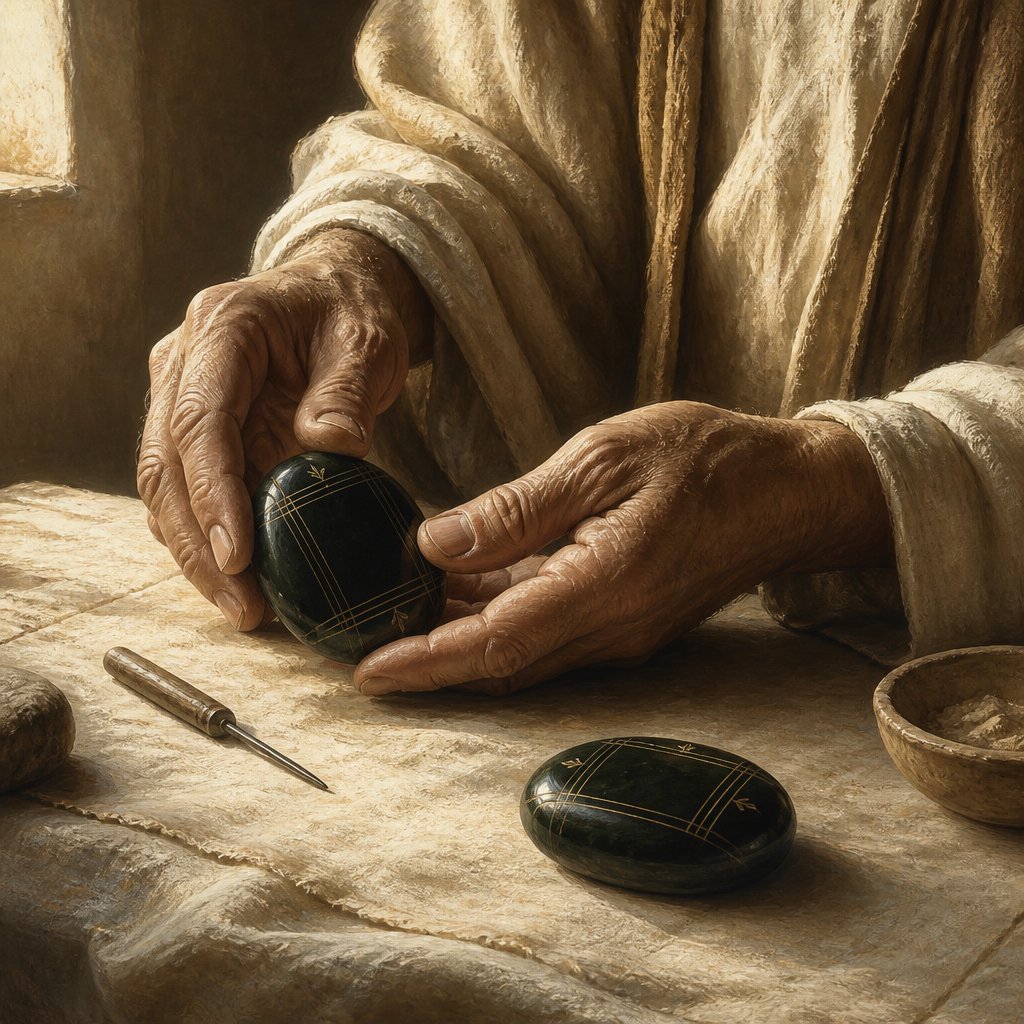
The book of Exodus stands as a pivotal testament to God’s deep longing for relationship with His people. One particular verse, Exodus 28:9, reads: "And thou shalt take two onyx stones, and grave on them the names of the children of Israel." This instruction was not merely about adornment for the high priest's breastplate; it was a profound call to remembrance, identity, and heritage.
In the broader context of Exodus 28, God is giving detailed instructions concerning the priestly garments for Aaron, the high priest. These garments were more than fabric and embellishments; they were deeply symbolic and laden with meaning. The two onyx stones were to serve as a permanent reminder of the twelve tribes of Israel. Each stone would bear the names of six tribes, signifying that the priest, as a mediator between the people and God, carried their identities before Him continually.
As we reflect on this verse, we can appreciate the significance of names and what they represent. Names carry weight. They encapsulate our heritage, our identity, and our belonging. When God instructed Moses to engrave the names of the children of Israel on these onyx stones, it was an acknowledgment of their unique place in His divine narrative. Just as the stones were engraved, our identities are etched in the very heart of God.
Consider for a moment the significance of the onyx stones. In ancient cultures, onyx was viewed as a stone of protection and strength. The choice of such a sturdy and valuable material implies that the names of God’s people are not only important, but they are also protected under His mighty hand. They are foundational to who they are. The high priest's physical bearing of these stones is a physical representation of God’s promise to never forget His people. In the same way, our names and stories matter in God's kingdom.
But engravings on rocks are more than just names; they are reminders of the stories of God's faithfulness. Every tribe bore not just a name, but a history of encounters with God. They carried narratives of deliverance, trials, and mercies. Each name told a story—a living testimony echoing the journey of the Israelites from slavery to freedom, from disobedience to covenant. These engraved names in God’s sight remind us that our past, with all its complexities, carries weight in our present spirituality. Just as the names on the stones connected the high priest to the people, our stories connect us to God's great narrative.
In our modern context, we too carry names and stories. Each of us has a family, a history, a legacy—we are the product of generations past, and our stories are interwoven with those who came before us. When God looks at us, He sees not just an isolated individual but a tapestry woven with rich and intricate threads of lineage, culture, trials, triumphs, and faith.
Moreover, the act of engraving implies permanence. In an age of rapid change and instability, it is comforting to know that our identities in Christ are not determined by transient circumstances or societal labels, but by His eternal love and call. God’s engraving of the names on onyx tells us that our belonging to Him transcends time, space, and culture.
As we meditate on Exodus 28:9, let us find solace in the truth that our identities are secure in God. Just as the high priest bore the names of the tribes close to his heart, God holds us dearly in His heart. Let us cherish our heritage, remind ourselves of the stories the Lord has woven through our lives, and honor Him by living out our identities faithfully.
Therefore, as we go forth, let us ensure that our lives reflect the names we carry as children of the most High. Let us engrave His truth on our hearts as we seek to live out the legacies of faithfulness, redemption, and love towards others. When we understand who we are in Christ—part of a chosen generation, a royal priesthood—we can walk boldly in the assurance that we, too, are engraved forever in His book of life.
Want to reflect more on Exodus 28:9?
Continue your spiritual journey with Bible Chat — an AI-powered tool for exploring God's Word through conversation. Ask questions, discover connections, and deepen your understanding.
Get Our Apps


Exodus 28:9 Artwork

Exodus 28:9 - "And thou shalt take two onyx stones, and grave on them the names of the children of Israel:"
"And thou shalt take two onyx stones, and grave on them the names of the children of Israel:" - Exodus 28:9

Exodus 9:28 - "Intreat the LORD (for it is enough) that there be no more mighty thunderings and hail; and I will let you go, and ye shall stay no longer."

Exodus 22:28

Exodus 28:4

Exodus 22:28

Exodus 23:28

Exodus 32:28

Exodus 22:28

Exodus 22:28

Exodus 22:28

exodus 28 ephod

Exodus 28:4

Exodus 28:4

Exodus 22:28

Exodus 28:4

Exodus 22:28

Exodus 22:28

Exodus 22:28

Exodus 22:28

Exodus 22:28

Exodus 23:28

Exodus 22:28

Exodus 22:28

Exodus 22:28

Exodus 28:30-43

Exodus 28:31-43

Exodus 28:31-34

Exodus 23:27-28

Exodus 28:15-30