A Prayer for Legacy and Faithfulness
"And Maaseiah the son of Baruch, the son of Col-hozeh, the son of Hazaiah, the son of Adaiah, the son of Joiarib, the son of Zechariah, the son of Shiloni." - Nehemiah 11:5
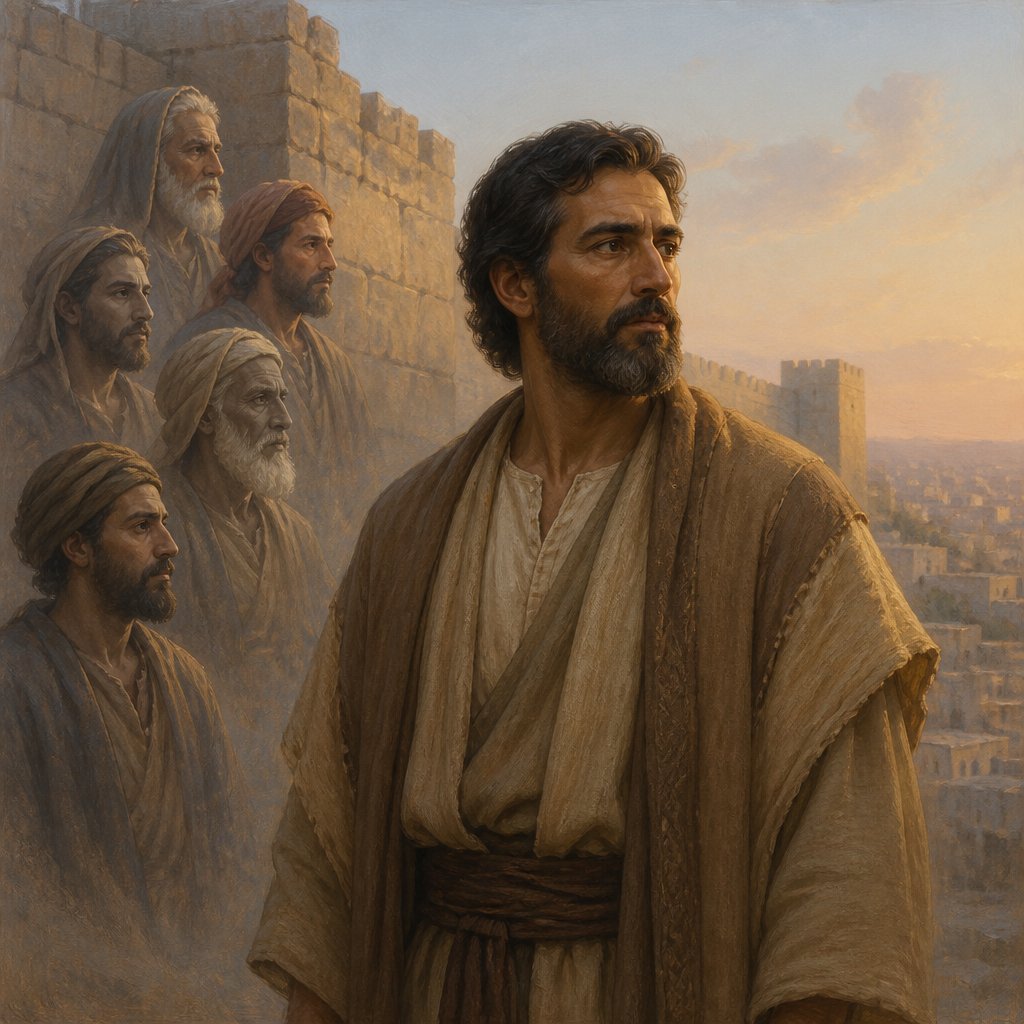
O Lord our God,
As I come before You today, I am reminded of the lineage of faithful servants recorded in Nehemiah 11:5, where it is written, "And Maaseiah the son of Baruch, the son of Col-hozeh, the son of Hazaiah, the son of Adaiah, the son of Joiarib, the son of Zechariah, the son of Shiloni." In these names, I see a tapestry woven with dedication, commitment, and devotion to Your mission, O God. Each name reflects a life lived in service to You and a legacy of faithfulness that has endured through generations.
Heavenly Father, as I meditate on this lineage, I ask that You instill in my heart a desire to build a legacy of faith in my family and community. I pray for the strength of Maaseiah, who, despite the challenges of his time, did not shy away from his heritage, nor the responsibilities that came with it. Empower me, Lord, to stand firm in my faith, to honor those who have come before me, and to cultivate a spirit of perseverance and commitment in my own life.
Lord, help me to recognize that I am a part of a great cloud of witnesses, just as Maaseiah was part of a lineage that led to noble service in Your kingdom. Let me take my place with humility and reverence, knowing that my actions today will resonate with my descendants tomorrow. As I seek to advance Your kingdom here on earth, remind me that every small act of faithfulness contributes to a greater story—Your story.
I pray for the spirit of Baruch, who led with a heart of obedience and integrity. May I exemplify the same willingness to be used by You, Lord. Each descendant in this lineage played a vital role in maintaining the faith and the practices that defined their people. In a world so often distracted by the urgency of the present, may I remain anchored in the teachings of Scripture and let them guide my decisions and actions.
In times of uncertainty, I look to the faith of Col-hozeh, who stood as a pillar among his people. Lord, grant me strength to be a pillar as well. Help me to support those around me in their spiritual journeys. May my life reflect Your light in whatever community You'veplaced me in, and let my faith be a refuge for others.
I think of Hazaiah and Adaiah, who surely faced trials of their own. In their names, I see a reminder of Your faithfulness through the ages. As I navigate my own challenges, let me draw strength from their legacy. Help me to trust in Your promises, which are as eternal as the generations that have come before me. Your providence was evident in their lives, and I pray to see that same providence unfolding in my circumstances.
Guide me in the path of Joiarib, who, alongside his lineage, upheld the standards of the faith. Teach me to live my life with a commitment to holiness and righteousness, to be someone who inspires others to pursue a deeper relationship with You. Let my words and my conduct reflect the truth of Your Gospel, drawing others closer to Your heart.
Lastly, Lord, I take inspiration from Zechariah and Shiloni. They represent the importance of connection and community in our worship. I earnestly pray for a spirit of unity within my church and within my family. Encourage us to join together in faith, supporting one another as brothers and sisters in Christ, building each other up in love and faithfulness.
I lift all these prayers to You, O God, knowing that You are the God of generations. May I follow in the steps of those who have laid the groundwork before me, and may You be glorified through all that I do. Help me to remember the significance of legacy and the call to be faithful servants in my own time.
In the name of Jesus, I pray,
Amen.
Want to pray more deeply over Nehemiah 11:5?
Explore this scripture further with Bible Chat — an AI-powered tool for diving deeper into God's Word through conversation. Ask questions, find related verses, and enrich your faith.
Get Our Apps


Nehemiah 11:5 Artwork

Nehemiah 11:5 - "And Maaseiah the son of Baruch, the son of Col-hozeh, the son of Hazaiah, the son of Adaiah, the son of Joiarib, the son of Zechariah, the son of Shiloni."
"And Maaseiah the son of Baruch, the son of Col-hozeh, the son of Hazaiah, the son of Adaiah, the son of Joiarib, the son of Zechariah, the son of Shiloni." - Nehemiah 11:5

Nehemiah 5:11 - "Restore, I pray you, to them, even this day, their lands, their vineyards, their oliveyards, and their houses, also the hundredth part of the money, and of the corn, the wine, and the oil, that ye exact of them."

Nehemiah 11:11-14

Nehemiah 11:13

Nehemiah 11:1-19

A biblical scene from Nehemiah 1:5-11 - Nehemiah, a Caucasian male in middle-eastern garb, is depicted respectfully requesting time from the king, a Middle-Eastern male seated on a throne. He is asking for the opportunity to return to Judah and help his people build a wall. The setting is a grand royal court marked by golden hues, opulent textiles, and architecturally rich columns. Nehemiah is the king's servant.

A biblical scene from Nehemiah 1:5-11 - Nehemiah, a Caucasian male in middle-eastern garb, is depicted respectfully requesting time from the king, a Middle-Eastern male seated at the dinner table while Nehemiah is serving his drink. He is asking for the opportunity to return to Judah and help his people build a wall. The setting is a grand royal court marked by golden hues, opulent textiles, and architecturally rich columns.

A biblical scene from Nehemiah 1:5-11 - Nehemiah, a middle-age Caucasian male in middle-eastern garb, is serving a drink to the Persian king, a Middle-Eastern male seated at the dinner table. The setting is a grand royal court marked by golden hues, opulent textiles, and architecturally rich columns.

A biblical scene from Nehemiah 1:5-11 - Nehemiah, a Caucasian male in middle-eastern garb, is depicted respectfully requesting time from the king, a Middle-Eastern male seated at the dinner table while Nehemiah is serving his drink. He is asking for the opportunity to return to Judah and help his people build a wall. The setting is a grand royal court marked by golden hues, opulent textiles, and architecturally rich columns.

A biblical scene from Nehemiah 1:5-11 - Nehemiah, a middle-age Caucasian male in middle-eastern garb and simple headdress, is standing, serving a drink to the Persian king, a Middle-Eastern male seated at the dinner table. The setting is a grand royal court marked by golden hues, opulent textiles, and architecturally rich columns.

A biblical scene from Nehemiah 1:5-11 - Nehemiah, a Caucasian male in middle-eastern garb, is depicted respectfully requesting time from the king, a Middle-Eastern male seated on a throne. He is asking for the opportunity to return to Judah and help his people build a wall. The setting is a grand royal court marked by golden hues, opulent textiles, and architecturally rich columns. Only the king and Nehemiah, the king's cup bearer, are in the room.

A biblical scene from Nehemiah 1:5-11 - Nehemiah, a middle-age Caucasian male in middle-eastern garb, is standing, serving a drink to the Persian king, a Middle-Eastern male seated at the dinner table. The setting is a grand royal court marked by golden hues, opulent textiles, and architecturally rich columns.

A biblical scene from Nehemiah 1:5-11 - Nehemiah, a Caucasian male in middle-eastern garb, is depicted respectfully requesting time from the king, a Middle-Eastern male seated at the dinner table while Nehemiah is serving his drink. He is asking for the opportunity to return to Judah and help his people build a wall. The setting is a grand royal court marked by golden hues, opulent textiles, and architecturally rich columns.

Nehemiah 11:34 - "Hadid, Zeboim, Neballat,"

Nehemiah 10:11 - "Micha, Rehob, Hashabiah,"

Nehemiah 11:33 - "Hazor, Ramah, Gittaim,"

Nehemiah 11:32 - "And at Anathoth, Nob, Ananiah,"

Nehemiah 11:26 - "And at Jeshua, and at Moladah, and at Beth-phelet,"

Nehemiah 11:29 - "And at En-rimmon, and at Zareah, and at Jarmuth,"

Nehemiah 10:5 - "Harim, Meremoth, Obadiah,"

Nehemiah 12:5 - "Miamin, Maadiah, Bilgah,"

Nehemiah 11:35 - "Lod, and Ono, the valley of craftsmen."

Nehemiah 11:28 - "And at Ziklag, and at Mekonah, and in the villages thereof,"

A biblical scene from Nehemiah 1:5-11 - Nehemiah, a Caucasian male in middle-eastern garb, is depicted respectfully requesting time from the king, a Middle-Eastern male seated on a throne. He is asking for the opportunity to return to Judah and help his people build a wall. The setting is a grand royal court marked by golden hues, opulent textiles, and architecturally rich columns.

Nehemiah 11:36 - "And of the Levites were divisions in Judah, and in Benjamin."

Nehemiah 11:10 - "Of the priests: Jedaiah the son of Joiarib, Jachin."

Nehemiah 12:11 - "And Joiada begat Jonathan, and Jonathan begat Jaddua."

Nehemiah 11:27 - "And at Hazar-shual, and at Beer-sheba, and in the villages thereof,"

Nehemiah 2:11 - "So I came to Jerusalem, and was there three days."