What does Zechariah 12:5 mean?
"And the governors of Judah shall say in their heart, The inhabitants of Jerusalem shall be my strength in the LORD of hosts their God." - Zechariah 12:5
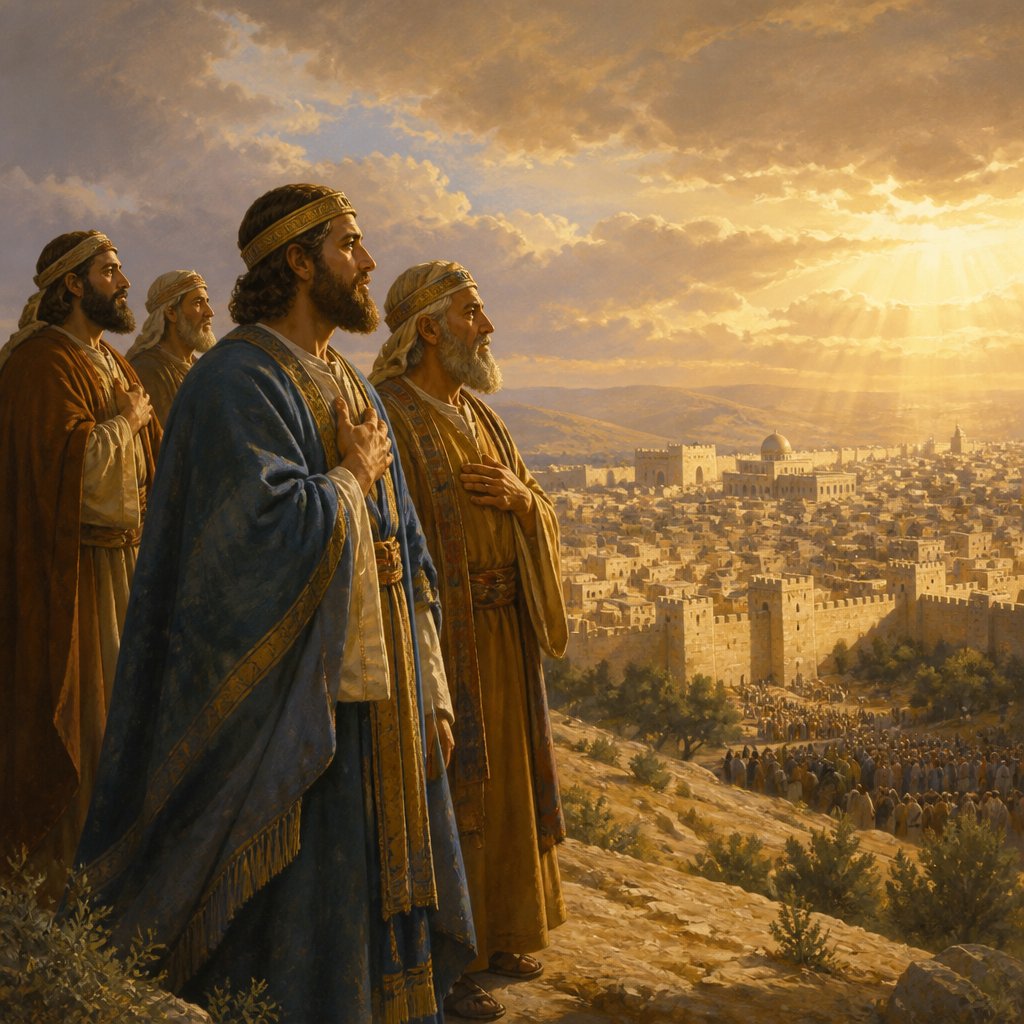
Zechariah 12:5 (KJV) states, "And the governors of Judah shall say in their heart, The inhabitants of Jerusalem shall be my strength in the Lord of hosts their God."
This verse is part of the book of Zechariah, which is one of the Old Testament books of the Bible. The book was written by the prophet Zechariah, who was called by God to bring a message of hope and encouragement to the Jewish people who had returned from exile in Babylon. The context of this verse is a prophecy about the future of Jerusalem and Judah, foretelling the restoration and redemption that will come to God's chosen people.
The verse begins with the mention of the "governors of Judah," which can be interpreted to refer to the leaders and rulers of the land. The phrase "shall say in their heart" indicates that the sentiment being expressed is one of deep conviction and belief. It signifies the inner resolve and commitment of the leaders to stand by a particular principle or truth.
The verse goes on to declare, "The inhabitants of Jerusalem shall be my strength in the Lord of hosts their God." This statement carries deep significance and is rich in symbolism. The mention of "the inhabitants of Jerusalem" is a direct reference to the people who reside in the holy city, representing the collective body of believers and worshippers of God. Jerusalem, as the capital of Judah and the site of the temple, holds immense spiritual and symbolic significance in the biblical narrative.
The phrase "shall be my strength" conveys the idea of reliance and empowerment. It suggests that the people of Jerusalem will serve as a source of support and fortitude for the rulers of Judah. This support is not merely physical or political but is rooted in their shared faith and devotion to the Lord of hosts, their God.
The concluding phrase, "in the Lord of hosts their God," underscores the ultimate source of strength and power for the people of Judah and Jerusalem. The title "Lord of hosts" denotes God's sovereignty and authority over the heavenly armies, signifying His divine power and protection. The affirmation that He is "their God" establishes a personal and covenantal relationship between God and His people, emphasizing their mutual dependence and loyalty.
One of the key themes in this verse is the interconnectedness of the political and spiritual realms. The governors of Judah, as the secular leaders, are acknowledging the spiritual strength and support they receive from the inhabitants of Jerusalem, who are characterized by their faith in God. This highlights the importance of a unified and symbiotic relationship between the temporal and the eternal, the earthly and the divine. It also underscores the principle of servant leadership, as the rulers recognize their need for the spiritual resilience and conviction of the people they govern.
Another theme is the idea of collective strength and solidarity. The verse portrays a sense of unity and mutual reinforcement among the people of Judah and Jerusalem. It reflects the biblical concept of the body of believers functioning as a cohesive and interdependent community, drawing strength and resilience from their shared devotion to God. This theme resonates with the broader message of the book of Zechariah, which emphasizes the restoration and unity of God's chosen people.
Symbolically, this verse embodies the spiritual principles of trust, reliance, and divine empowerment. It portrays a vision of a community bound together by their faith in God and their commitment to His purposes. The reference to Jerusalem, as the epicenter of religious life and worship, symbolizes the spiritual heart of the nation and the focal point of God's redemptive work.
In conclusion, Zechariah 12:5 conveys a message of hope and confidence in God's ultimate sovereignty and the collective strength of His people. It speaks to the inseparable link between faith and leadership, the power of communal solidarity, and the abiding trust in the Lord as the source of strength and protection. As believers, we can draw inspiration from this verse to cultivate a deeper sense of mutual support and reliance on God, recognizing that our strength lies in our unwavering commitment to Him.
Have questions about Zechariah 12:5?
Dive deeper into this scripture with Bible Chat — an AI-powered tool for exploring God's Word through conversation. Ask questions, get context, and grow in your understanding of the Bible.
Get Our Apps


Zechariah 12:5 Artwork

Zechariah 12:5 - "And the governors of Judah shall say in their heart, The inhabitants of Jerusalem shall be my strength in the LORD of hosts their God."
"And the governors of Judah shall say in their heart, The inhabitants of Jerusalem shall be my strength in the LORD of hosts their God." - Zechariah 12:5

Nehemiah 12:16 - "Of Iddo, Zechariah; of Ginnethon, Meshullam;"

Zechariah 1:5 - "Your fathers, where are they? and the prophets, do they live for ever?"

Zechariah 12:14 - "All the families that remain, every family apart, and their wives apart."

Zechariah 12:11 - "In that day shall there be a great mourning in Jerusalem, as the mourning of Hadadrimmon in the valley of Megiddon."

"Of Iddo, Zechariah; of Ginnethon, Meshullam;" - Nehemiah 12:16

Nehemiah 12:41 - "And the priests; Eliakim, Maaseiah, Miniamin, Michaiah, Elioenai, Zechariah, and Hananiah, with trumpets;"

Zechariah 8:5 - "And the streets of the city shall be full of boys and girls playing in the streets thereof."

Zechariah 5:7 - "And, behold, there was lifted up a talent of lead: and this is a woman that sitteth in the midst of the ephah."

Zechariah 5:10 - "Then said I to the angel that talked with me, Whither do these bear the ephah?"

Zechariah 12:12 - "And the land shall mourn, every family apart; the family of the house of David apart, and their wives apart; the family of the house of Nathan apart, and their wives apart;"

Zechariah 5:5 - "¶ Then the angel that talked with me went forth, and said unto me, Lift up now thine eyes, and see what is this that goeth forth."

Zechariah 5:1 - "Then I turned, and lifted up mine eyes, and looked, and behold a flying roll."

Zechariah 12:13 - "The family of the house of Levi apart, and their wives apart; the family of Shimei apart, and their wives apart;"

Zechariah 10:12 - "And I will strengthen them in the LORD; and they shall walk up and down in his name, saith the LORD."

Zechariah 2:12 - "And the LORD shall inherit Judah his portion in the holy land, and shall choose Jerusalem again."

Zechariah 12:9 - "¶ And it shall come to pass in that day, that I will seek to destroy all the nations that come against Jerusalem."

1 Chronicles 5:7 - "And his brethren by their families, when the genealogy of their generations was reckoned, were the chief, Jeiel, and Zechariah,"

Zechariah 2:5 - "For I, saith the LORD, will be unto her a wall of fire round about, and will be the glory in the midst of her."

Luke 1:11-12

Zechariah 5:8 - "And he said, This is wickedness. And he cast it into the midst of the ephah; and he cast the weight of lead upon the mouth thereof."

Zechariah 4:5 - "Then the angel that talked with me answered and said unto me, Knowest thou not what these be? And I said, No, my lord."

Zechariah 5:6 - "And I said, What is it? And he said, This is an ephah that goeth forth. He said moreover, This is their resemblance through all the earth."

Zechariah 5:11 - "And he said unto me, To build it an house in the land of Shinar: and it shall be established, and set there upon her own base."

"Your fathers, where are they? and the prophets, do they live for ever?" - Zechariah 1:5

Zechariah 9:12 - "¶ Turn you to the strong hold, ye prisoners of hope: even to day do I declare that I will render double unto thee;"

Nehemiah 12:35 - "And certain of the priests' sons with trumpets; namely, Zechariah the son of Jonathan, the son of Shemaiah, the son of Mattaniah, the son of Michaiah, the son of Zaccur, the son of Asaph:"

Nehemiah 11:5 - "And Maaseiah the son of Baruch, the son of Col-hozeh, the son of Hazaiah, the son of Adaiah, the son of Joiarib, the son of Zechariah, the son of Shiloni."

Zechariah 13:5 - "But he shall say, I am no prophet, I am an husbandman; for man taught me to keep cattle from my youth."