What does Song of Solomon 8:7 mean?
"Many waters cannot quench love, neither can the floods drown it: if a man would give all the substance of his house for love, it would utterly be contemned." - Song of Solomon 8:7
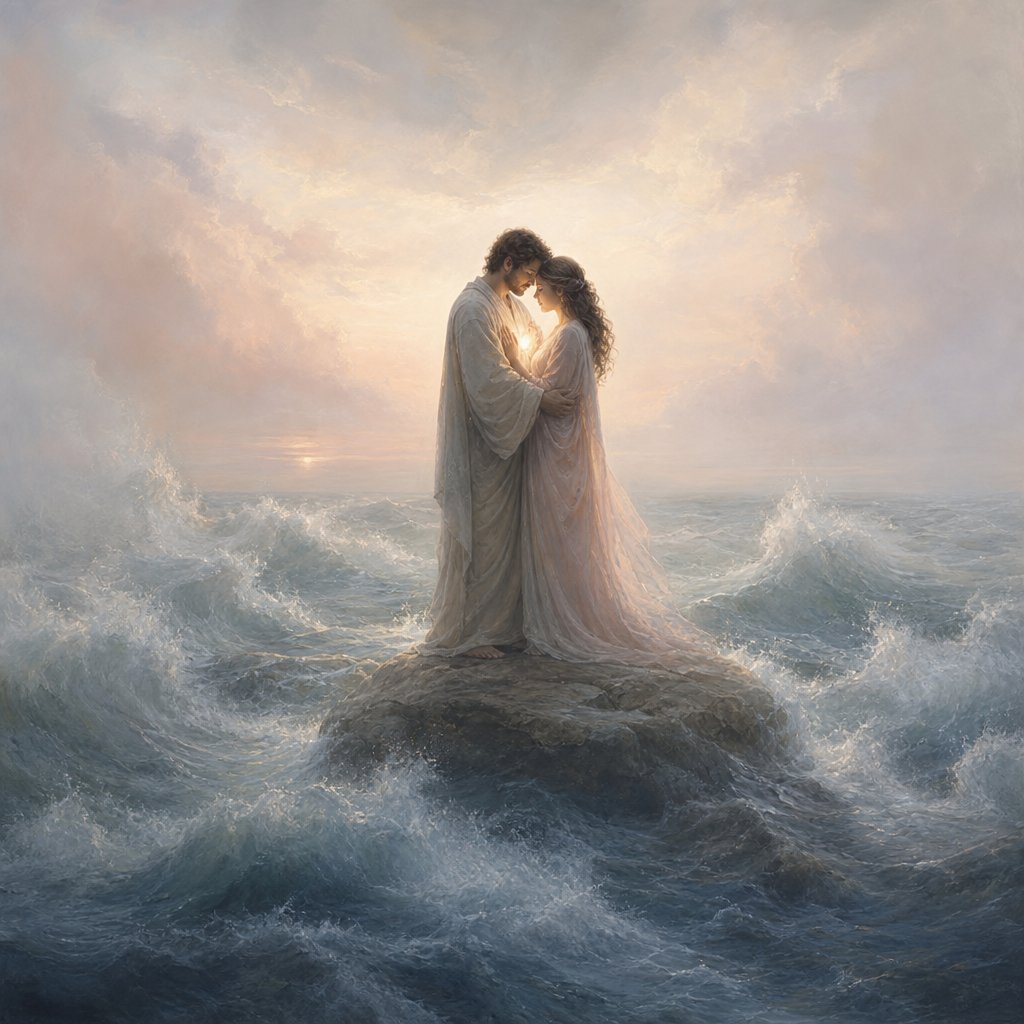
Song of Solomon 8:7 in the KJV reads, “Many waters cannot quench love, neither can the floods drown it: if a man would give all the substance of his house for love, it would utterly be contemned.”
In its immediate context, these words belong to the closing movement of the Song, where the beloved has been speaking with a steadiness and finality that sounds like a settled testimony. Just before this verse she has said, “Set me as a seal upon thine heart, as a seal upon thine arm: for love is strong as death; jealousy is cruel as the grave: the coals thereof are coals of fire, which hath a most vehement flame” (Song of Solomon 8:6). Then comes 8:7 as the continuation and enlargement of that claim. Taken together, the passage is not describing a passing attraction, but a love presented as binding, total, and enduring—marked like a “seal” upon the inner life (“heart”) and upon outward strength and action (“arm”). Verse 7 supplies two proof-images: love’s endurance against overwhelming forces, and love’s inestimable worth against any attempt to buy it.
The first clause, “Many waters cannot quench love, neither can the floods drown it,” uses the imagery of water in its most threatening form. “Many waters” and “floods” evoke not a gentle stream but a deluge—great pressures, trials, distances, oppositions, sufferings, or any circumstances that would normally extinguish a flame or sweep away what is fragile. Yet love here is pictured as something like the “coals of fire” and the “most vehement flame” of 8:6: it burns with a force that cannot be put out by external torrents. The symbolism works on two levels at once. On the surface, it speaks of marital or covenantal love that outlasts hardship: the relationship may meet storms, but true love is not simply the product of easy conditions, so it does not collapse when conditions become violent. At the same time, the Song consistently speaks in heightened poetry, so the language suggests more than mere survival; it suggests triumph. The waters do not merely fail to destroy love; they are powerless to do so. Love is presented as having an inherent strength, not a borrowed strength from favorable circumstances.
The second clause, “if a man would give all the substance of his house for love, it would utterly be contemned,” turns from forces of disaster to the force of wealth. “All the substance of his house” means the totality of a person’s goods, property, and resources—everything that can be counted, weighed, or owned. The verse does not say such a gift would be inadequate; it says it would be “utterly… contemned,” despised and rejected as an insult. This is crucial to the meaning. The Song is not merely claiming that love is expensive or rare; it is asserting that love belongs to a different order of value than possessions. It cannot be purchased without corrupting its nature. If someone tries to secure love by payment, the attempt is not only futile; it is morally out of place, treating a sacred reality as a commodity. In the world of the Song, love is personal, free, and covenantal; it is given, not bought. The contempt arises because the offer misunderstands what love is. To put a price on it is to cheapen it.
These two images together—waters that cannot quench and wealth that cannot buy—frame love as both unkillable and priceless. The verse’s significance is that it places love beyond two of the strongest “powers” people fear or trust: overwhelming circumstance and material power. The floods represent all that threatens to erase what we cherish; the substance of a house represents all that we might use to secure what we desire. The beloved declares that neither category has final authority over love. It does not die when threatened, and it does not yield when bribed.
Within the Song as a whole, which celebrates desire, delight, mutual belonging, and faithful longing between bride and bridegroom, 8:7 functions like a culminating statement of what their bond means. Earlier refrains in the book guard love from being forced or mishandled (“I charge you… that ye stir not up, nor awake my love, till he please,” Song of Solomon 2:7; 3:5; 8:4). That emphasis on love’s proper season and freedom fits perfectly with 8:7’s insistence that love cannot be manufactured by external pressure or purchased by external means. The lovers seek one another, endure absence, overcome obstacles, and finally speak as those who have tested love and found it stronger than what threatened it.
Because the Song is Scripture and is written with the kind of poetry that invites layers, many readers also hear in this verse an echo of the steadfast love of God—love that cannot be extinguished by the floods of affliction and cannot be reduced to a transaction. Even without leaving the KJV text of the Song, the verse itself supports such a meditation: love is depicted with absolutes and with covenantal imagery (“seal”), and it is contrasted with all “substance,” as though the highest treasures cannot purchase what love freely gives. In that light, 8:7 can be read as a testimony that true love—whether in the covenant of marriage or as a figure of divine love—has a durability that outlasts chaos and a purity that refuses to be commercialized.
So Song of Solomon 8:7 is a poetic climax: love is a flame that floods cannot drown and a gift that riches cannot buy. It teaches that love’s strength is not measured by comfort, and its worth is not measured by money. It is revealed as enduring, incomparable, and sacred—something to be treasured, guarded, and honored as beyond price.
Have questions about Song of Solomon 8:7?
Dive deeper into this scripture with Bible Chat — an AI-powered tool for exploring God's Word through conversation. Ask questions, get context, and grow in your understanding of the Bible.
Get Our Apps


Song of Solomon 8:7 Artwork

"Many waters cannot quench love, neither can the floods drown it: if a man would give all the substance of his house for love, it would utterly be contemned." - Song of Solomon 8:7

Song of Solomon 8:7 - "Many waters cannot quench love, neither can the floods drown it: if a man would give all the substance of his house for love, it would utterly be contemned."
"Many waters cannot quench love, neither can the floods drown it: if a man would give all the substance of his house for love, it would utterly be contemned." - Song of Solomon 8:7

Song of Solomon 8:3 - "His left hand should be under my head, and his right hand should embrace me."

Song of Solomon 7:7 - "This thy stature is like to a palm tree, and thy breasts to clusters of grapes."

Song of Solomon 6:8 - "There are threescore queens, and fourscore concubines, and virgins without number."

Song of Solomon 8:14 - "¶ Make haste, my beloved, and be thou like to a roe or to a young hart upon the mountains of spices."

Song of Solomon 8:13 - "Thou that dwellest in the gardens, the companions hearken to thy voice: cause me to hear it."

Song of Solomon 7:8 - "I said, I will go up to the palm tree, I will take hold of the boughs thereof: now also thy breasts shall be as clusters of the vine, and the smell of thy nose like apples;"

Song of Solomon 6:7 - "As a piece of a pomegranate are thy temples within thy locks."
Song of Solomon 4:7 - "Thou art all fair, my love; there is no spot in thee."

Song of Solomon 7:3 - "Thy two breasts are like two young roes that are twins."

Song of Solomon 7:10 - "¶ I am my beloved's, and his desire is toward me."

Song of Solomon 8:4 - "I charge you, O daughters of Jerusalem, that ye stir not up, nor awake my love, until he please."

Song of Solomon 7:6 - "How fair and how pleasant art thou, O love, for delights!"
Song of Solomon 8:10 - "I am a wall, and my breasts like towers: then was I in his eyes as one that found favour."

Song of Solomon 8:12 - "My vineyard, which is mine, is before me: thou, O Solomon, must have a thousand, and those that keep the fruit thereof two hundred."

Song of Solomon 8:8 - "¶ We have a little sister, and she hath no breasts: what shall we do for our sister in the day when she shall be spoken for?"

Song of Solomon 3:7 - "Behold his bed, which is Solomon's; threescore valiant men are about it, of the valiant of Israel."

Song of Solomon 8:11 - "Solomon had a vineyard at Baal-hamon; he let out the vineyard unto keepers; every one for the fruit thereof was to bring a thousand pieces of silver."

Song of Solomon 2:8 - "¶ The voice of my beloved! behold, he cometh leaping upon the mountains, skipping upon the hills."

Song of Solomon 7:11 - "Come, my beloved, let us go forth into the field; let us lodge in the villages."

Song of Solomon 1:1 - "The song of songs, which is Solomon's."
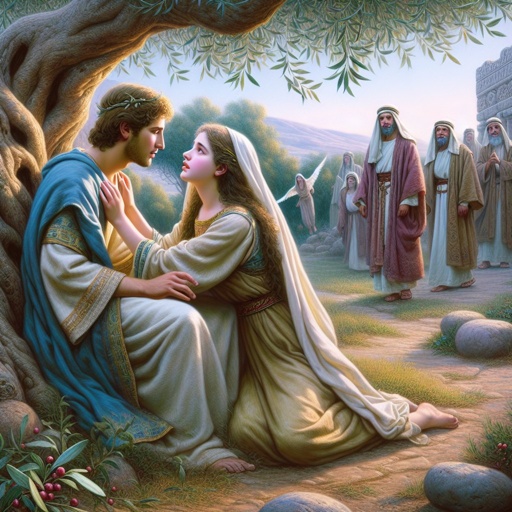
Song of Solomon 8:1 - "O that thou wert as my brother, that sucked the breasts of my mother! when I should find thee without, I would kiss thee; yea, I should not be despised."

Song of Solomon 8:2 - "I would lead thee, and bring thee into my mother's house, who would instruct me: I would cause thee to drink of spiced wine of the juice of my pomegranate."
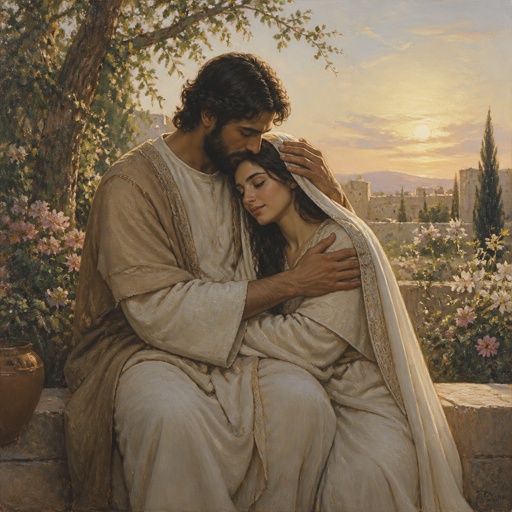
"His left hand should be under my head, and his right hand should embrace me." - Song of Solomon 8:3

"Set me as a seal upon thine heart, as a seal upon thine arm: for love is strong as death; jealousy is cruel as the grave: the coals thereof are coals of fire, which hath a most vehement flame." - Song of Solomon 8:6
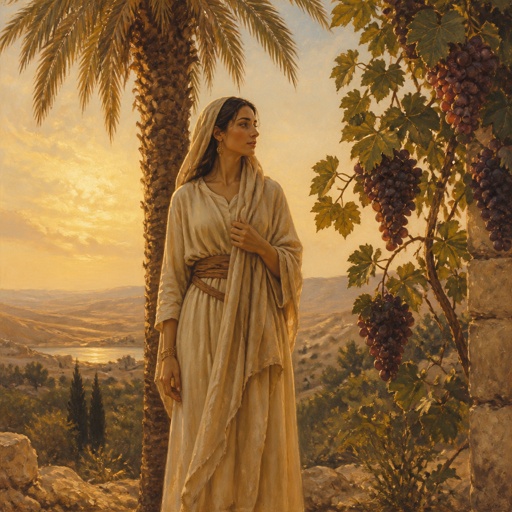
"This thy stature is like to a palm tree, and thy breasts to clusters of grapes." - Song of Solomon 7:7

Song of Solomon 7:5 - "Thine head upon thee is like Carmel, and the hair of thine head like purple; the king is held in the galleries."

Song of Solomon 8:9 - "If she be a wall, we will build upon her a palace of silver: and if she be a door, we will inclose her with boards of cedar."