What does Song of Solomon 5:3 mean?
"I have put off my coat; how shall I put it on? I have washed my feet; how shall I defile them?" - Song of Solomon 5:3
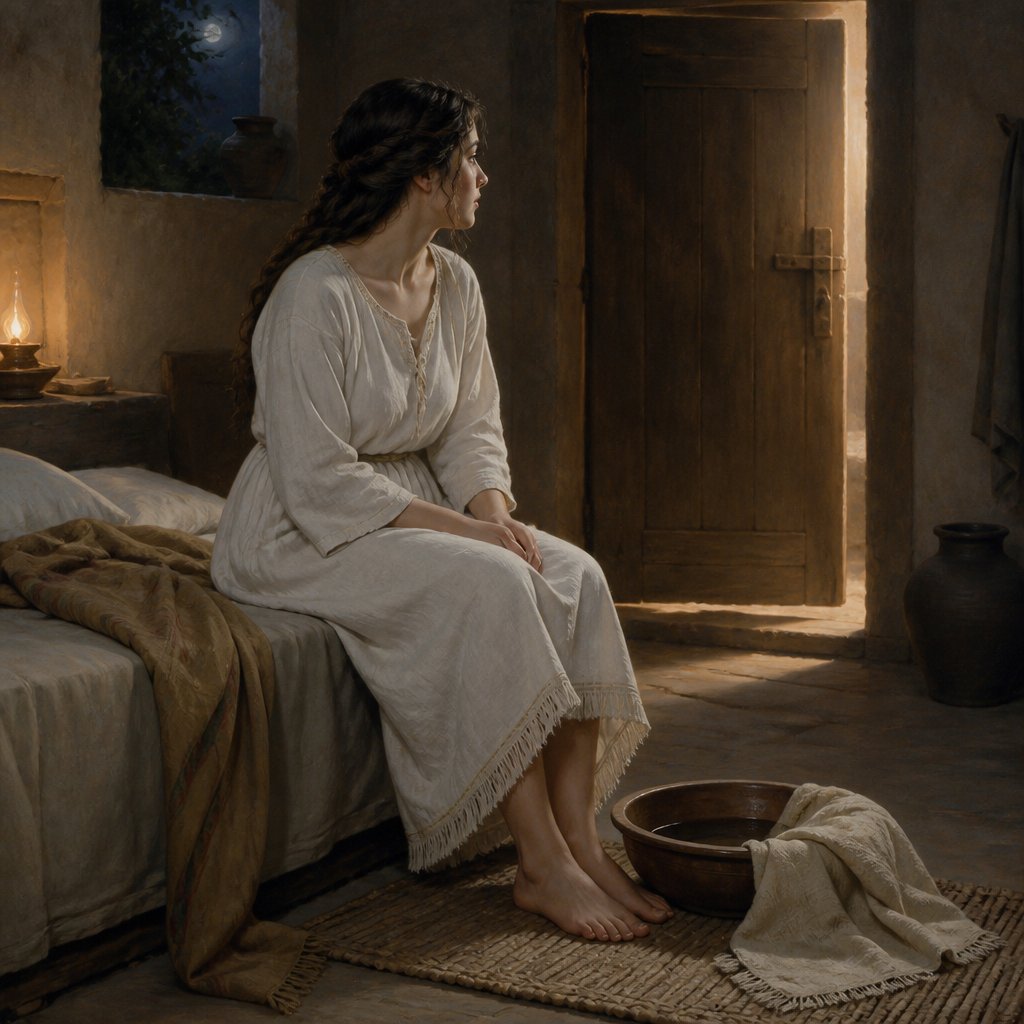
Song of Solomon 5:3 in the King James Version reads, "I have put off my coat; how shall I put it on? I have washed my feet; how shall I defile them?" This verse is part of the love poetry found in the Song of Solomon, also known as the Song of Songs, which is a unique book in the Bible that celebrates love and the intimacy between a bride and a bridegroom. The Song of Solomon is traditionally attributed to King Solomon, and it is filled with imagery and metaphors that celebrate the beauty of romantic love.
The verse, on a literal level, appears to be the bride's lament. She has prepared herself for bed, and when her beloved comes to her, she hesitates to get up and open the door. She has already removed her coat and washed her feet, and she is hesitant to soil herself again by getting up. In a broader sense, this verse can be interpreted as the bride expressing her longing for her beloved. She desperately wants to be with him, but she is hesitant to abandon the routine of comfort and cleanliness she has prepared for herself.
On a deeper level, this verse can also be symbolic of the bride's hesitation and doubt about her own worthiness and readiness for love. She may be concerned about her own flaws and shortcomings, and afraid to expose her vulnerabilities to her beloved. This verse may also reflect the fear of intimacy and the struggle to balance personal boundaries with the desire for closeness and connection.
In the larger context of the Song of Solomon, this verse is part of a larger poem describing the bride's longing for her beloved and their eventual reunion. The entire book is filled with rich and vivid imagery that conveys both the intensity of the bride and groom's love for each other, as well as the challenges and obstacles they face in their relationship. The imagery of washing and clothing in this verse may also symbolize the purity and preparation of the bride, and her concern for maintaining that purity in the face of her beloved's arrival.
This verse also highlights the tension between the physical and the spiritual in the context of love and intimacy. The bride's physical preparations—removing her coat and washing her feet—reflect her attention to bodily cleanliness and comfort. However, her hesitation to defile herself again indicates a concern for spiritual purity as well. In the larger context of the book, this tension between the physical and the spiritual reflects the complexity of love and the challenge of maintaining both physical and spiritual intimacy in a relationship.
Overall, Song of Solomon 5:3 is a powerful and evocative verse that captures the tension, longing, and uncertainty that often accompany deep love and desire. The verse's imagery and symbolism convey the bride's hesitation and vulnerability, and it resonates with readers as a reflection of the universal human experience of yearning for love while struggling with doubt and self-worth. As with much of the Song of Solomon, this verse invites readers to contemplate the complexity of human relationships and the depth of human emotions, and to celebrate the beauty and challenges of romantic love.
Have questions about Song of Solomon 5:3?
Dive deeper into this scripture with Bible Chat — an AI-powered tool for exploring God's Word through conversation. Ask questions, get context, and grow in your understanding of the Bible.
Get Our Apps


Song of Solomon 5:3 Artwork

Song of Solomon 5:3 - "I have put off my coat; how shall I put it on? I have washed my feet; how shall I defile them?"
"I have put off my coat; how shall I put it on? I have washed my feet; how shall I defile them?" - Song of Solomon 5:3

Song of Solomon 5:11

Song of Solomon 3:9 - "King Solomon made himself a chariot of the wood of Lebanon."

Song of Solomon 2:3

Song of Solomon 3:4

Song of Solomon 5:10 - "My beloved is white and ruddy, the chiefest among ten thousand."

Song of Solomon 1:5 - "I am black, but comely, O ye daughters of Jerusalem, as the tents of Kedar, as the curtains of Solomon."

Song of Solomon 3:5 - "I charge you, O ye daughters of Jerusalem, by the roes, and by the hinds of the field, that ye stir not up, nor awake my love, till he please."

Song of Solomon 5:11 - "His head is as the most fine gold, his locks are bushy, and black as a raven."

"My beloved is white and ruddy, the chiefest among ten thousand." - Song of Solomon 5:10

Song of Solomon 5:12 - "His eyes are as the eyes of doves by the rivers of waters, washed with milk, and fitly set."

Song of Solomon 5:14 - "His hands are as gold rings set with the beryl: his belly is as bright ivory overlaid with sapphires."

Song of Solomon 5:4 - "My beloved put in his hand by the hole of the door, and my bowels were moved for him."

Song of Solomon 5:13 - "His cheeks are as a bed of spices, as sweet flowers: his lips like lilies, dropping sweet smelling myrrh."
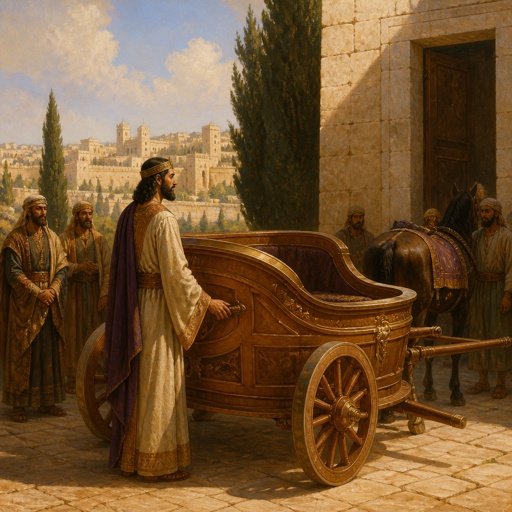
"King Solomon made himself a chariot of the wood of Lebanon." - Song of Solomon 3:9

Song of Solomon 7:3 - "Thy two breasts are like two young roes that are twins."

Song of Solomon 2:5 - "Stay me with flagons, comfort me with apples: for I am sick of love."

Song of Solomon 5:15 - "His legs are as pillars of marble, set upon sockets of fine gold: his countenance is as Lebanon, excellent as the cedars."

Song of Solomon 5:8 - "I charge you, O daughters of Jerusalem, if ye find my beloved, that ye tell him, that I am sick of love."

Song of Solomon 3:7 - "Behold his bed, which is Solomon's; threescore valiant men are about it, of the valiant of Israel."

Song of Solomon 5:16 - "His mouth is most sweet: yea, he is altogether lovely. This is my beloved, and this is my friend, O daughters of Jerusalem."

Song of Solomon 4:5 - "Thy two breasts are like two young roes that are twins, which feed among the lilies."

Song of Solomon 1:1 - "The song of songs, which is Solomon's."

Song of Solomon 6:3 - "I am my beloved's, and my beloved is mine: he feedeth among the lilies."

Song of Solomon 3:3 - "The watchmen that go about the city found me: to whom I said, Saw ye him whom my soul loveth?"

Song of Solomon 5:5 - "I rose up to open to my beloved; and my hands dropped with myrrh, and my fingers with sweet smelling myrrh, upon the handles of the lock."
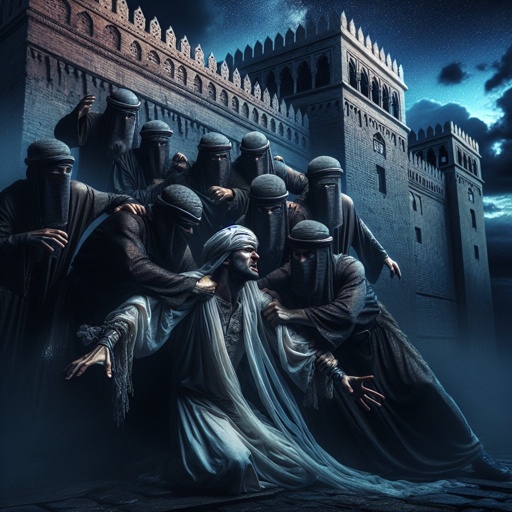
Song of Solomon 5:7 - "The watchmen that went about the city found me, they smote me, they wounded me; the keepers of the walls took away my veil from me."

Song of Solomon 5:11 Please follow scripture descriptions of raven black hair and add in an element of royal purple

Song of Solomon 5:11 Please follow scripture descriptions of raven black hair and add in an element of royal purple