What does Song of Solomon 4:7 mean?
"Thou art all fair, my love; there is no spot in thee." - Song of Solomon 4:7
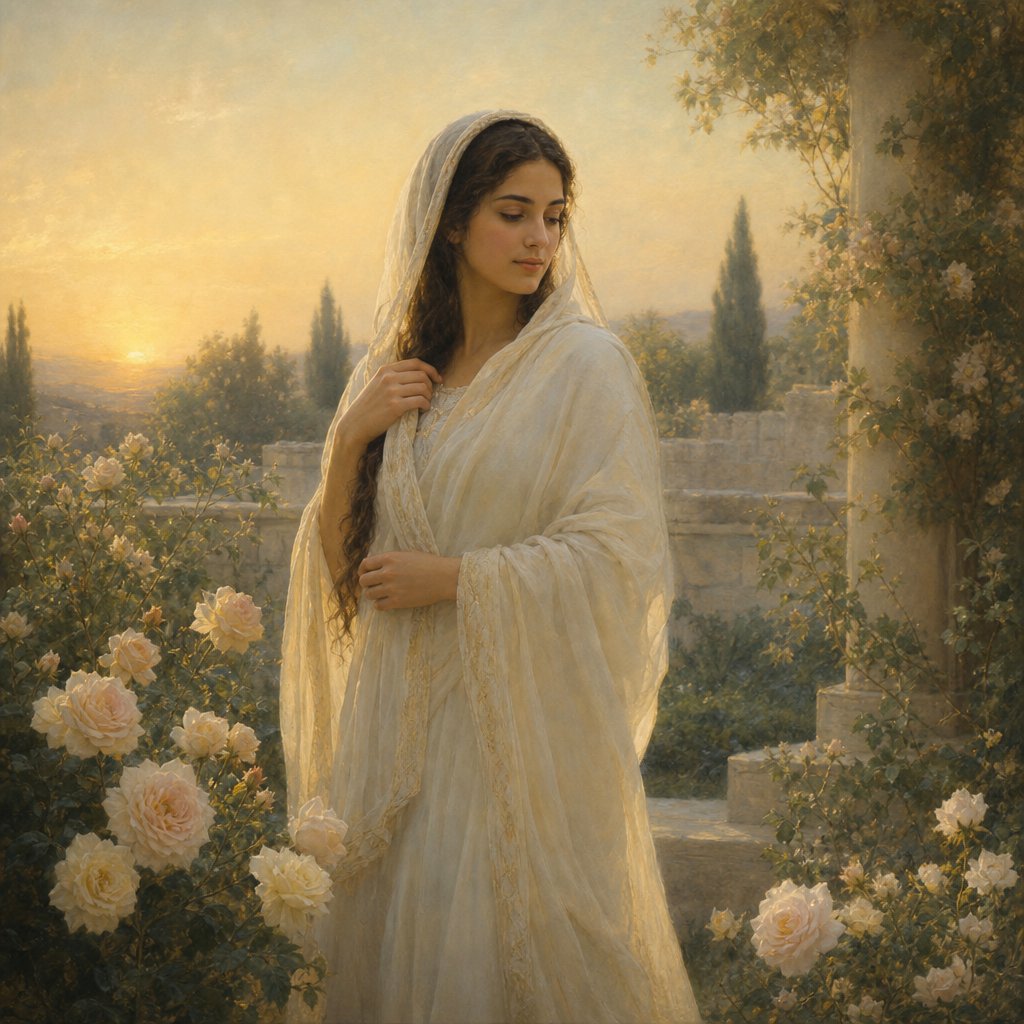
Song of Solomon 4:7 (KJV) says, "Thou art all fair, my love; there is no spot in thee." This verse is a part of a collection of love poems in the Old Testament often attributed to King Solomon. The book as a whole speaks about the passionate and romantic love between a bridegroom and his bride. It is also often interpreted as an allegory of the love between God and his people.
In this particular verse, the bridegroom is expressing his admiration and adoration for his beloved. He tells her that she is entirely fair or beautiful and there is no spot in her. This imagery is often seen as the bridegroom's perception of the bride as being perfect and without blemish. It speaks to the idealization of love and the beloved.
One of the key themes in this verse is the concept of unconditional love. The bridegroom's declaration of the bride's perfection reflects a love that is not based on external conditions or flaws. It is a love that is pure, accepting, and sees the beloved as flawless. This theme is often associated with the divine love of God for his people, as he sees them as perfect and without blemish through his grace and mercy.
The context of this verse also reflects the celebration of human love and beauty. The bridegroom's words convey the intensity of his feelings for his bride, and his appreciation for her physical and inner beauty. This speaks to the importance of love and admiration within the context of a relationship. It emphasizes the significance of celebrating and cherishing one another's qualities and uniqueness.
Furthermore, the symbolism in this verse signifies the idealization of love and beauty. The bridegroom's words may be interpreted as symbolic of how love can elevate and exalt the beloved in the eyes of the lover. It also symbolizes the purity and perfection of the bride in the eyes of her beloved, which reflects the romantic and idealistic aspects of love.
The verse can also be seen in the framework of Christian theology, where it represents the love of Christ for his church. In the New Testament, the church is often referred to as the bride of Christ, and Christ as the bridegroom. This verse can be understood as a reflection of Christ's love for his church, seeing them as pure and without blemish through his sacrifice and redemption.
In conclusion, Song of Solomon 4:7 is a beautiful and poetic expression of love, beauty, and perfection. It celebrates the unconditionality and idealization of love, while also symbolizing the divine love of God for his people. Its themes and symbolism reflect the significance of love, admiration, and the idealization of the beloved in human relationships and in the theological context. The verse continues to resonate as a powerful and captivating portrayal of love and its transcendental qualities.
Have questions about Song of Solomon 4:7?
Dive deeper into this scripture with Bible Chat — an AI-powered tool for exploring God's Word through conversation. Ask questions, get context, and grow in your understanding of the Bible.
Get Our Apps


Song of Solomon 4:7 Artwork
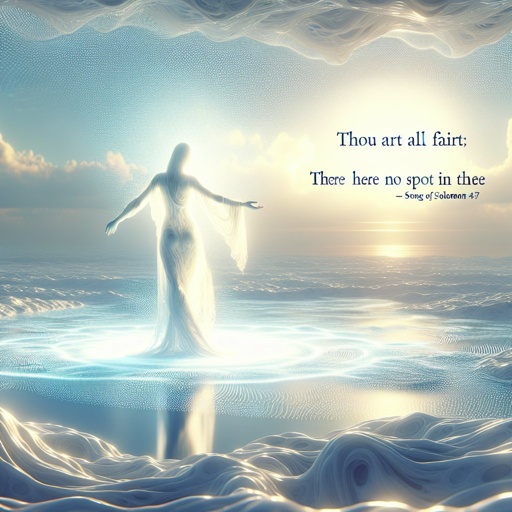
Song of Solomon 4:7 - "Thou art all fair, my love; there is no spot in thee."
"Thou art all fair, my love; there is no spot in thee." - Song of Solomon 4:7

Song of Solomon 1:4

Song of Solomon 1:4

Song of Solomon 3:4

Song of Solomon 4:13 - "Thy plants are an orchard of pomegranates, with pleasant fruits; camphire, with spikenard,"

Song of Solomon 4:15 - "A fountain of gardens, a well of living waters, and streams from Lebanon."

Song of Solomon 7:4 - "Thy neck is as a tower of ivory; thine eyes like the fishpools in Heshbon, by the gate of Bath-rabbim: thy nose is as the tower of Lebanon which looketh toward Damascus."

Song of Solomon 7:7 - "This thy stature is like to a palm tree, and thy breasts to clusters of grapes."

Song of Solomon 4:12 - "A garden inclosed is my sister, my spouse; a spring shut up, a fountain sealed."

Song of Solomon 4:5 - "Thy two breasts are like two young roes that are twins, which feed among the lilies."

Song of Solomon 6:7 - "As a piece of a pomegranate are thy temples within thy locks."

Song of Solomon 4:14 - "Spikenard and saffron; calamus and cinnamon, with all trees of frankincense; myrrh and aloes, with all the chief spices:"

Song of Solomon 7:3 - "Thy two breasts are like two young roes that are twins."

Song of Solomon 7:10 - "¶ I am my beloved's, and his desire is toward me."

Song of Solomon 7:6 - "How fair and how pleasant art thou, O love, for delights!"

"A fountain of gardens, a well of living waters, and streams from Lebanon." - Song of Solomon 4:15

Song of Solomon 3:7 - "Behold his bed, which is Solomon's; threescore valiant men are about it, of the valiant of Israel."

Song of Solomon 4:6 - "Until the day break, and the shadows flee away, I will get me to the mountain of myrrh, and to the hill of frankincense."

Song of Solomon 4:3 - "Thy lips are like a thread of scarlet, and thy speech is comely: thy temples are like a piece of a pomegranate within thy locks."
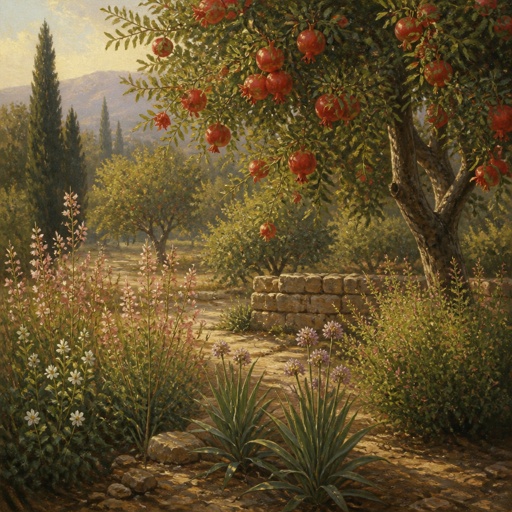
"Thy plants are an orchard of pomegranates, with pleasant fruits; camphire, with spikenard," - Song of Solomon 4:13
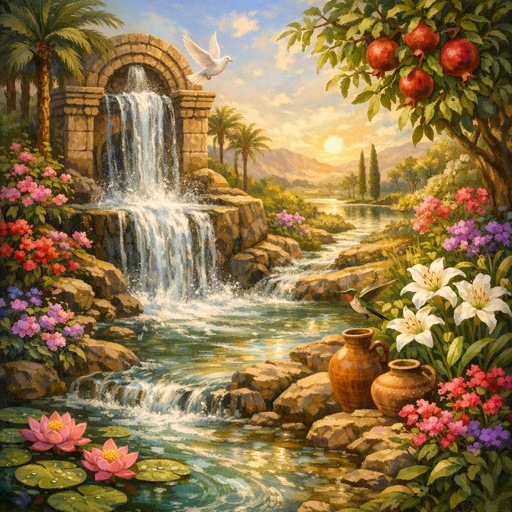
"A fountain of gardens, a well of living waters, and streams from Lebanon." - Song of Solomon 4:15

Song of Solomon 2:4 - "He brought me to the banqueting house, and his banner over me was love."

Song of Solomon 4:4 - "Thy neck is like the tower of David builded for an armoury, whereon there hang a thousand bucklers, all shields of mighty men."

Song of Solomon 4:9 - "Thou hast ravished my heart, my sister, my spouse; thou hast ravished my heart with one of thine eyes, with one chain of thy neck."

Song of Solomon 7:11 - "Come, my beloved, let us go forth into the field; let us lodge in the villages."

Song of Solomon 1:1 - "The song of songs, which is Solomon's."

Song of Solomon 4:2 - "Thy teeth are like a flock of sheep that are even shorn, which came up from the washing; whereof every one bear twins, and none is barren among them."

Song of Solomon 5:4 - "My beloved put in his hand by the hole of the door, and my bowels were moved for him."

Song of Solomon 6:4 - "¶ Thou art beautiful, O my love, as Tirzah, comely as Jerusalem, terrible as an army with banners."