What does Song of Solomon 4:16 mean?
"¶ Awake, O north wind; and come, thou south; blow upon my garden, that the spices thereof may flow out. Let my beloved come into his garden, and eat his pleasant fruits." - Song of Solomon 4:16
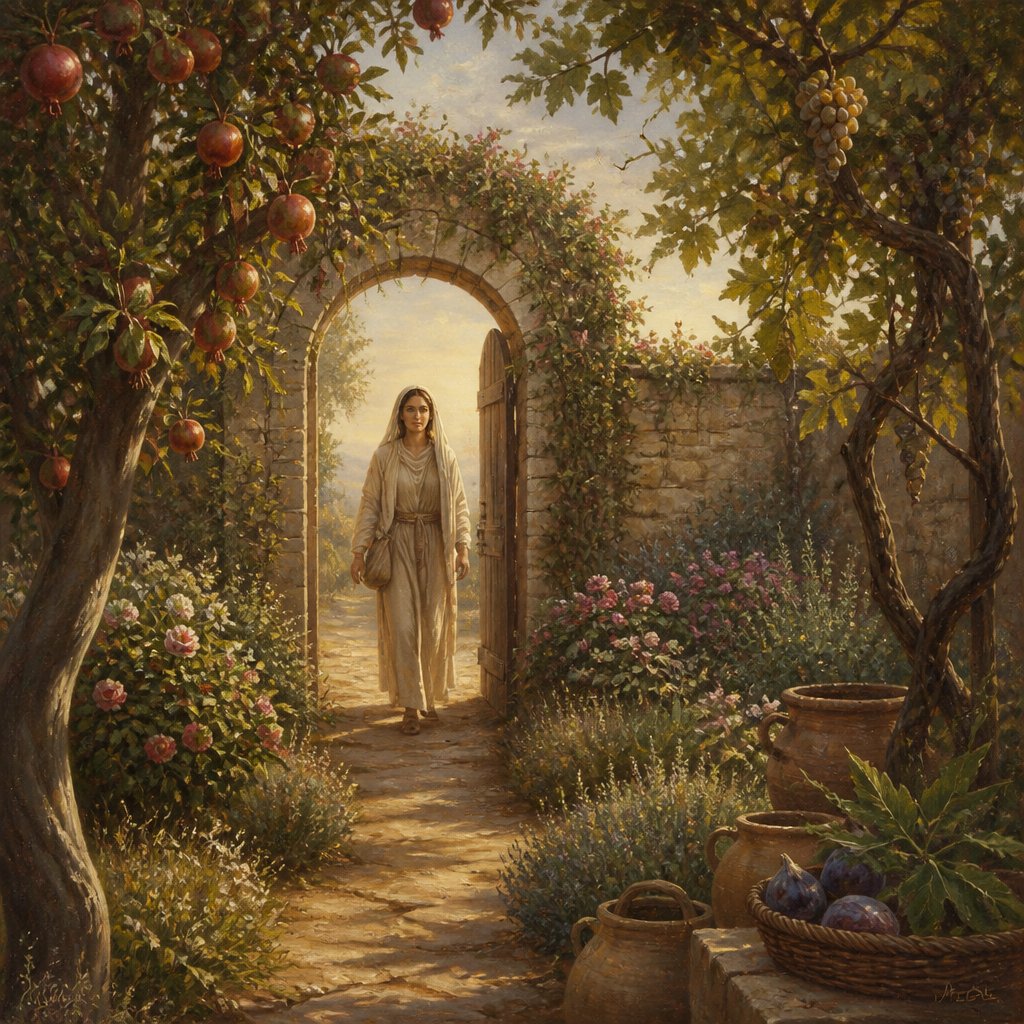
Song of Solomon 4:16 (KJV) states, "Awake, O north wind; and come, thou south; blow upon my garden, that the spices thereof may flow out. Let my beloved come into his garden, and eat his pleasant fruits."
The Song of Solomon is a beautiful and poetic book in the Bible that is often attributed to King Solomon, reflecting the love between a man and a woman. This verse in particular is filled with symbolism and imagery that provides insight into the themes of love, desire, and the beauty of God's creation.
The verse begins with the speaker addressing the winds, calling for them to wake up and bring their influence upon the garden. The imagery of the north wind and the south wind symbolizes the idea of totality and completeness. In ancient Hebrew thought, the north and south winds were seen as representing the fullness of the earth's breath, and by invoking both winds, the speaker is asking for a complete and fulfilling impact on their garden.
The garden in this verse is a metaphor for the woman herself, and the spices within it represent her love and beauty. The desire for the winds to blow upon the garden so that the spices may flow out suggests a longing for the woman's love and beauty to be fully realized and experienced. This can be seen as a metaphor for the woman longing to fully express and share her love and beauty with her beloved.
The second part of the verse shifts the focus to the beloved, who is invited to come into the garden and enjoy its pleasant fruits. This can be understood as an invitation for the beloved to partake in the fullness of the woman's love and beauty. It is a beautiful depiction of the mutuality and reciprocity of love, where both partners are invited to fully embrace and enjoy each other.
In a deeper spiritual sense, this verse can also be understood as an allegory for the relationship between God and his people. The garden can represent the human soul, and the spices within it can symbolize the fruits of the Spirit, such as love, joy, peace, patience, kindness, goodness, faithfulness, gentleness, and self-control (Galatians 5:22-23). The winds can be seen as the influence of the Holy Spirit, which brings about the full expression and fruition of these spiritual fruits within the believer.
The invitation for the beloved to come into the garden can be seen as an invitation for God to come and dwell within the human heart, enjoying the fruits of the Spirit that have been cultivated and nurtured within. This parallels the biblical imagery of God as the bridegroom and the church as his bride, where the intimate and reciprocal nature of human love reflects the relationship between God and his people.
In conclusion, Song of Solomon 4:16 is a beautiful and rich verse that captures the themes of love, desire, and the beauty of God's creation. It uses vivid imagery and symbolism to convey deep spiritual truths about the nature of love and the relationship between God and his people. It invites the reader to contemplate the depth of love and the beauty of God's presence in our lives, and to fully embrace and enjoy the fruits of that love.
Have questions about Song of Solomon 4:16?
Dive deeper into this scripture with Bible Chat — an AI-powered tool for exploring God's Word through conversation. Ask questions, get context, and grow in your understanding of the Bible.
Get Our Apps


Song of Solomon 4:16 Artwork

Song of Solomon 4:16 - "¶ Awake, O north wind; and come, thou south; blow upon my garden, that the spices thereof may flow out. Let my beloved come into his garden, and eat his pleasant fruits."
"¶ Awake, O north wind; and come, thou south; blow upon my garden, that the spices thereof may flow out. Let my beloved come into his garden, and eat his pleasant fruits." - Song of Solomon 4:16

Song of Solomon 1:4

Song of Solomon 1:4

Song of Solomon 3:4

Song of Solomon 4:13 - "Thy plants are an orchard of pomegranates, with pleasant fruits; camphire, with spikenard,"
Song of Solomon 4:7 - "Thou art all fair, my love; there is no spot in thee."

Song of Solomon 4:15 - "A fountain of gardens, a well of living waters, and streams from Lebanon."

Song of Solomon 4:12 - "A garden inclosed is my sister, my spouse; a spring shut up, a fountain sealed."

Song of Solomon 4:5 - "Thy two breasts are like two young roes that are twins, which feed among the lilies."

Song of Solomon 4:14 - "Spikenard and saffron; calamus and cinnamon, with all trees of frankincense; myrrh and aloes, with all the chief spices:"
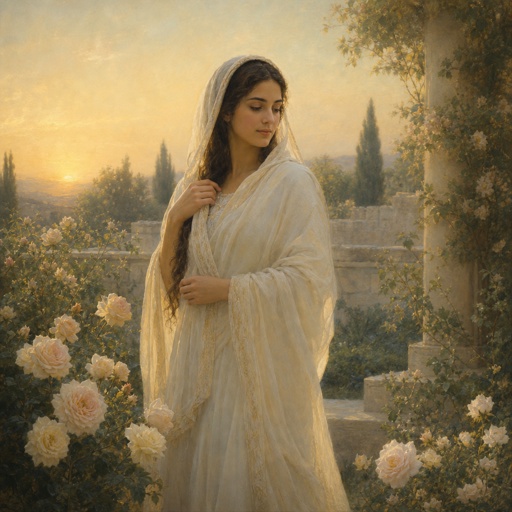
"Thou art all fair, my love; there is no spot in thee." - Song of Solomon 4:7

Song of Solomon 2:16 - "¶ My beloved is mine, and I am his: he feedeth among the lilies."
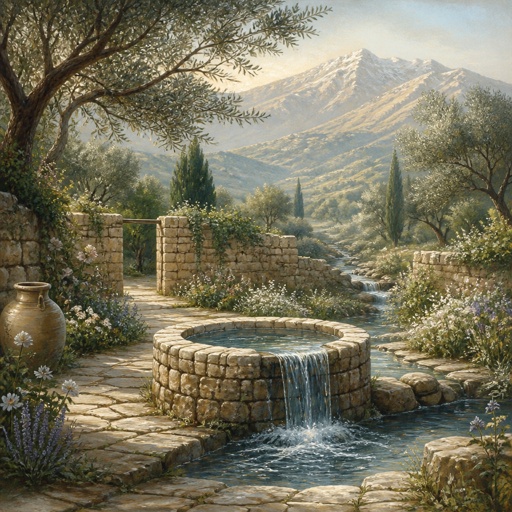
"A fountain of gardens, a well of living waters, and streams from Lebanon." - Song of Solomon 4:15

Song of Solomon 4:6 - "Until the day break, and the shadows flee away, I will get me to the mountain of myrrh, and to the hill of frankincense."

Song of Solomon 1:16 - "Behold, thou art fair, my beloved, yea, pleasant: also our bed is green."

Song of Solomon 4:3 - "Thy lips are like a thread of scarlet, and thy speech is comely: thy temples are like a piece of a pomegranate within thy locks."
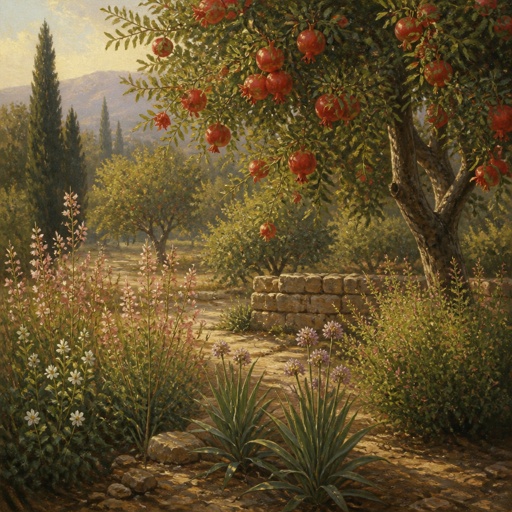
"Thy plants are an orchard of pomegranates, with pleasant fruits; camphire, with spikenard," - Song of Solomon 4:13
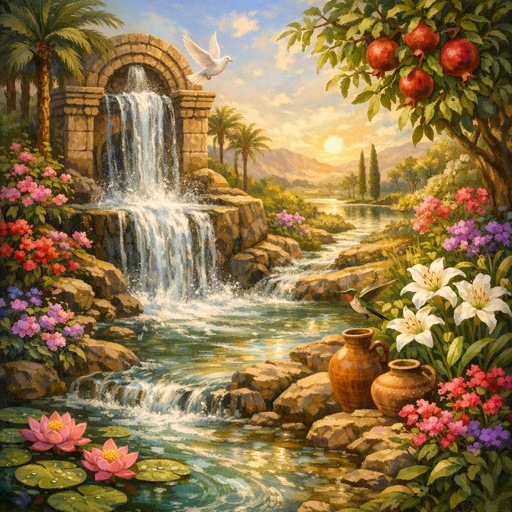
"A fountain of gardens, a well of living waters, and streams from Lebanon." - Song of Solomon 4:15

Song of Solomon 2:4 - "He brought me to the banqueting house, and his banner over me was love."

Song of Solomon 4:4 - "Thy neck is like the tower of David builded for an armoury, whereon there hang a thousand bucklers, all shields of mighty men."

Song of Solomon 4:9 - "Thou hast ravished my heart, my sister, my spouse; thou hast ravished my heart with one of thine eyes, with one chain of thy neck."

Song of Solomon 1:1 - "The song of songs, which is Solomon's."

Song of Solomon 4:2 - "Thy teeth are like a flock of sheep that are even shorn, which came up from the washing; whereof every one bear twins, and none is barren among them."

Song of Solomon 5:4 - "My beloved put in his hand by the hole of the door, and my bowels were moved for him."

Song of Solomon 6:4 - "¶ Thou art beautiful, O my love, as Tirzah, comely as Jerusalem, terrible as an army with banners."

Song of Solomon 5:16 - "His mouth is most sweet: yea, he is altogether lovely. This is my beloved, and this is my friend, O daughters of Jerusalem."
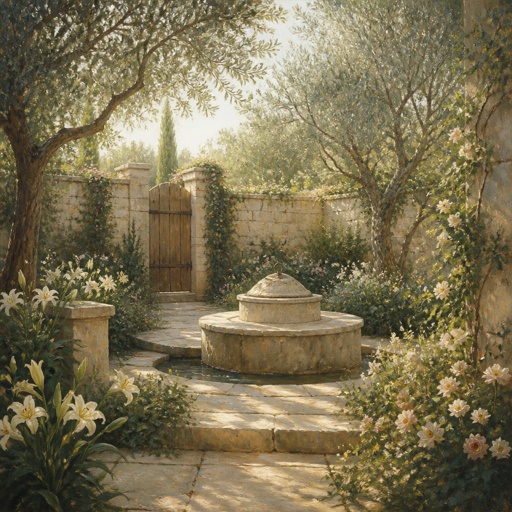
"A garden inclosed is my sister, my spouse; a spring shut up, a fountain sealed." - Song of Solomon 4:12
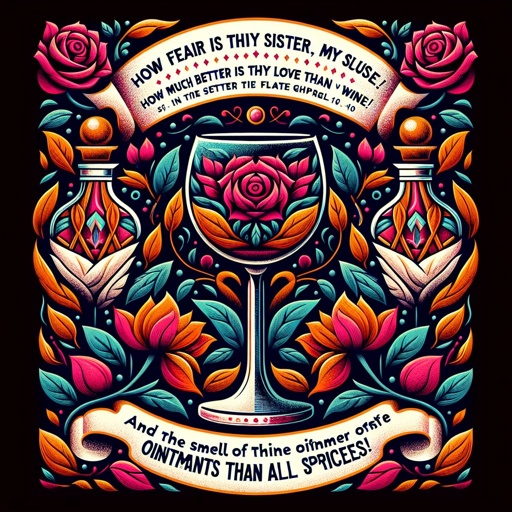
Song of Solomon 4:10 - "How fair is thy love, my sister, my spouse! how much better is thy love than wine! and the smell of thine ointments than all spices!"

Song of Solomon 4:1 - "Behold, thou art fair, my love; behold, thou art fair; thou hast doves' eyes within thy locks: thy hair is as a flock of goats, that appear from mount Gilead."