What does Song of Solomon 3:6 mean?
"¶ Who is this that cometh out of the wilderness like pillars of smoke, perfumed with myrrh and frankincense, with all powders of the merchant?" - Song of Solomon 3:6
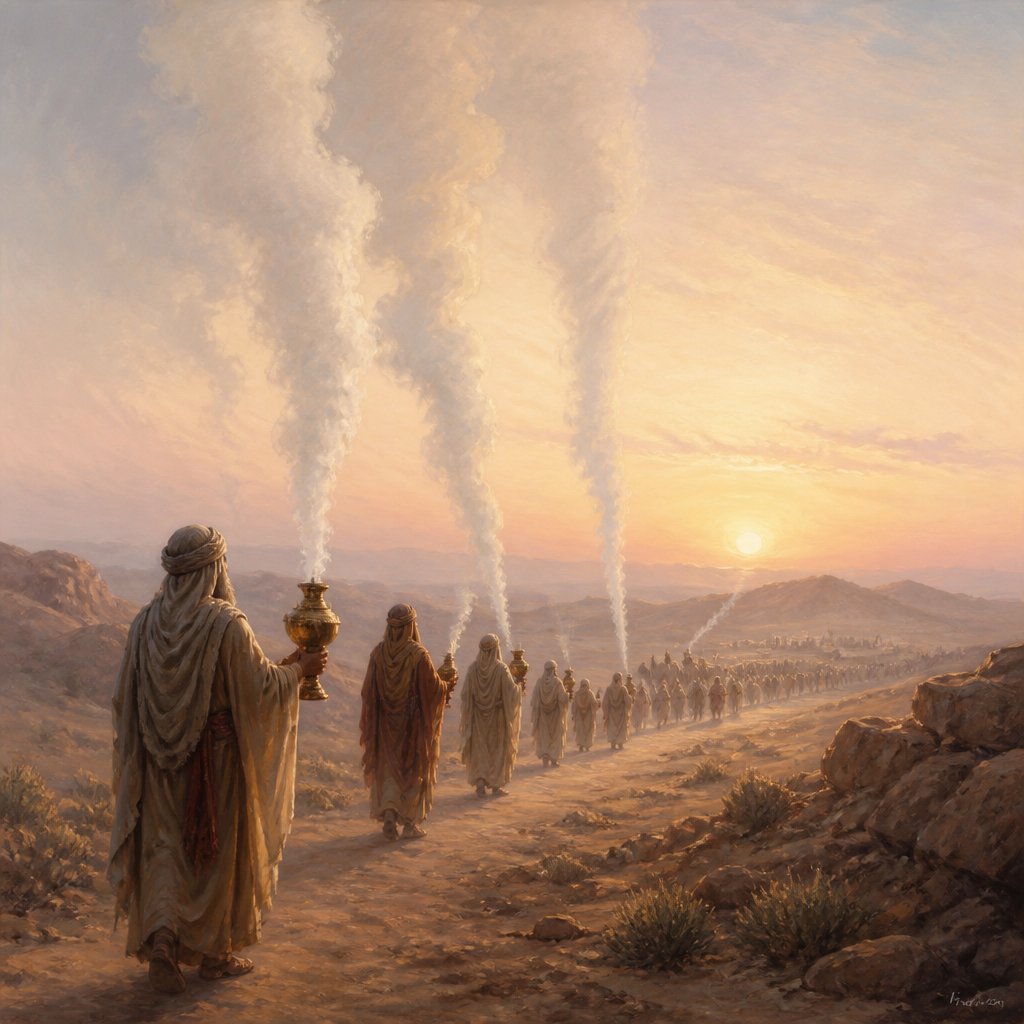
Song of Solomon 3:6 in the King James Version reads:
"Who is this that cometh out of the wilderness like pillars of smoke, perfumed with myrrh and frankincense, with all powders of the merchant?"
The Song of Solomon, also known as the Song of Songs, is a book of the Bible that has been the subject of much debate and interpretation throughout history. It is a unique and beautiful poetic love story between a bride and her groom, which has often been interpreted as an allegory of the relationship between God and the people of Israel, or between Christ and the Church.
In this particular verse, the bride is describing the approach of her beloved groom, and she does so using vivid and evocative imagery. The wilderness is often symbolic of a place of testing, purification, and preparation, and the fact that the groom is coming "out of the wilderness" may suggest that he has overcome challenges and trials in order to be with the bride. The pillars of smoke can be seen as a sign of his presence, rising up like incense from the desert, indicating his power, strength, and majesty.
The mention of myrrh, frankincense, and other merchant powders is significant as well. In the ancient world, these were prized and costly commodities, often used in religious rituals and as gifts for royalty. Myrrh was associated with anointing, healing, and sacrifice, while frankincense was used in worship and symbolized prayer ascending to heaven. By using these fragrances to describe her groom, the bride is emphasizing his regal and divine nature, and the reverence and awe with which she regards him.
The verse also brings to mind the wise men's gifts of gold, frankincense, and myrrh to the baby Jesus in the New Testament, suggesting a connection between this passage and the coming of Christ as the ultimate bridegroom, anointer, and savior of humanity. This connection reinforces the interpretation of the Song of Solomon as an allegory of the relationship between Christ and the Church, with the bride symbolizing believers and the groom representing Jesus.
The broader context of this verse within the Song of Solomon is also important to consider. The book as a whole is a celebration of love, desire, intimacy, and the beauty of human relationships. It explores the physical, emotional, and spiritual aspects of love, and it does so in a way that is passionate, sensual, and joyful. This verse, with its imagery of fragrance, smoke, and exotic powders, fits into this larger theme of delight in the senses and in the experience of love.
At the same time, the verse emphasizes the transcendence and holiness of the groom, as well as the longing and anticipation of the bride as she awaits his arrival. This tension between the physical and the spiritual, the earthly and the divine, is a central theme of the book, reflecting the mystery and complexity of human relationships and of the love between God and humanity.
In conclusion, Song of Solomon 3:6 is a rich and evocative verse that contributes to the rich tapestry of themes and imagery found in the Song of Solomon. It speaks to the longing for connection, the beauty of love, and the ultimate union between the divine and the human. It invites us to consider the nature of our relationship with God and with one another, and it does so with beauty, passion, and reverence.
Have questions about Song of Solomon 3:6?
Dive deeper into this scripture with Bible Chat — an AI-powered tool for exploring God's Word through conversation. Ask questions, get context, and grow in your understanding of the Bible.
Get Our Apps


Song of Solomon 3:6 Artwork

Song of Solomon 3:6 - "¶ Who is this that cometh out of the wilderness like pillars of smoke, perfumed with myrrh and frankincense, with all powders of the merchant?"
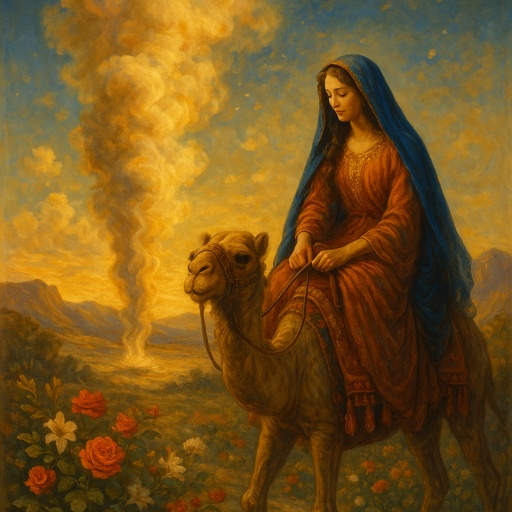
"Who is this that cometh out of the wilderness like pillars of smoke, perfumed with myrrh and frankincense, with all powders of the merchant?" - Song of Solomon 3:6
"¶ Who is this that cometh out of the wilderness like pillars of smoke, perfumed with myrrh and frankincense, with all powders of the merchant?" - Song of Solomon 3:6

Song of Solomon 3:4

Song of Solomon 6:3 - "I am my beloved's, and my beloved is mine: he feedeth among the lilies."

Song of Solomon 3:9 - "King Solomon made himself a chariot of the wood of Lebanon."

Song of Solomon 2:3

Song of Solomon 3:7 - "Behold his bed, which is Solomon's; threescore valiant men are about it, of the valiant of Israel."
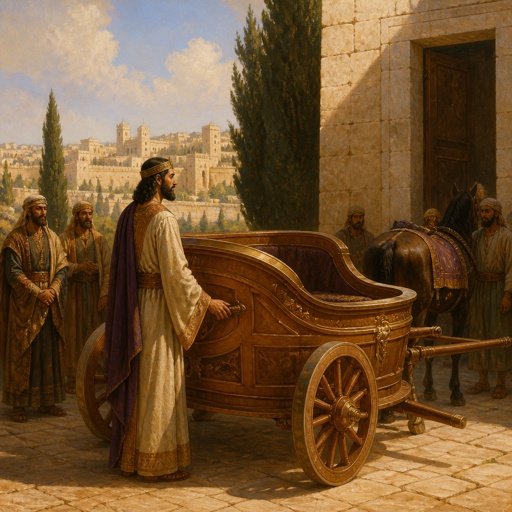
"King Solomon made himself a chariot of the wood of Lebanon." - Song of Solomon 3:9

Song of Solomon 3:3 - "The watchmen that go about the city found me: to whom I said, Saw ye him whom my soul loveth?"

Song of Solomon 3:1 - "By night on my bed I sought him whom my soul loveth: I sought him, but I found him not."

Song of Solomon 6:8 - "There are threescore queens, and fourscore concubines, and virgins without number."

Song of Solomon 6:7 - "As a piece of a pomegranate are thy temples within thy locks."
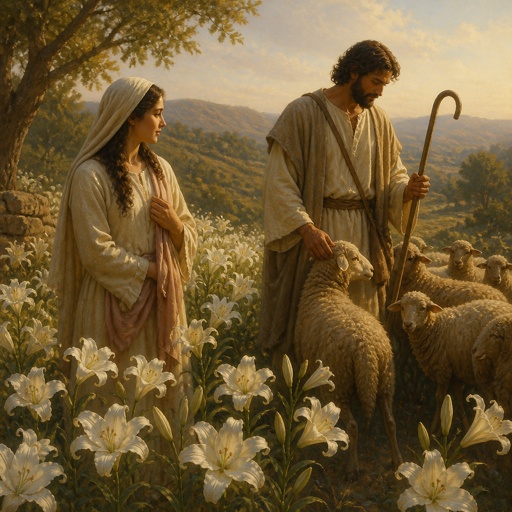
"I am my beloved's, and my beloved is mine: he feedeth among the lilies." - Song of Solomon 6:3

Song of Solomon 7:6 - "How fair and how pleasant art thou, O love, for delights!"

Song of Solomon 7:3 - "Thy two breasts are like two young roes that are twins."

Song of Solomon 3:8 - "They all hold swords, being expert in war: every man hath his sword upon his thigh because of fear in the night."

Song of Solomon 6:12 - "Or ever I was aware, my soul made me like the chariots of Amminadib."
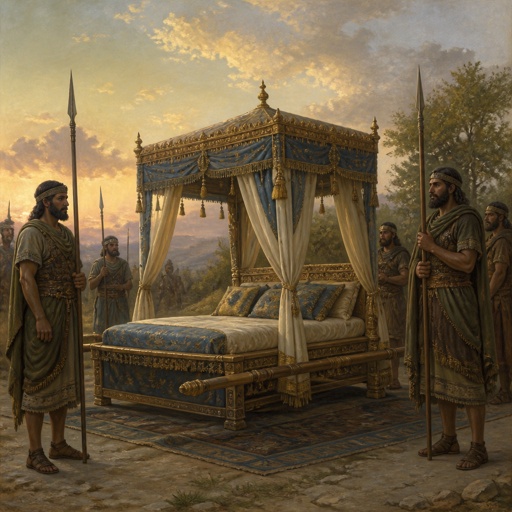
"Behold his bed, which is Solomon's; threescore valiant men are about it, of the valiant of Israel." - Song of Solomon 3:7
!["Who [is] she [that] looketh forth as the morning, fair as the moon, clear as the sun, [and] terrible as [an army] with banners?" - Song of Solomon 6:10](https://media.bible.art/6b2ee690-5202-4c13-a4ad-2500f2f9b28c-thumbnail.jpg)
"Who [is] she [that] looketh forth as the morning, fair as the moon, clear as the sun, [and] terrible as [an army] with banners?" - Song of Solomon 6:10

Song of Solomon 2:6 - "His left hand is under my head, and his right hand doth embrace me."

Song of Solomon 6:10 - "¶ Who is she that looketh forth as the morning, fair as the moon, clear as the sun, and terrible as an army with banners?"

Song of Solomon 1:1 - "The song of songs, which is Solomon's."

Song of Solomon 6:2 - "My beloved is gone down into his garden, to the beds of spices, to feed in the gardens, and to gather lilies."

Song of Solomon 6:4 - "¶ Thou art beautiful, O my love, as Tirzah, comely as Jerusalem, terrible as an army with banners."

Song of Solomon 6:6 - "Thy teeth are as a flock of sheep which go up from the washing, whereof every one beareth twins, and there is not one barren among them."

Song of Solomon 4:6 - "Until the day break, and the shadows flee away, I will get me to the mountain of myrrh, and to the hill of frankincense."

Song of Solomon 8:3 - "His left hand should be under my head, and his right hand should embrace me."

Song of Solomon 3:11 - "Go forth, O ye daughters of Zion, and behold king Solomon with the crown wherewith his mother crowned him in the day of his espousals, and in the day of the gladness of his heart."

Song of Solomon 6:11 - "I went down into the garden of nuts to see the fruits of the valley, and to see whether the vine flourished, and the pomegranates budded."