What does Song of Solomon 3:5 mean?
"I charge you, O ye daughters of Jerusalem, by the roes, and by the hinds of the field, that ye stir not up, nor awake my love, till he please." - Song of Solomon 3:5
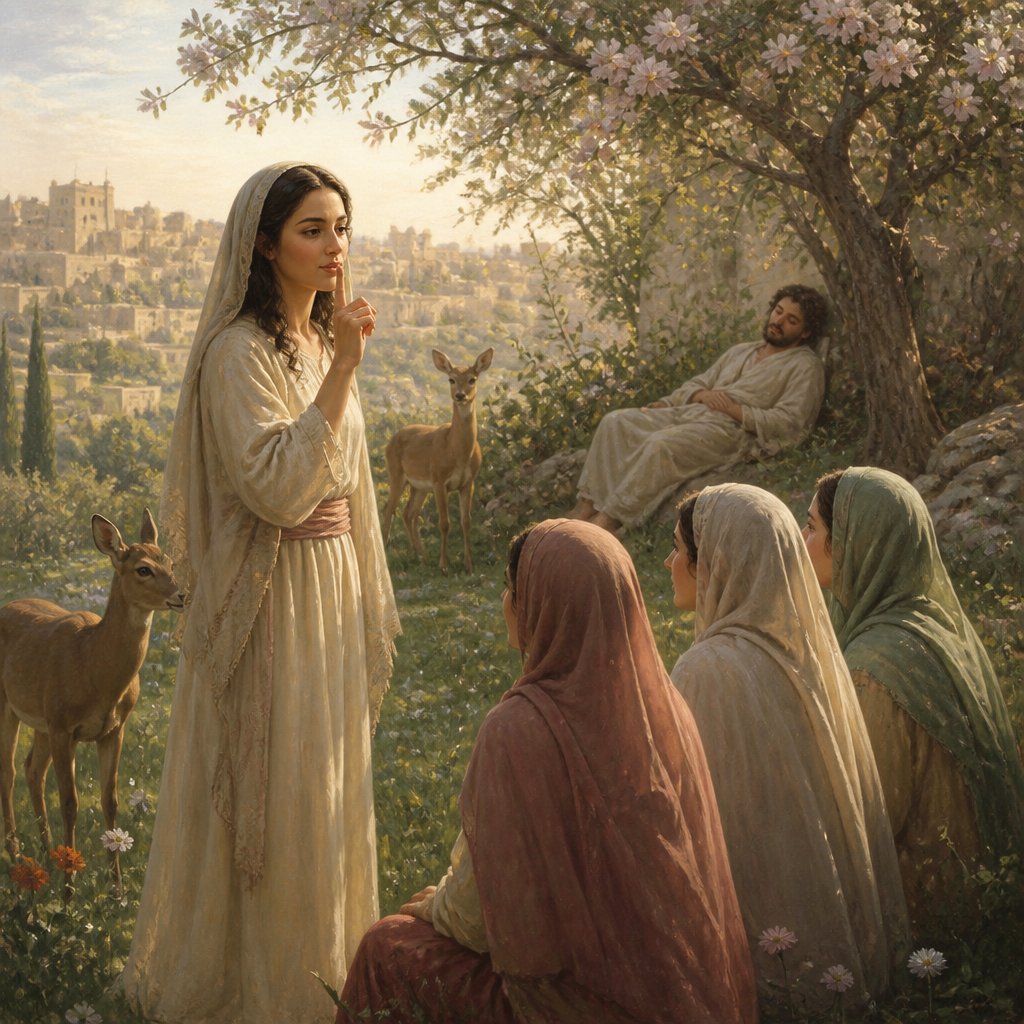
The verse Song of Solomon 3:5 in the King James Version of the Bible reads, "I charge you, O ye daughters of Jerusalem, by the roes, and by the hinds of the field, that ye stir not up, nor awake my love, till he please."
The Song of Solomon, also known as the Song of Songs, is a collection of love poems and dialogues. It is traditionally attributed to King Solomon and is often interpreted as an allegory of the love between God and his people, or between Christ and the church. The book is unique in the Bible for its overtly sensual and erotic language, and it has been a subject of much debate and interpretation throughout history.
In this particular verse, the speaker is addressing the "daughters of Jerusalem" and asking them to refrain from disturbing or awakening their love until he pleases. The speaker is expressing a desire for privacy and intimacy with their beloved, urging others to respect their relationship and not interfere.
The imagery in this verse is rich and symbolic. The mention of "roes" and "hinds of the field" suggests a natural, idyllic setting. Roes and hinds are types of deer, and in ancient Hebrew poetry, they are often used as symbols of grace, beauty, and gentleness. The speaker is invoking these natural and graceful creatures as witnesses to their request for privacy and respect for their love.
The theme of privacy and respect for love is central to this verse. The speaker is asserting their autonomy and their right to enjoy their love without interference from others. In the context of the Song of Solomon as a whole, this verse reflects the deep intimacy and passion between the lovers, and their desire to have their love honored and protected.
The verse can also be interpreted in a broader spiritual sense, reflecting the longing for a pure and undisturbed relationship with God. In this reading, the "daughters of Jerusalem" could symbolize distractions or temptations that can pull people away from their devotion to God. The speaker's plea to not stir up or awake their love until he pleases can be seen as a desire to remain faithful and focused on their spiritual connection without being led astray.
The Song of Solomon has been interpreted in a variety of ways throughout history. Some see it as a celebration of human love and sexuality, while others view it as an allegory for the love between God and humanity. The imagery and language of the book are often seen as symbolic of the beauty and intimacy of the spiritual journey.
Overall, Song of Solomon 3:5 is a plea for privacy and respect for love, whether in a human relationship or in a spiritual context. The verse uses evocative imagery and language to express the speaker's desire for their love to remain undisturbed and pure. It is a powerful expression of the longing for intimacy and devotion, both in human relationships and in the relationship between God and humanity.
Have questions about Song of Solomon 3:5?
Dive deeper into this scripture with Bible Chat — an AI-powered tool for exploring God's Word through conversation. Ask questions, get context, and grow in your understanding of the Bible.
Get Our Apps


Song of Solomon 3:5 Artwork

Song of Solomon 3:5 - "I charge you, O ye daughters of Jerusalem, by the roes, and by the hinds of the field, that ye stir not up, nor awake my love, till he please."
"I charge you, O ye daughters of Jerusalem, by the roes, and by the hinds of the field, that ye stir not up, nor awake my love, till he please." - Song of Solomon 3:5

Song of Solomon 3:4

Song of Solomon 3:9 - "King Solomon made himself a chariot of the wood of Lebanon."

Song of Solomon 5:11

Song of Solomon 2:3

Song of Solomon 3:7 - "Behold his bed, which is Solomon's; threescore valiant men are about it, of the valiant of Israel."
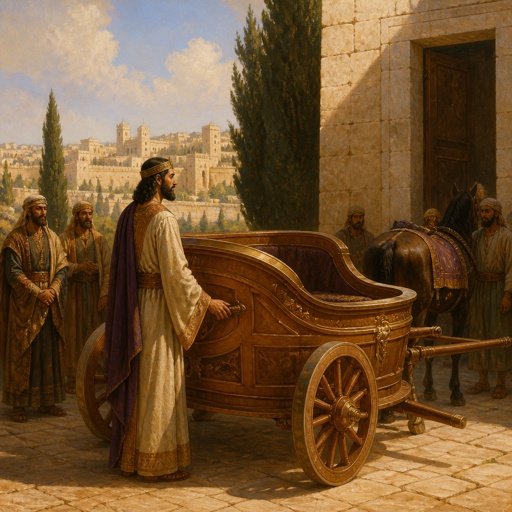
"King Solomon made himself a chariot of the wood of Lebanon." - Song of Solomon 3:9

Song of Solomon 1:5 - "I am black, but comely, O ye daughters of Jerusalem, as the tents of Kedar, as the curtains of Solomon."

Song of Solomon 5:3 - "I have put off my coat; how shall I put it on? I have washed my feet; how shall I defile them?"

Song of Solomon 3:3 - "The watchmen that go about the city found me: to whom I said, Saw ye him whom my soul loveth?"

Song of Solomon 3:1 - "By night on my bed I sought him whom my soul loveth: I sought him, but I found him not."

Song of Solomon 5:10 - "My beloved is white and ruddy, the chiefest among ten thousand."

Song of Solomon 7:3 - "Thy two breasts are like two young roes that are twins."

Song of Solomon 3:8 - "They all hold swords, being expert in war: every man hath his sword upon his thigh because of fear in the night."

Song of Solomon 5:12 - "His eyes are as the eyes of doves by the rivers of waters, washed with milk, and fitly set."

Song of Solomon 5:11 - "His head is as the most fine gold, his locks are bushy, and black as a raven."

Song of Solomon 2:5 - "Stay me with flagons, comfort me with apples: for I am sick of love."
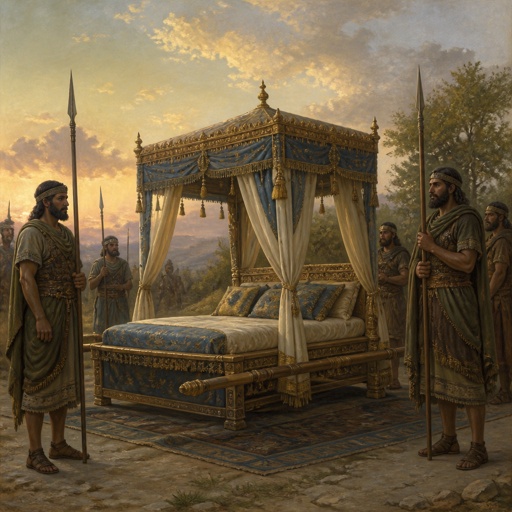
"Behold his bed, which is Solomon's; threescore valiant men are about it, of the valiant of Israel." - Song of Solomon 3:7

Song of Solomon 3:6 - "¶ Who is this that cometh out of the wilderness like pillars of smoke, perfumed with myrrh and frankincense, with all powders of the merchant?"
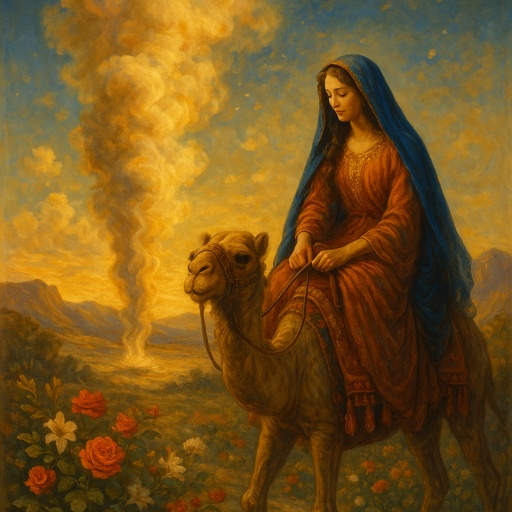
"Who is this that cometh out of the wilderness like pillars of smoke, perfumed with myrrh and frankincense, with all powders of the merchant?" - Song of Solomon 3:6

Song of Solomon 5:14 - "His hands are as gold rings set with the beryl: his belly is as bright ivory overlaid with sapphires."

Song of Solomon 5:4 - "My beloved put in his hand by the hole of the door, and my bowels were moved for him."

Song of Solomon 4:5 - "Thy two breasts are like two young roes that are twins, which feed among the lilies."

Song of Solomon 1:1 - "The song of songs, which is Solomon's."

Song of Solomon 6:3 - "I am my beloved's, and my beloved is mine: he feedeth among the lilies."

Song of Solomon 5:5 - "I rose up to open to my beloved; and my hands dropped with myrrh, and my fingers with sweet smelling myrrh, upon the handles of the lock."

Song of Solomon 8:3 - "His left hand should be under my head, and his right hand should embrace me."

Song of Solomon 3:11 - "Go forth, O ye daughters of Zion, and behold king Solomon with the crown wherewith his mother crowned him in the day of his espousals, and in the day of the gladness of his heart."

Song of Solomon 5:13 - "His cheeks are as a bed of spices, as sweet flowers: his lips like lilies, dropping sweet smelling myrrh."