What does Ruth 1:16 mean?
"And Ruth said, Intreat me not to leave thee, or to return from following after thee: for whither thou goest, I will go; and where thou lodgest, I will lodge: thy people shall be my people, and thy God my God:" - Ruth 1:16
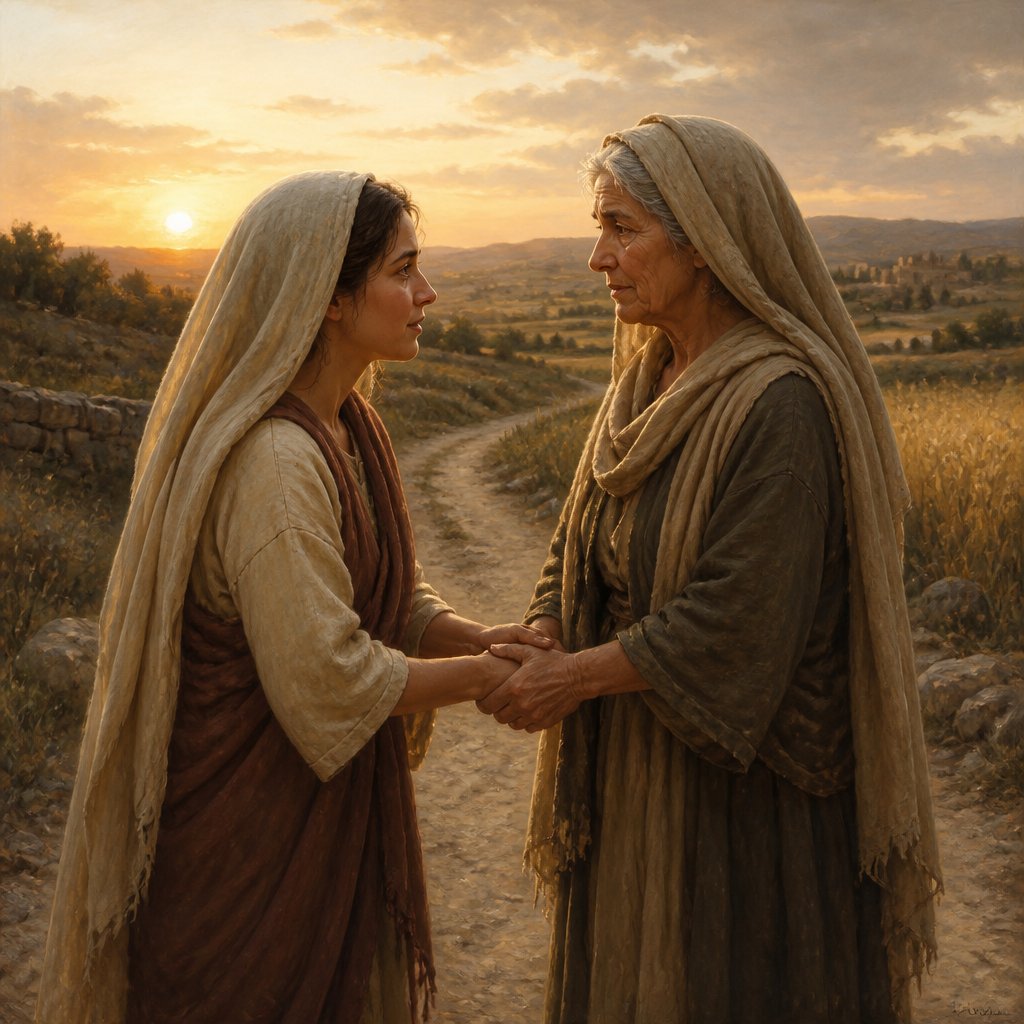
Ruth 1:16 (KJV) - "And Ruth said, Intreat me not to leave thee, or to return from following after thee: for whither thou goest, I will go; and where thou lodgest, I will lodge: thy people shall be my people, and thy God my God"
The Book of Ruth is a beautiful piece of biblical literature that tells the story of loyalty, devotion, and redemption. Ruth 1:16 is a pivotal verse in the book, capturing the essence of Ruth's commitment to her mother-in-law, Naomi.
The context of this verse is important for understanding its deeper meaning. At the beginning of the book, we learn that Naomi and her husband, Elimelech, and their two sons, Mahlon and Chilion, migrate to the land of Moab due to a famine in their own land. In Moab, Mahlon and Chilion marry Orpah and Ruth, two Moabite women. Tragically, Elimelech and his two sons die, leaving Naomi a widow with her daughters-in-law.
Naomi decides to return to her homeland in Judah, and initially, both Orpah and Ruth set out with her. However, Naomi insists that they return to their own families, as she has nothing to offer them. Orpah tearfully obeys and returns to her people, but Ruth refuses to leave Naomi, speaking the words found in Ruth 1:16.
Ruth's loyalty and dedication to Naomi are emblematic of the larger theme of love and kindness portrayed throughout the book. Ruth's selfless decision to stay with Naomi, leaving behind her family and her own land, sets the stage for the rest of the narrative. Her pledge to stay with Naomi and embrace her people and her God represents a deep commitment to love and care for another person, even in the face of difficulty and uncertainty.
The symbolism in Ruth 1:16 is rich and multi-layered. Ruth's declaration is not just a simple statement of dedication to her mother-in-law, but it also represents a metaphorical journey of faith and spiritual transformation. By choosing to accompany Naomi and adopt her faith and people, Ruth becomes an example of true discipleship and obedience to God's will. Her decision echoes the deeper biblical theme of faithfulness and the importance of loving and caring for others, even in the midst of loss and hardship.
The themes of loyalty, faithfulness, and selflessness are central to the entire book of Ruth, and they are encapsulated in Ruth 1:16. Through Ruth's unwavering devotion to Naomi, the narrative illustrates the power of love and the redemptive potential of human relationships. Furthermore, Ruth's actions foreshadow the future redemptive work of God, as she becomes an ancestor of King David and, ultimately, Jesus Christ.
In conclusion, Ruth 1:16 is a pivotal verse in the Book of Ruth, encapsulating the themes of loyalty, love, and faithfulness. Ruth's commitment to her mother-in-law, Naomi, and her decision to embrace her people and her God serve as a powerful example of selflessness and devotion. The verse symbolizes the transformative journey of faith and the redemptive potential of human relationships, ultimately pointing to the larger biblical narrative of God's love and redemption for all people.
Have questions about Ruth 1:16?
Dive deeper into this scripture with Bible Chat — an AI-powered tool for exploring God's Word through conversation. Ask questions, get context, and grow in your understanding of the Bible.
Get Our Apps


Ruth 1:16 Artwork

Ruth 1:16 - "And Ruth said, Intreat me not to leave thee, or to return from following after thee: for whither thou goest, I will go; and where thou lodgest, I will lodge: thy people shall be my people, and thy God my God:"

Ruth 1:16-17 - "But Ruth replied, "Don't urge me to leave you or to turn back from you. Where you go I will go, and where you stay I will stay. Your people will be my people and your God my God. Where you die I will die, and there I will be buried. May the LORD deal with me, be it ever so severely, if even death separates you and me.""
"And Ruth said, Intreat me not to leave thee, or to return from following after thee: for whither thou goest, I will go; and where thou lodgest, I will lodge: thy people shall be my people, and thy God my God:" - Ruth 1:16
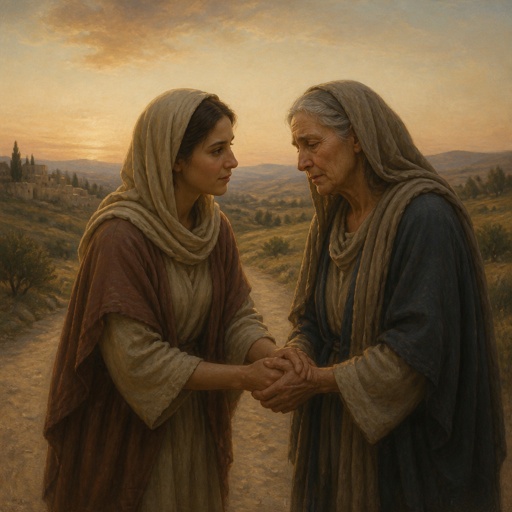
"But Ruth replied, "Don't urge me to leave you or to turn back from you. Where you go I will go, and where you stay I will stay. Your people will be my people and your God my God. Where you die I will die, and there I will be buried. May the LORD deal with me, be it ever so severely, if even death separates you and me."" - Ruth 1:16-17

Ruth 4:16 - "And Naomi took the child, and laid it in her bosom, and became nurse unto it."

Ruth 1:14 - "And they lifted up their voice, and wept again: and Orpah kissed her mother in law; but Ruth clave unto her."

Ruth 1:4 - "And they took them wives of the women of Moab; the name of the one was Orpah, and the name of the other Ruth: and they dwelled there about ten years."

ruth, the loyal daughter

Ruth 1:22 - "So Naomi returned, and Ruth the Moabitess, her daughter in law, with her, which returned out of the country of Moab: and they came to Beth-lehem in the beginning of barley harvest."

Ruth 2:16 - "And let fall also some of the handfuls of purpose for her, and leave them, that she may glean them, and rebuke her not."
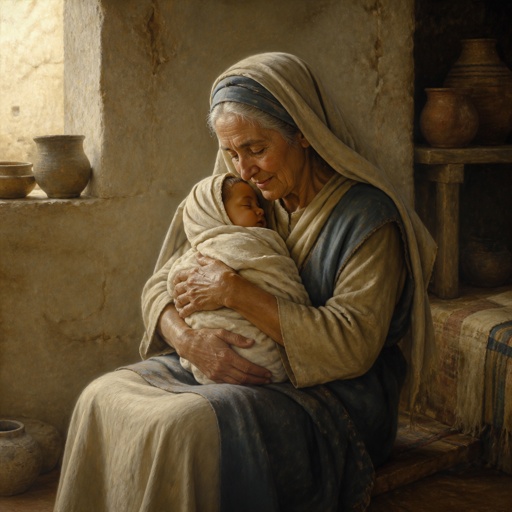
"And Naomi took the child, and laid it in her bosom, and became nurse unto it." - Ruth 4:16
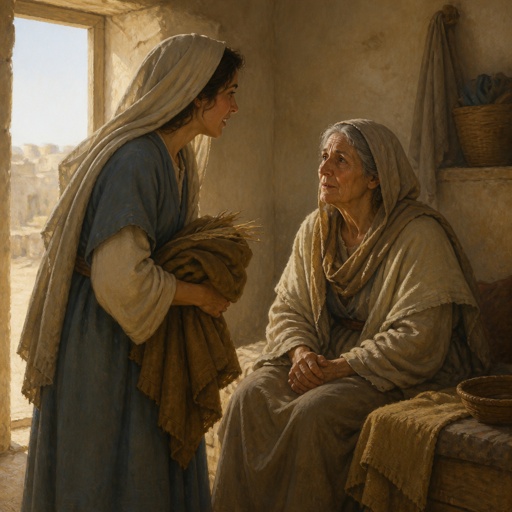
"And when she came to her mother in law, she said, Who art thou, my daughter? And she told her all that the man had done to her." - Ruth 3:16

Ruth 3:16 - "And when she came to her mother in law, she said, Who art thou, my daughter? And she told her all that the man had done to her."

Ruth 1:3 - "And Elimelech Naomi's husband died; and she was left, and her two sons."

Ruth 3:1 - "Then Naomi her mother in law said unto her, My daughter, shall I not seek rest for thee, that it may be well with thee?"

Ruth 1:6 - "¶ Then she arose with her daughters in law, that she might return from the country of Moab: for she had heard in the country of Moab how that the LORD had visited his people in giving them bread."
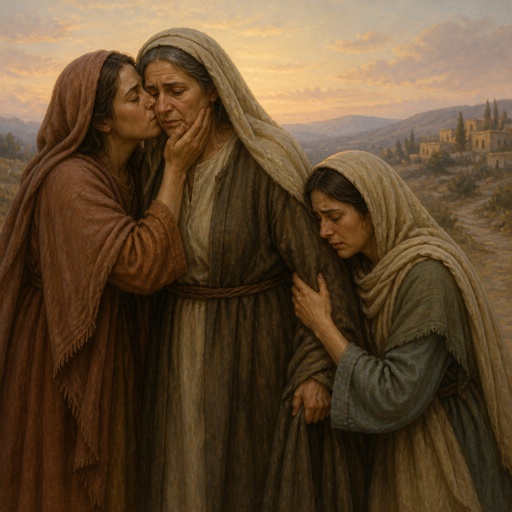
"And they lifted up their voice, and wept again: and Orpah kissed her mother in law; but Ruth clave unto her." - Ruth 1:14

Ruth 1:10 - "And they said unto her, Surely we will return with thee unto thy people."

Matthew 1:5 - "And Salmon begat Booz of Rachab; and Booz begat Obed of Ruth; and Obed begat Jesse;"
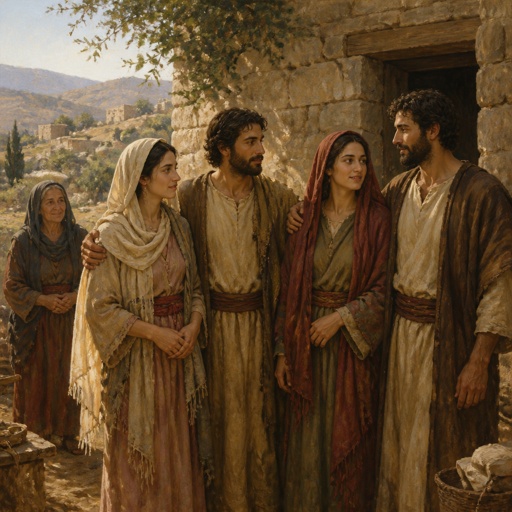
"And they took them wives of the women of Moab; the name of the one was Orpah, and the name of the other Ruth: and they dwelled there about ten years." - Ruth 1:4

Ruth 1:18 - "When she saw that she was stedfastly minded to go with her, then she left speaking unto her."

Ruth 1:5 - "And Mahlon and Chilion died also both of them; and the woman was left of her two sons and her husband."

Ruth 2:1 - "And Naomi had a kinsman of her husband's, a mighty man of wealth, of the family of Elimelech; and his name was Boaz."

Ruth 1:20 - "And she said unto them, Call me not Naomi, call me Mara: for the Almighty hath dealt very bitterly with me."
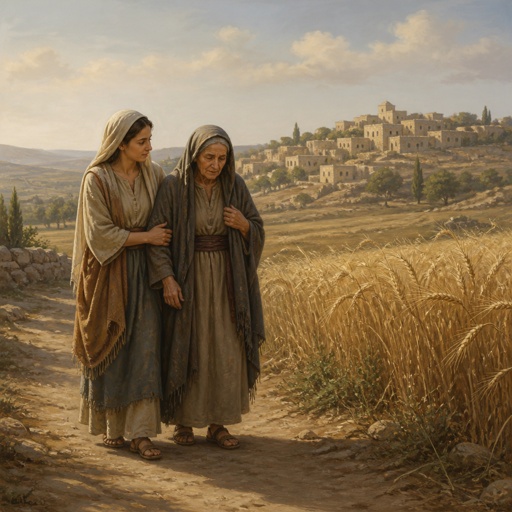
"So Naomi returned, and Ruth the Moabitess, her daughter in law, with her, which returned out of the country of Moab: and they came to Beth-lehem in the beginning of barley harvest." - Ruth 1:22

Ruth 1:17 - "Where thou diest, will I die, and there will I be buried: the LORD do so to me, and more also, if ought but death part thee and me."

Ruth 1:1 - "Now it came to pass in the days when the judges ruled, that there was a famine in the land. And a certain man of Beth-lehem-judah went to sojourn in the country of Moab, he, and his wife, and his two sons."

Ruth 1:11 - "And Naomi said, Turn again, my daughters: why will ye go with me? are there yet any more sons in my womb, that they may be your husbands?"

Ruth 1:7 - "Wherefore she went forth out of the place where she was, and her two daughters in law with her; and they went on the way to return unto the land of Judah."

Ruth 1:9 - "The LORD grant you that ye may find rest, each of you in the house of her husband. Then she kissed them; and they lifted up their voice, and wept."