What does Romans 9:19 mean?
"Thou wilt say then unto me, Why doth he yet find fault? For who hath resisted his will?" - Romans 9:19
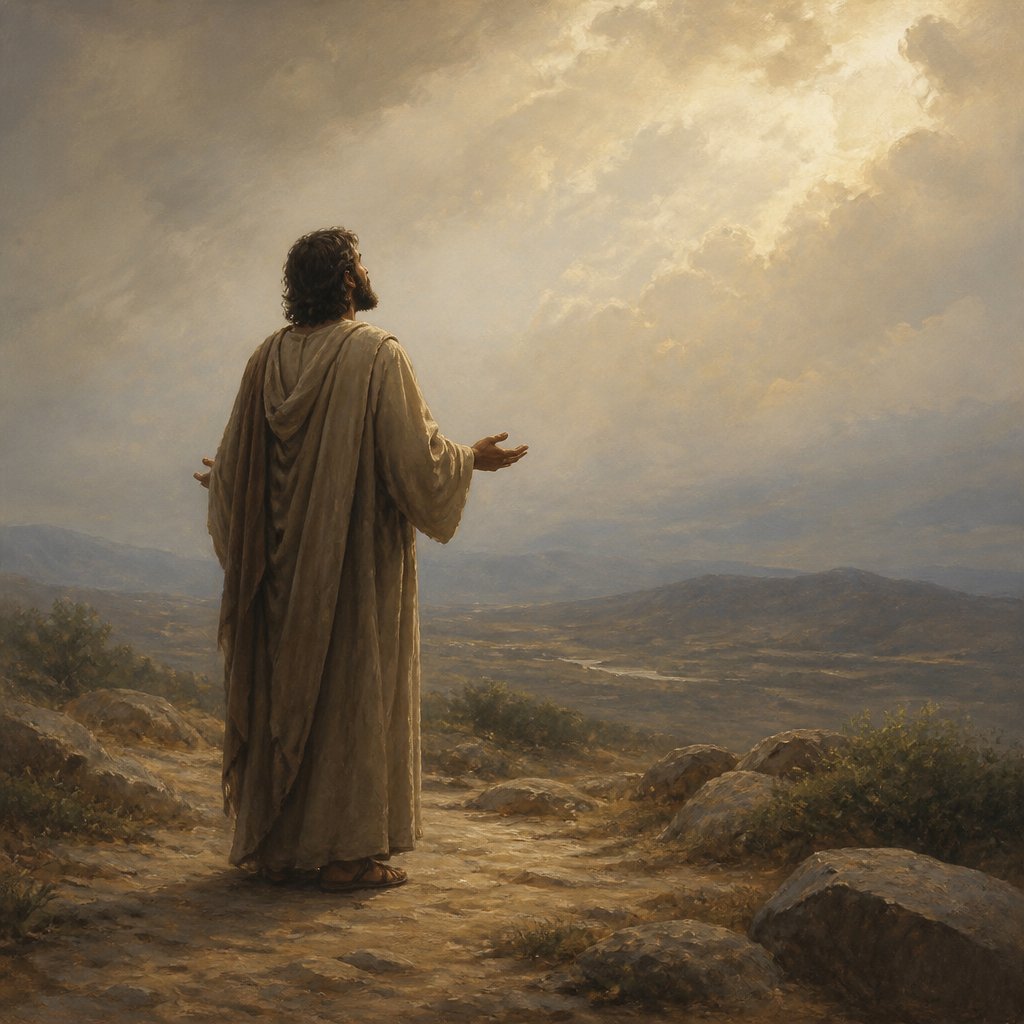
Romans 9:19 in the King James Version of the Bible reads, "Thou wilt say then unto me, Why doth he yet find fault? For who hath resisted his will?". This verse is part of the broader context of Romans 9, where the apostle Paul discusses the sovereignty of God in choosing who will be saved and emphasizing that it is not based on human will or effort, but on God's mercy.
The verse begins with the phrase, "Thou wilt say then unto me", indicating that Paul is addressing a potential objection or question that may arise from his previous statements about God's sovereignty. The question posed is, "Why doth he yet find fault? For who hath resisted his will?" This question reflects a common human struggle to understand the relationship between God's sovereignty and human responsibility.
The themes present in this verse include the sovereignty of God, human responsibility, and the tension between the two. This tension has been a topic of theological debate for centuries, and Paul's response in the subsequent verses provides insight into this complex issue.
The broader context of Romans 9 is important to understanding the full meaning of this verse. In the preceding verses, Paul discusses God's sovereign choice in electing individuals for salvation, using the examples of Jacob and Esau to illustrate his point. He emphasizes that God's choice is not based on human works, but on his own purpose and grace. This leads to the objection raised in verse 19, questioning how God can find fault with individuals if his will is ultimately irresistible.
Paul's response to this objection is found in the following verses, where he uses the analogy of a potter and clay to illustrate God's right to exercise sovereignty over his creation. He emphasizes that God, as the creator, has the right to make some vessels for honorable use and others for dishonorable use, according to his own will. This reinforces the theme of God's sovereignty and the limitations of human understanding in questioning his ways.
This verse also raises the issue of human responsibility in light of God's sovereignty. The objection implies that if God's will is irresistible, then individuals cannot be held accountable for their actions. However, Paul's response in the subsequent verses affirms that humans are still responsible for their choices, even though God's sovereignty is ultimately unchallenged.
In terms of symbolism, the potter and clay analogy used by Paul in his response to the objection carries significant symbolism. The potter represents God as the creator and sovereign ruler, shaping and molding his creation according to his will. The clay represents humanity, which is subject to the divine will and ultimately dependent on God's choices.
Overall, Romans 9:19 in the King James Version of the Bible raises profound questions about the nature of God's sovereignty and human responsibility. The verse and its broader context in Romans 9 challenge readers to grapple with the tension between these two truths and to trust in the wisdom and justice of God, even when his ways are beyond our understanding. It serves as a reminder of the limitations of human understanding and the need to humbly submit to God's sovereignty.
Have questions about Romans 9:19?
Dive deeper into this scripture with Bible Chat — an AI-powered tool for exploring God's Word through conversation. Ask questions, get context, and grow in your understanding of the Bible.
Get Our Apps


Romans 9:19 Artwork

Romans 9:19 - "Thou wilt say then unto me, Why doth he yet find fault? For who hath resisted his will?"
"Thou wilt say then unto me, Why doth he yet find fault? For who hath resisted his will?" - Romans 9:19

Romans 9:19-26 - "You will say to me then, “Why does he still find fault? For who can resist his will?” But who are you, O man, to answer back to God? Will what is molded say to its molder, “Why have you made me like this?” Has the potter no right over the clay, to make out of the same lump one vessel for honorable use and another for dishonorable use? What if God, desiring to show his wrath and to make known his power, has endured with much patience vessels of wrath prepared for destruction, in order to make known the riches of his glory for vessels of mercy, which he has prepared beforehand for glory— even us whom he has called, not from the Jews only but also from the Gentiles? As indeed he says in Hosea, “Those who were not my people I will call ‘my people,’ and her who was not beloved I will call ‘beloved.’” “And in the very place where it was said to them, ‘You are not my people,’ there they will be called ‘sons of the living God.’”"
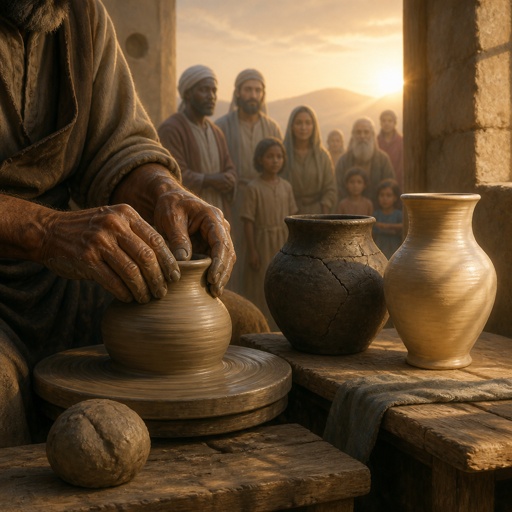
"You will say to me then, “Why does he still find fault? For who can resist his will?” But who are you, O man, to answer back to God? Will what is molded say to its molder, “Why have you made me like this?” Has the potter no right over the clay, to make out of the same lump one vessel for honorable use and another for dishonorable use? What if God, desiring to show his wrath and to make known his power, has endured with much patience vessels of wrath prepared for destruction, in order to make known the riches of his glory for vessels of mercy, which he has prepared beforehand for glory— even us whom he has called, not from the Jews only but also from the Gentiles? As indeed he says in Hosea, “Those who were not my people I will call ‘my people,’ and her who was not beloved I will call ‘beloved.’” “And in the very place where it was said to them, ‘You are not my people,’ there they will be called ‘sons of the living God.’”" - Romans 9:19-26

Romans 7:19

Romans 5:19

Romans 8:19

Romans 8:19

Romans 5:19

Romans 10:9

Romans 10:9

Romans 9:9 - "For this is the word of promise, At this time will I come, and Sara shall have a son."

Romans 8:19 - "For the earnest expectation of the creature waiteth for the manifestation of the sons of God."

Romans 11:19 - "Thou wilt say then, The branches were broken off, that I might be graffed in."

Romans 9:12 - "It was said unto her, The elder shall serve the younger."

Romans 2:19 - "And art confident that thou thyself art a guide of the blind, a light of them which are in darkness,"

Romans 7:19 - "For the good that I would I do not: but the evil which I would not, that I do."

Romans 9:14 - "What shall we say then? Is there unrighteousness with God? God forbid."

Romans 1:19 - "Because that which may be known of God is manifest in them; for God hath shewed it unto them."

Romans 16:9 - "Salute Urbane, our helper in Christ, and Stachys my beloved."

Romans 9:2 - "That I have great heaviness and continual sorrow in my heart."

Romans 9:8 - "That is, They which are the children of the flesh, these are not the children of God: but the children of the promise are counted for the seed."

Romans 9:32 - "Wherefore? Because they sought it not by faith, but as it were by the works of the law. For they stumbled at that stumblingstone;"

Romans 9:13 - "As it is written, Jacob have I loved, but Esau have I hated."

Romans 9:16 - "So then it is not of him that willeth, nor of him that runneth, but of God that sheweth mercy."

Romans 5:19 - "For as by one man's disobedience many were made sinners, so by the obedience of one shall many be made righteous."

Romans 12:9 - "Let love be without dissimulation. Abhor that which is evil; cleave to that which is good."

Romans 9:31 - "But Israel, which followed after the law of righteousness, hath not attained to the law of righteousness."

Romans 9:24 - "Even us, whom he hath called, not of the Jews only, but also of the Gentiles?"

Romans 9:6 - "Not as though the word of God hath taken none effect. For they are not all Israel, which are of Israel:"