What does Romans 7:6 mean?
"But now we are delivered from the law, that being dead wherein we were held; that we should serve in newness of spirit, and not in the oldness of the letter." - Romans 7:6
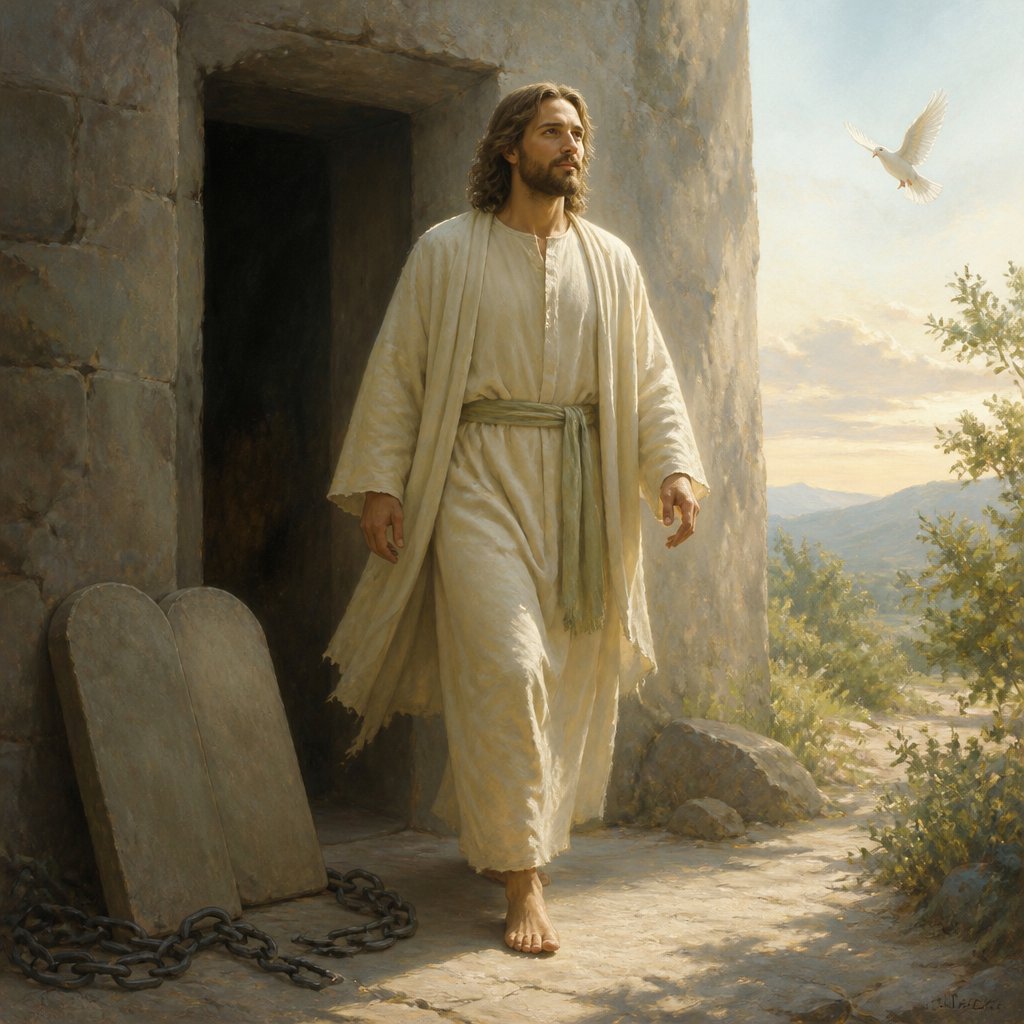
Romans 7:6 (KJV) - "But now we are delivered from the law, that being dead wherein we were held; that we should serve in newness of spirit, and not in the oldness of the letter."
The book of Romans in the Bible, written by the apostle Paul, is one of the most influential and foundational books in the New Testament. In this verse, Paul addresses the concept of freedom through our deliverance from the law, and the subsequent transformation that occurs as a result.
The verse begins with the statement "But now we are delivered from the law." Here, "the law" refers to the Mosaic Law given to the Israelites in the Old Testament, which included the Ten Commandments and various other regulations and ordinances. Paul is emphasizing that through Christ's sacrifice and the new covenant, believers are no longer bound to the strict requirements of the law. Instead, they are set free from its condemnation and the burden of trying to earn righteousness through works.
Paul continues by stating that we are delivered from "that being dead wherein we were held." This emphasizes the idea that, prior to being delivered from the law, we were under its power and subject to its consequences - namely, spiritual death and separation from God. However, through the redemptive work of Christ, we are set free from this bondage and given new life.
The verse goes on to explain the purpose of our deliverance: "that we should serve in newness of spirit, and not in the oldness of the letter." This speaks to the transformation that takes place in the lives of believers. No longer are they confined to a legalistic understanding of righteousness, but rather they are empowered and motivated by the Holy Spirit to live in accordance with God's will. The "newness of spirit" refers to the change that occurs within a person when they are born again and indwelt by the Spirit of God. This new life is characterized by a desire to obey and serve God out of love and gratitude, rather than a sense of obligation or duty dictated by the letter of the law.
One of the key themes in this verse is the contrast between the old and new covenant. In the Old Testament, the Israelites were under the law, which prescribed specific rules and regulations for righteous living. However, the coming of Christ ushered in a new covenant, based on grace and faith in Him. This new covenant brings freedom from the burden of the law and a transformed heart that desires to obey God out of love.
Another important theme is the concept of spiritual transformation. As believers, we are not simply freed from the law, but we are also called to live in a new way - "in newness of spirit." This speaks to the internal change that occurs as a result of our salvation, as we are no longer governed by legalistic rules but are empowered to live a life that is pleasing to God.
The context of this verse is important to understand its full significance. In the preceding chapters of Romans, Paul expounds on the righteousness that comes through faith in Christ rather than through obedience to the law. He highlights the universal sinfulness of humanity and the need for salvation through faith, regardless of one's background or ethnicity. In chapter 6, Paul discusses how believers are united with Christ in His death and resurrection, and are therefore freed from the power of sin. This sets the stage for the passage in chapter 7, where Paul delves deeper into the relationship between the law, sin, and freedom in Christ.
In terms of symbolism, the law can be seen as representative of the old way of relating to God - one based on strict obedience and adherence to rules. On the other hand, the newness of spirit symbolizes the transformed heart and mind that comes with salvation, allowing believers to serve God in a way that is motivated by love and empowered by the Holy Spirit.
In conclusion, Romans 7:6 emphasizes the freedom and transformation that comes through our deliverance from the law and the redemptive work of Christ. It speaks to the shift from legalistic obedience to a life governed by the Spirit, and the internal change that occurs in the hearts of believers. This verse holds significant implications for our understanding of the Christian faith and the implications of Christ's sacrifice for our lives today.
Have questions about Romans 7:6?
Dive deeper into this scripture with Bible Chat — an AI-powered tool for exploring God's Word through conversation. Ask questions, get context, and grow in your understanding of the Bible.
Get Our Apps


Romans 7:6 Artwork

Romans 7:6 - "But now we are delivered from the law, that being dead wherein we were held; that we should serve in newness of spirit, and not in the oldness of the letter."

"But now we are delivered from the law, that being dead wherein we were held; that we should serve in newness of spirit, and not in the oldness of the letter." - Romans 7:6

Romans 6:7 - "For he that is dead is freed from sin."

"For he that is dead is freed from sin." - Romans 6:7

Romans 2:6-7 - "God "will repay each person according to what they have done." To those who by persistence in doing good seek glory, honor and immortality, he will give eternal life."

Romans 6:23

Romans 8:6

Romans 6:23

Romans 7:19

Romans 7:12

Romans 2:6 - "Who will render to every man according to his deeds:"

Romans 7:12 - "Wherefore the law is holy, and the commandment holy, and just, and good."

Romans 14:7 - "For none of us liveth to himself, and no man dieth to himself."

Romans 7:17 - "Now then it is no more I that do it, but sin that dwelleth in me."

Romans 6:6 - "Knowing this, that our old man is crucified with him, that the body of sin might be destroyed, that henceforth we should not serve sin."

Romans 8:6 - "For to be carnally minded is death; but to be spiritually minded is life and peace."

Romans 16:6 - "Greet Mary, who bestowed much labour on us."

Romans 1:6 - "Among whom are ye also the called of Jesus Christ:"

Romans 3:6 - "God forbid: for then how shall God judge the world?"

Romans 7:22 - "For I delight in the law of God after the inward man:"

Romans 7:10 - "And the commandment, which was ordained to life, I found to be unto death."

Romans 4:7 - "Saying, Blessed are they whose iniquities are forgiven, and whose sins are covered."

Romans 7:11 - "For sin, taking occasion by the commandment, deceived me, and by it slew me."

Romans 6:18 - "Being then made free from sin, ye became the servants of righteousness."

Romans 12:7 - "Or ministry, let us wait on our ministering: or he that teacheth, on teaching;"

Romans 6:20 - "For when ye were the servants of sin, ye were free from righteousness."

Romans 10:7 - "Or, Who shall descend into the deep? (that is, to bring up Christ again from the dead.)"

Romans 7:14 - "For we know that the law is spiritual: but I am carnal, sold under sin."

Romans 7:16 - "If then I do that which I would not, I consent unto the law that it is good."

Romans 6:8 - "Now if we be dead with Christ, we believe that we shall also live with him:"