What does Romans 7:4 mean?
"Wherefore, my brethren, ye also are become dead to the law by the body of Christ; that ye should be married to another, even to him who is raised from the dead, that we should bring forth fruit unto God." - Romans 7:4
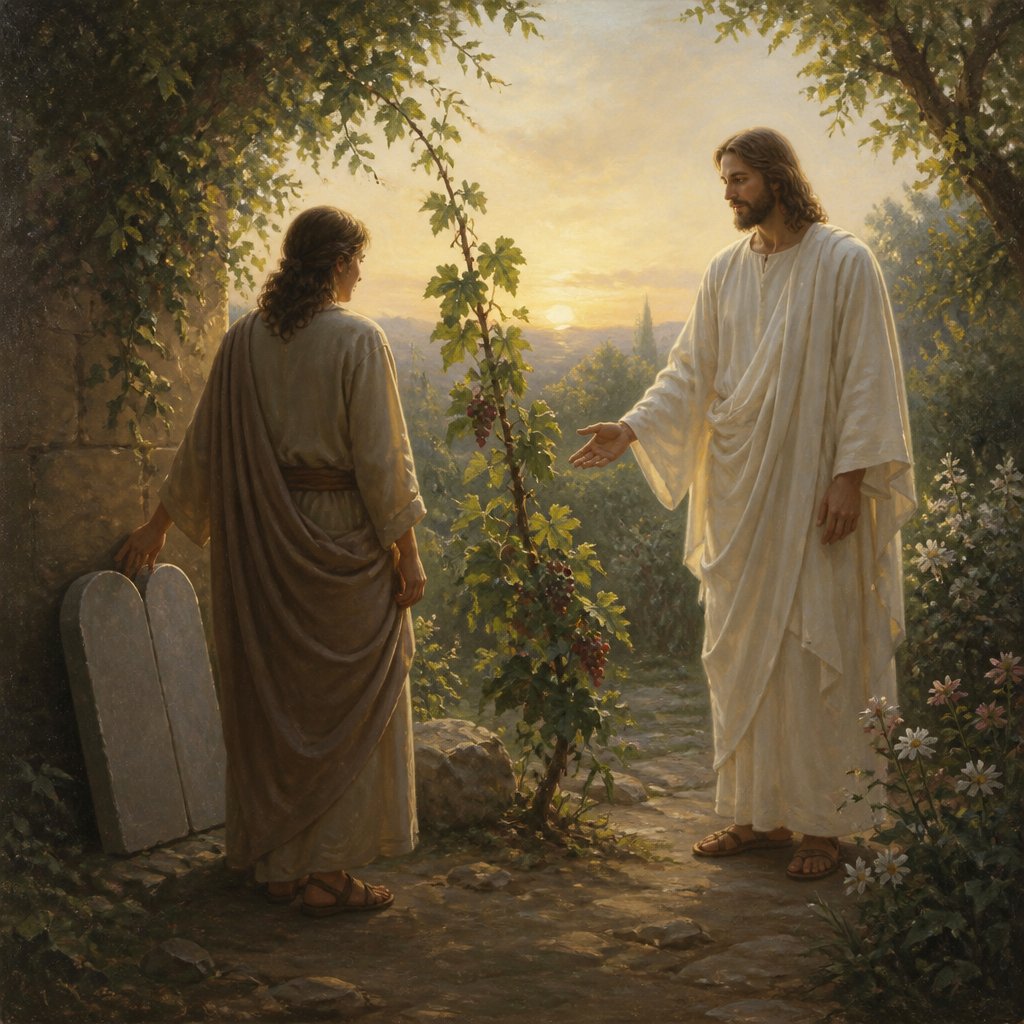
Romans 7:4 in the King James Version of the Bible states, "Wherefore, my brethren, ye also are become dead to the law by the body of Christ; that ye should be married to another, even to him who is raised from the dead, that we should bring forth fruit unto God." This verse is part of a larger passage in the book of Romans where Paul is discussing the believer's relationship to the law and sin.
In this verse, Paul is addressing the believers in Rome, referring to them as "my brethren." He is speaking to fellow Christians, emphasizing their shared faith and connection in Christ. Paul begins by explaining that the believers have become dead to the law through the body of Christ. This concept of being dead to the law is central to Paul's teaching on the believer's freedom from the burdensome requirements of the Mosaic law.
The phrase "the body of Christ" refers to Jesus' sacrificial death on the cross. Through His death and resurrection, Christ fulfilled the requirements of the law and provided a way for believers to be set free from its demands. This does not mean that the law is null and void, but rather that its power to condemn and control believers has been broken through Jesus' atoning sacrifice.
Paul then uses the analogy of marriage to illustrate the believers' new relationship with Christ. He states that they are now married to another, specifically to Him who is raised from the dead, referring to Jesus. This metaphor of marriage conveys the intimate and covenantal nature of the believer's union with Christ. It implies a profound spiritual union and commitment to Christ, emphasizing the believers' new identity and allegiance in Him.
Furthermore, Paul emphasizes the purpose of this new union with Christ, stating that it is for the purpose of bearing fruit unto God. This fruit refers to the spiritual growth, maturity, and righteousness that should characterize the lives of believers. Through their union with Christ, they are empowered to live lives that are pleasing to God and produce good works that bring glory to Him.
The broader context of this verse is significant for understanding its implications. In the preceding verses, Paul discusses the believer's release from the law through identification with Christ's death and resurrection. He explains that believers have died to sin through their union with Christ and are now free to live for God. This freedom from the law does not give license to sin but rather empowers believers to live in obedience to God's will through the indwelling power of the Holy Spirit.
The themes present in Romans 7:4 include freedom from the law, union with Christ, spiritual intimacy, and fruitful living. The verse underscores the transformative nature of the believer's relationship with Christ, emphasizing the believer's new identity and purpose in Him. It highlights the believer's liberation from the bondage of the law and sin and calls them to a life of holiness and obedience in Christ.
Symbolically, this verse portrays the believer as a bride who has been united with Christ, the bridegroom. This imagery conveys the intimate and loving nature of the believer's relationship with Christ, as well as the covenantal commitment and loyalty that it entails. The notion of bearing fruit unto God symbolizes the believer's spiritual growth, character transformation, and the manifestation of Christ's life within them.
In conclusion, Romans 7:4 is a powerful and profound reminder of the believer's liberation from the law through their union with Christ. It encourages believers to live in obedience and holiness, empowered by the indwelling Spirit, and to bear fruit that brings glory to God. It serves as a call to embrace the transformative power of Christ's sacrifice and to live in the fullness of their new identity and purpose in Him.
Have questions about Romans 7:4?
Dive deeper into this scripture with Bible Chat — an AI-powered tool for exploring God's Word through conversation. Ask questions, get context, and grow in your understanding of the Bible.
Get Our Apps


Romans 7:4 Artwork

Romans 7:4 - "Wherefore, my brethren, ye also are become dead to the law by the body of Christ; that ye should be married to another, even to him who is raised from the dead, that we should bring forth fruit unto God."

Wherefore, my brethren, ye also are become dead to the law by the body of Christ; that ye should be married to another, even to him who is raised from the dead, that we should bring forth fruit unto God. Romans 7:4

Death to the Law Romans 7:4 Wherefore, my brethren, ye also are become dead to the law by the body of Christ; that ye should be married to another, even to him who is raised from the dead, that we should bring forth fruit unto God.

Death to the Law Romans 7:4 Likewise, my brothers, you also have died to the law through the body of Christ, so that you may belong to another, to him who has been raised from the dead, in order that we may bear fruit for God.
"Wherefore, my brethren, ye also are become dead to the law by the body of Christ; that ye should be married to another, even to him who is raised from the dead, that we should bring forth fruit unto God." - Romans 7:4

Romans 4:7 - "Saying, Blessed are they whose iniquities are forgiven, and whose sins are covered."

Romans 4:7-8 - "Blessed are those whose transgressions are forgiven, whose sins are covered. Blessed is the one whose sin the Lord will never count against them."

"Saying, Blessed are they whose iniquities are forgiven, and whose sins are covered." - Romans 4:7

Romans 7:19

Romans 7:12

Romans 2:4

Romans 4:3

Romans 4:4 - "Now to him that worketh is the reward not reckoned of grace, but of debt."
romans 12: 4-5

Romans 6:7 - "For he that is dead is freed from sin."

Romans 5:4 - "And patience, experience; and experience, hope:"

Romans 4:22 - "And therefore it was imputed to him for righteousness."

Romans 7:12 - "Wherefore the law is holy, and the commandment holy, and just, and good."

Romans 14:7 - "For none of us liveth to himself, and no man dieth to himself."

Romans 7:17 - "Now then it is no more I that do it, but sin that dwelleth in me."

Romans 7:22 - "For I delight in the law of God after the inward man:"

Romans 7:10 - "And the commandment, which was ordained to life, I found to be unto death."

Romans 4:8 - "Blessed is the man to whom the Lord will not impute sin."

Romans 7:11 - "For sin, taking occasion by the commandment, deceived me, and by it slew me."

Romans 4:15 - "Because the law worketh wrath: for where no law is, there is no transgression."

Romans 10:4 - "For Christ is the end of the law for righteousness to every one that believeth."

Romans 4:23 - "Now it was not written for his sake alone, that it was imputed to him;"

Romans 12:7 - "Or ministry, let us wait on our ministering: or he that teacheth, on teaching;"

"Now to him that worketh is the reward not reckoned of grace, but of debt." - Romans 4:4

Romans 10:7 - "Or, Who shall descend into the deep? (that is, to bring up Christ again from the dead.)"