What does Romans 6:15 mean?
"What then? shall we sin, because we are not under the law, but under grace? God forbid." - Romans 6:15

“Know ye not, that to whom ye yield yourselves servants to obey, his servants ye are to whom ye obey; whether of sin unto death, or of obedience unto righteousness?” (Romans 6:16, KJV). In the KJV, Romans 6:15 is the question that leads directly into this statement: “What then? shall we sin, because we are not under the law, but under grace? God forbid.” (Romans 6:15, KJV). Taken together in their immediate flow, Romans 6:15 is Paul’s forceful refusal of a misunderstanding of grace, and it opens a passage explaining that grace does not loosen the bonds of holiness; it breaks the bonds of sin and binds the believer to a new Master.
The context is Paul’s larger argument in Romans 6, where he has been teaching that the believer is united with Christ in His death and resurrection. Having shown that grace is not a license for continuing in sin, Paul anticipates a second, subtler objection. If Christians are “not under the law, but under grace,” someone might conclude that sin no longer matters in any binding way, that the demands of holiness have been set aside. Romans 6:15 meets that thought head-on with two sharp questions and an even sharper answer. “What then?” means, in effect, “What follows from what I have said?” and “shall we sin…?” states the feared conclusion: that grace might be treated as permission. Paul’s reply, “God forbid,” is the KJV’s strongest kind of denial, expressing moral and spiritual impossibility, not mere disagreement. He is saying that such a conclusion contradicts the very nature of grace and the reality of conversion.
The main theme is that grace changes lordship. The verse assumes that the believer’s relationship to God is not merely a legal status but a transfer of allegiance. The phrase “not under the law, but under grace” does not mean “without obligation,” but “no longer under the law as a condemning covenant that exposes sin and pronounces judgment.” Under grace, the believer stands in God’s favor through Christ, yet that favor is not passive. Grace reigns, teaches, and transforms. It does not simply pardon the old life; it creates a new one. The question “shall we sin” is therefore not an academic matter for Paul. It is a question of identity: can a person who has been brought into grace continue to treat sin as normal? Paul answers that the very thought is incompatible with what grace has done.
Romans 6:15 also sets up the symbolism of servitude that governs the rest of the passage. In the world Paul wrote to, “servant” could imply slavery: a person belonging to a master, obeying that master’s will, and living under that master’s power. Paul uses this imagery to make sin and obedience concrete. Sin is not presented as a harmless set of mistakes, nor grace as a vague optimism. Sin is a master that demands service, pays wages, and ends in death; grace is God’s reign that liberates, reorients, and leads to righteousness. When Paul says, “What then? shall we sin…?” he is essentially asking, “Shall we go back to the old master because we have been freed from condemnation?” His “God forbid” insists that freedom from law’s condemnation is not freedom to re-enter bondage.
The verse’s significance becomes clearer when its key terms are heard in their biblical weight. “Sin” in Romans 6 is not only individual acts, but a ruling power that once dominated the person. “Law” is holy and good in Paul’s teaching, but it cannot justify the sinner; it reveals and condemns sin. Being “under the law” evokes the condition of standing exposed and guilty, with the law speaking against you. Being “under grace” evokes the condition of standing accepted in Christ, with God’s favor actively at work to save and to sanctify. Paul therefore rejects the idea that grace lowers God’s moral seriousness. Instead, grace relocates the believer into a new realm where God’s will is written into the heart and lived out in a new way. If the law could command righteousness without imparting power, grace not only forgives but also empowers obedience.
There is also a moral logic embedded in Romans 6:15. Paul is confronting the human tendency to treat forgiveness as a way to avoid consequences while keeping cherished sins. He refuses to separate justification from transformation. The whole direction of his argument is that salvation is not merely escape from punishment; it is deliverance from sin’s dominion. Therefore, the question “shall we sin” is answered not only with “God forbid” but with the implied reason: the believer’s new position under grace is the very reason sin must not be treated casually. Grace is costly, purchased and displayed in Christ’s death and resurrection, and it ushers the believer into a life that reflects that holy mercy.
Romans 6:15 is also pastoral. It protects tender consciences from thinking that holiness is legalism, and it protects careless consciences from thinking that grace is permissiveness. Paul does not say believers are under law in the same way they once were; he says they are under grace. Yet he refuses to let “under grace” be interpreted as moral indifference. The verse stands like a gate: it blocks the road that turns grace into an excuse, and it leads into the road where grace is understood as a new mastery that produces obedience “unto righteousness,” as the next verse explains.
In sum, Romans 6:15 means that the believer’s release from the law’s condemning rule does not open the door to sin, because grace is not a moral vacuum. It is God’s reigning favor in Christ, and where grace reigns, sin cannot be embraced as though nothing has changed. Paul’s “God forbid” is the cry of a gospel that forgives freely and, by that same gospel, makes the forgiven person belong to God in a new way.
Have questions about Romans 6:15?
Dive deeper into this scripture with Bible Chat — an AI-powered tool for exploring God's Word through conversation. Ask questions, get context, and grow in your understanding of the Bible.
Get Our Apps


Romans 6:15 Artwork

Romans 6:15 - "What then? shall we sin, because we are not under the law, but under grace? God forbid."

"What then? shall we sin, because we are not under the law, but under grace? God forbid." - Romans 6:15

Romans 15:6 - "That ye may with one mind and one mouth glorify God, even the Father of our Lord Jesus Christ."
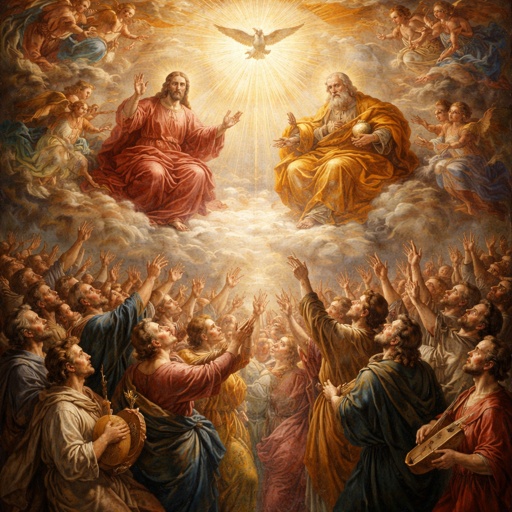
So that with one purpose and one voice you may glorify the God and Father of our Lord Jesus Christ Romans 15:6

Romans 10:13-15

Romans 8:15-16

Romans 6:23

Romans 8:6

Romans 6:23
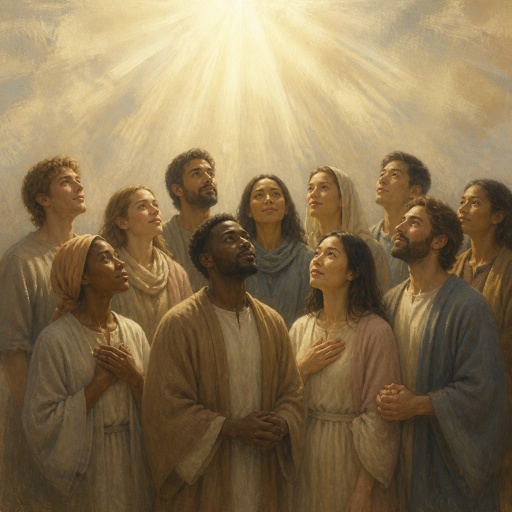
"That ye may with one mind and one mouth glorify God, even the Father of our Lord Jesus Christ." - Romans 15:6

Romans 3:15 - "Their feet are swift to shed blood:"

Romans 15:5-6 - "May the God who gives endurance and encouragement give you the same attitude of mind toward each other that Christ Jesus had, so that with one mind and one voice you may glorify the God and Father of our Lord Jesus Christ."

Romans 15:33 - "Now the God of peace be with you all. Amen."

Romans 12:15 - "Rejoice with them that do rejoice, and weep with them that weep."

Romans 4:15 - "Because the law worketh wrath: for where no law is, there is no transgression."

Romans 15:25 - "But now I go unto Jerusalem to minister unto the saints."

Romans 15:10 - "And again he saith, Rejoice, ye Gentiles, with his people."

Romans 6:7 - "For he that is dead is freed from sin."

Romans 15:1 - "We then that are strong ought to bear the infirmities of the weak, and not to please ourselves."

Romans 15:32 - "That I may come unto you with joy by the will of God, and may with you be refreshed."

Romans 15:2 - "Let every one of us please his neighbour for his good to edification."

Romans 15:15 - "Nevertheless, brethren, I have written the more boldly unto you in some sort, as putting you in mind, because of the grace that is given to me of God,"

Romans 2:6 - "Who will render to every man according to his deeds:"

Romans 6:6 - "Knowing this, that our old man is crucified with him, that the body of sin might be destroyed, that henceforth we should not serve sin."

"Their feet are swift to shed blood:" - Romans 3:15

Romans 8:6 - "For to be carnally minded is death; but to be spiritually minded is life and peace."

Romans 16:6 - "Greet Mary, who bestowed much labour on us."

Romans 1:6 - "Among whom are ye also the called of Jesus Christ:"

Romans 3:6 - "God forbid: for then how shall God judge the world?"

Romans 15:21 - "But as it is written, To whom he was not spoken of, they shall see: and they that have not heard shall understand."