What does Romans 4:4 mean?
"Now to him that worketh is the reward not reckoned of grace, but of debt." - Romans 4:4

Romans 4:4 in the King James Version of the Bible reads: "Now to him that worketh is the reward not reckoned of grace, but of debt."
This verse is part of the larger context of Romans 4, where the apostle Paul is addressing the relationship between faith and works in the context of God's grace and justification. In this particular verse, Paul is addressing the idea that salvation or justification cannot be earned through human effort or works, but rather comes through God's grace.
The verse begins with the phrase "Now to him that worketh," which speaks to the idea of human effort and labor. Throughout history, many religions and belief systems have emphasized the importance of good deeds and moral living as a means of earning favor with a higher power. However, Paul is challenging this notion by stating that the reward for such work is not reckoned of grace, but of debt. In other words, if salvation were based on human effort, it would be a debt that God owed to us in exchange for our labor. However, this is not the case. Salvation is not something that can be earned or deserved; it is a gift from God, given out of His grace and mercy.
This idea is foundational to the Christian faith and to the message of the gospel. The Bible teaches that all have sinned and fall short of the glory of God (Romans 3:23) and that the wages of sin is death (Romans 6:23). In other words, no amount of good works or personal efforts could ever bridge the gap between humanity and a holy God. It is only through God's grace, demonstrated through the sacrificial death and resurrection of Jesus Christ, that salvation is made possible.
This verse also speaks to the broader theme of grace versus legalism. Throughout his letters, Paul emphasizes the importance of God's grace as the means of salvation, as opposed to a legalistic mindset focused on following a set of rules or earning favor through works. In Ephesians 2:8-9, Paul writes, "For by grace are ye saved through faith; and that not of yourselves: it is the gift of God: Not of works, lest any man should boast." This echoes the sentiment of Romans 4:4, emphasizing that salvation is a gift from God, not something that can be earned through human effort.
The concept of grace is a central theme throughout the New Testament, and it is rooted in the Old Testament as well. In the Old Testament, we see numerous examples of God's grace extended to His people, despite their unfaithfulness and disobedience. The entire story of redemption, from the Israelites' deliverance from slavery in Egypt to the establishment of the covenant and the promise of a Messiah, is a testimony to God's grace and faithfulness.
In terms of symbolism, the verse can be seen as a contrast between the attitudes of entitlement and gratitude. If salvation were something that could be earned through labor, it would lead to an attitude of entitlement and pride. However, recognizing that salvation is a gift of grace fosters a spirit of gratitude and humility. This distinction is important for believers to understand, as it shapes their perspective on their relationship with God and their interactions with others.
In conclusion, Romans 4:4 serves as a powerful reminder of the central importance of God's grace in the Christian faith. It challenges the mindset of earning salvation through human effort and emphasizes the need for humility and gratitude in response to the gift of grace. This verse, along with the broader context of Romans 4 and the teachings of the New Testament, provides believers with a firm foundation for understanding the nature of salvation and our relationship with God.
Have questions about Romans 4:4?
Dive deeper into this scripture with Bible Chat — an AI-powered tool for exploring God's Word through conversation. Ask questions, get context, and grow in your understanding of the Bible.
Get Our Apps


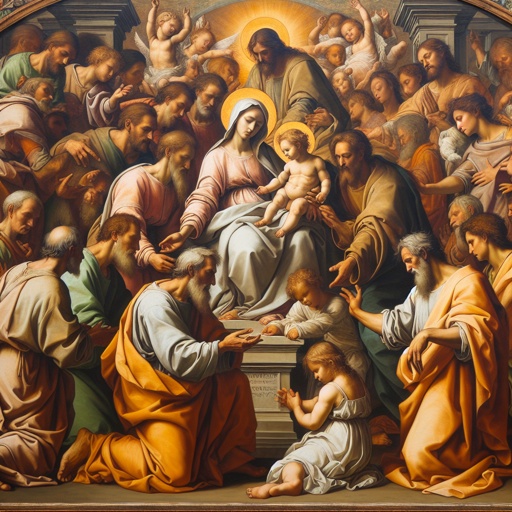
Romans 4:4 Artwork

Romans 4:4 - "Now to him that worketh is the reward not reckoned of grace, but of debt."

"Now to him that worketh is the reward not reckoned of grace, but of debt." - Romans 4:4

Romans 2:4

Romans 4:3
romans 12: 4-5

Romans 5:4 - "And patience, experience; and experience, hope:"

Romans 4:22 - "And therefore it was imputed to him for righteousness."

Romans 4:8 - "Blessed is the man to whom the Lord will not impute sin."

Romans 4:15 - "Because the law worketh wrath: for where no law is, there is no transgression."

Romans 10:4 - "For Christ is the end of the law for righteousness to every one that believeth."

Romans 4:23 - "Now it was not written for his sake alone, that it was imputed to him;"

Romans 4:7 - "Saying, Blessed are they whose iniquities are forgiven, and whose sins are covered."

Romans 4:10 - "How was it then reckoned? when he was in circumcision, or in uncircumcision? Not in circumcision, but in uncircumcision."

Romans 4:25 - "Who was delivered for our offences, and was raised again for our justification."

"And patience, experience; and experience, hope:" - Romans 5:4

"And therefore it was imputed to him for righteousness." - Romans 4:22

Romans 1:4 - "And declared to be the Son of God with power, according to the spirit of holiness, by the resurrection from the dead:"

Romans 4:3 - "For what saith the scripture? Abraham believed God, and it was counted unto him for righteousness."

Romans 4:14 - "For if they which are of the law be heirs, faith is made void, and the promise made of none effect:"

Romans 4:2 - "For if Abraham were justified by works, he hath whereof to glory; but not before God."

Romans 4:5 - "But to him that worketh not, but believeth on him that justifieth the ungodly, his faith is counted for righteousness."

Romans 12:4 - "For as we have many members in one body, and all members have not the same office:"

Romans 8:4 - "That the righteousness of the law might be fulfilled in us, who walk not after the flesh, but after the Spirit."

Romans 4:21 - "And being fully persuaded that, what he had promised, he was able also to perform."

Romans 4:1 - "What shall we say then that Abraham our father, as pertaining to the flesh, hath found?"

Romans 4:20 - "He staggered not at the promise of God through unbelief; but was strong in faith, giving glory to God;"

Romans 9:4 - "Who are Israelites; to whom pertaineth the adoption, and the glory, and the covenants, and the giving of the law, and the service of God, and the promises;"

Romans 2:4 - "Or despisest thou the riches of his goodness and forbearance and longsuffering; not knowing that the goodness of God leadeth thee to repentance?"

Romans 4:13 - "For the promise, that he should be the heir of the world, was not to Abraham, or to his seed, through the law, but through the righteousness of faith."

Romans 4:6 - "Even as David also describeth the blessedness of the man, unto whom God imputeth righteousness without works,"