What does Romans 4:3 mean?
"For what saith the scripture? Abraham believed God, and it was counted unto him for righteousness." - Romans 4:3
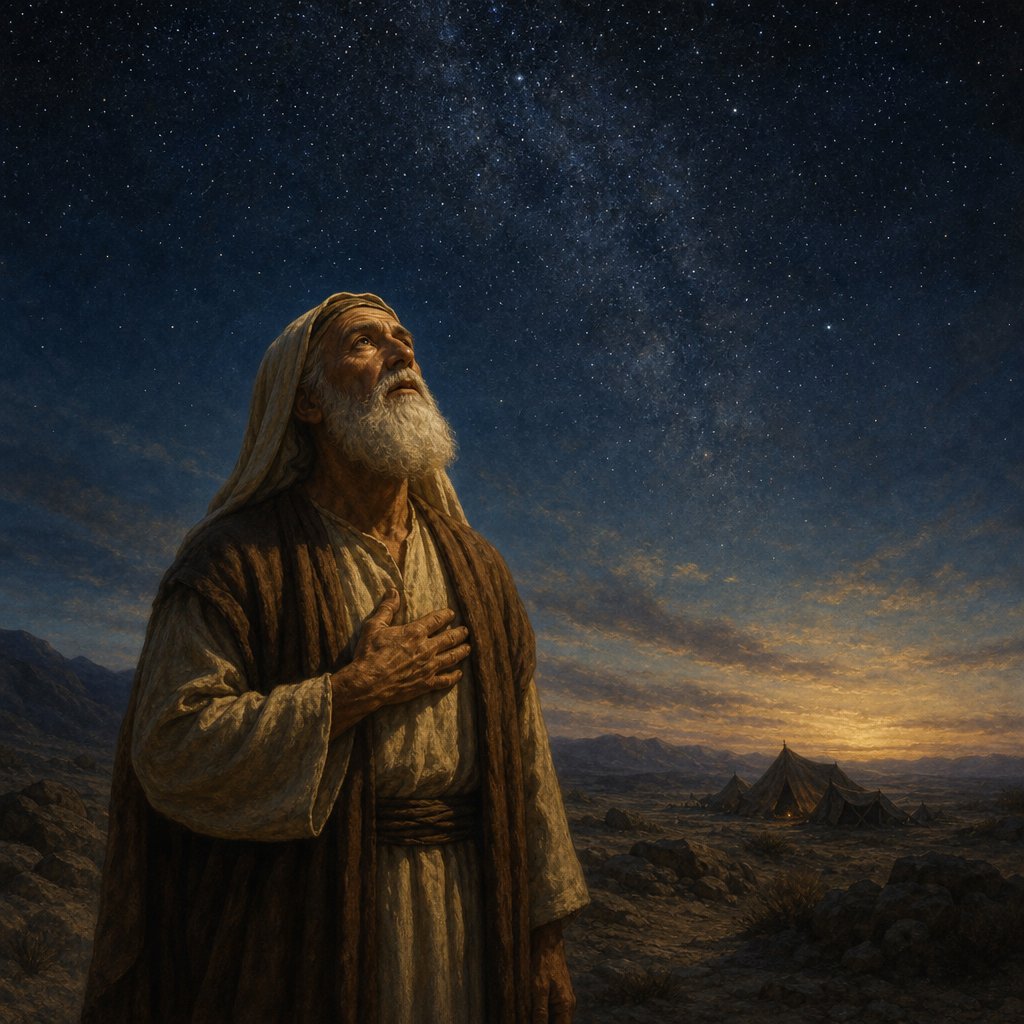
Romans 4:3 in the King James Version (KJV) reads, "For what saith the scripture? Abraham believed God, and it was counted unto him for righteousness." This verse is a pivotal moment in the book of Romans, and it addresses the key theme of righteousness through faith.
The book of Romans, written by the Apostle Paul, is a letter to the believers in Rome. It is a theological masterpiece that dives deep into the nature of sin, salvation, and the righteousness of God. In Chapter 4, Paul uses the example of Abraham, the father of the Jewish nation, to illustrate the concept of righteousness through faith.
The verse starts with the question, "For what saith the scripture?" This signals that Paul is about to reference the Old Testament as evidence for his argument. He draws upon the story of Abraham from the book of Genesis, where it is said that Abraham believed God, and it was counted unto him for righteousness. This refers to Genesis 15:6, which says, "And he believed in the Lord; and he counted it to him for righteousness."
This concept of righteousness being attained through faith is central to the Christian faith. It speaks to the idea that no one can earn their way to righteousness through their own deeds or actions. Instead, it is through belief in God and his promises that one can be counted as righteous. This is a key distinction from other religious systems that emphasize works-based salvation.
The example of Abraham is crucial because he was considered the father of the Jewish faith. Paul uses him to show that even Abraham, a man highly revered in Jewish tradition, was declared righteous by his faith and not by his works. This would have been a radical idea to the Jewish audience, as they were steeped in the tradition of following the law and commandments to attain righteousness.
The theme of righteousness through faith is further developed in the subsequent verses as Paul contrasts the difference between works and grace. He argues that if righteousness came through the law, then faith would be void and the promise of God nullified. Instead, Paul asserts that it is faith that brings about the fulfillment of God's promises and the imputation of righteousness.
This verse also reflects the broader context of the book of Romans, where Paul addresses the universal need for righteousness. He outlines the sinful state of humanity and the condemnation that all people face apart from faith in Christ. By using Abraham as an example, Paul demonstrates that righteousness through faith predates the law and is available to both Jews and Gentiles.
The symbolism in this verse is profound. Abraham, as the father of the Jewish nation, represents the patriarchal lineage of faith. His belief in God's promises serves as a model for all believers to follow. The act of God counting his faith as righteousness foreshadows the grace and mercy extended to all who believe in Jesus Christ.
In conclusion, Romans 4:3 in the King James Version encapsulates the core message of the book of Romans and the broader Christian faith. It highlights the central theme of righteousness through faith and uses the example of Abraham to illustrate this concept. The verse serves as a reminder that salvation is not attained through one's own efforts, but through trust and belief in the promises of God. It is a foundational truth that continues to shape the Christian understanding of grace and salvation.
Have questions about Romans 4:3?
Dive deeper into this scripture with Bible Chat — an AI-powered tool for exploring God's Word through conversation. Ask questions, get context, and grow in your understanding of the Bible.
Get Our Apps


Romans 4:3 Artwork

Romans 4:3

Romans 4:3 - "For what saith the scripture? Abraham believed God, and it was counted unto him for righteousness."
"For what saith the scripture? Abraham believed God, and it was counted unto him for righteousness." - Romans 4:3
"For what saith the scripture? Abraham believed God, and it was counted unto him for righteousness." - Romans 4:3

Romans 5:3-4 - "And not only so, but we glory in tribulations also: knowing that tribulation worketh patience; And patience, experience; and experience, hope."

Romans 3:3-4 - "For what if some were unfaithful? Will their unfaithfulness nullify God's faithfulness? Not at all! Let God be true, and every human being a liar. As it is written: "So that you may be proved right when you speak and prevail when you judge.""

Romans 3:4 - "God forbid: yea, let God be true, but every man a liar; as it is written, That thou mightest be justified in thy sayings, and mightest overcome when thou art judged."

Romans 2:4

Romans 3:24

Romans 4:4 - "Now to him that worketh is the reward not reckoned of grace, but of debt."

Romans 3:16 - "Destruction and misery are in their ways:"
romans 12: 4-5

Romans 3:17 - "And the way of peace have they not known:"

Romans 5:4 - "And patience, experience; and experience, hope:"

Romans 4:22 - "And therefore it was imputed to him for righteousness."

Romans 3:15 - "Their feet are swift to shed blood:"

Romans 3:10 - "As it is written, There is none righteous, no, not one:"

Romans 3:18 - "There is no fear of God before their eyes."

Romans 3:3 - "For what if some did not believe? shall their unbelief make the faith of God without effect?"

Romans 3:14 - "Whose mouth is full of cursing and bitterness:"

"And not only so, but we glory in tribulations also: knowing that tribulation worketh patience; And patience, experience; and experience, hope." - Romans 5:3-4

Romans 4:8 - "Blessed is the man to whom the Lord will not impute sin."

Romans 3:11 - "There is none that understandeth, there is none that seeketh after God."

Romans 16:3 - "Greet Priscilla and Aquila my helpers in Christ Jesus:"

Romans 4:15 - "Because the law worketh wrath: for where no law is, there is no transgression."

Romans 10:4 - "For Christ is the end of the law for righteousness to every one that believeth."

Romans 4:23 - "Now it was not written for his sake alone, that it was imputed to him;"

Romans 3:1 - "What advantage then hath the Jew? or what profit is there of circumcision?"

Romans 3:23 - "For all have sinned, and come short of the glory of God;"

Romans 3:6 - "God forbid: for then how shall God judge the world?"