What does Romans 4:25 mean?
"Who was delivered for our offences, and was raised again for our justification." - Romans 4:25
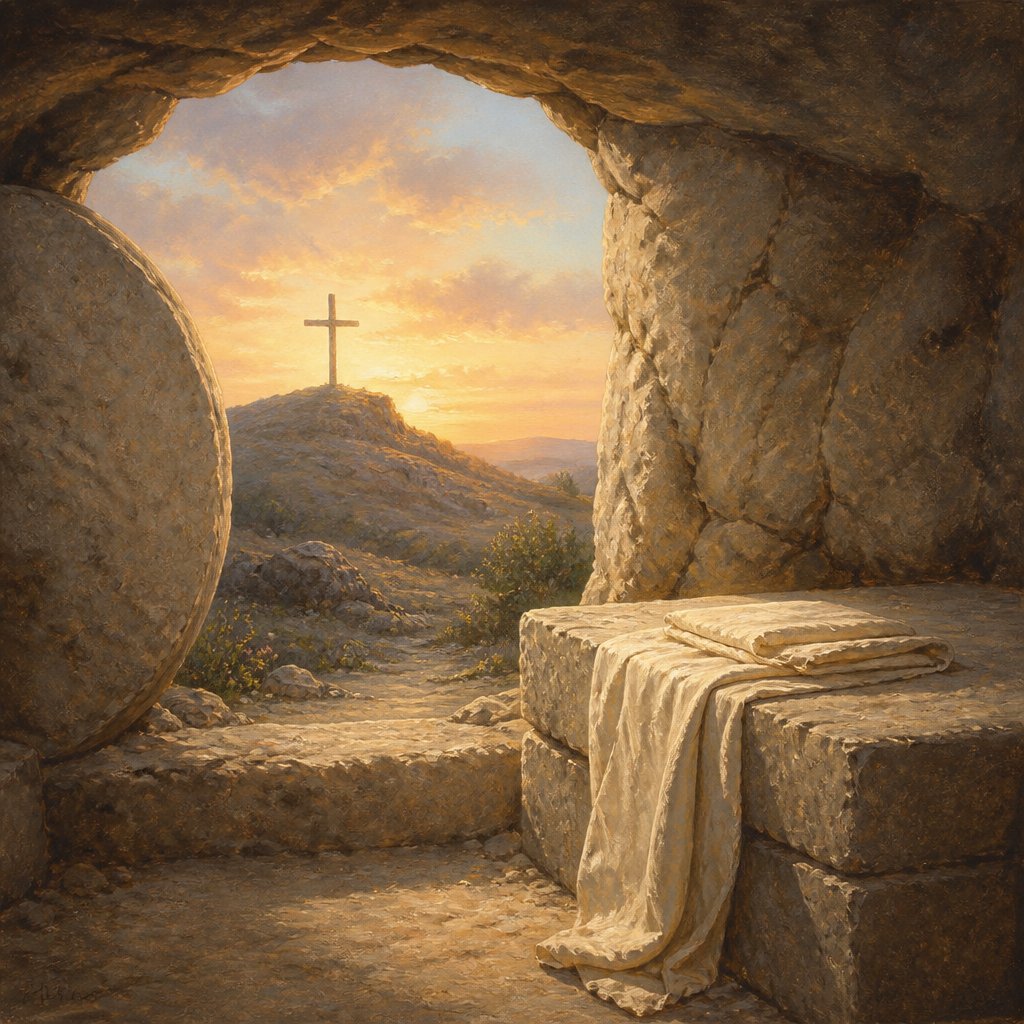
Romans 4:25 in the King James Version of the Bible states: "Who was delivered for our offences, and was raised again for our justification." This verse encapsulates the core message of Christianity and holds within it deep theological and spiritual significance.
The verse is part of the larger passage in which the apostle Paul discusses the concept of justification by faith. He uses the example of Abraham, the father of the Israelite nation, to illustrate how faith in God leads to righteousness. In this specific verse, Paul focuses on the role of Jesus Christ in securing the believers' justification.
The verse begins with the statement "Who was delivered for our offences," referring to Jesus Christ. This phrase brings to mind the idea of atonement and sacrifice. The word "delivered" implies a deliberate and purposeful act, indicating that Jesus willingly took upon himself the burden of human sin. This act of self-sacrifice is central to Christian theology, representing the ultimate expression of love and grace. Jesus, as the perfect and sinless Son of God, took on the sins of humanity in order to reconcile them with God. This concept of atonement is deeply rooted in the Old Testament sacrificial system, where the shedding of blood was required for the forgiveness of sins. In the New Testament, Jesus becomes the ultimate and final sacrifice, fulfilling all the requirements of the Mosaic Law and providing a way for humanity to be reconciled with God.
The phrase "and was raised again for our justification" serves as the second part of the verse, highlighting the resurrection of Jesus Christ. This event is of paramount importance in Christian belief, as it signifies the victory of life over death and the completion of God's redemptive plan. The resurrection serves as proof of Jesus' divinity and as the basis for the Christian hope of eternal life. In the context of justification, the resurrection is what validates Jesus' sacrifice as effective for the forgiveness of sins. It demonstrates that God accepted Jesus' atoning work and confirms believers' justification before God. Through the resurrection, Jesus conquered sin and death, offering the promise of new life to all who believe in him.
The verse, therefore, contains the key elements of the Christian gospel – the crucifixion and resurrection of Jesus Christ. These events are central to the Christian faith and are the foundation of Christian theology. The verse speaks to the heart of the Christian message, emphasizing the role of Jesus as the savior and redeemer of humanity.
In the wider context of the book of Romans, this verse is part of Paul's systematic presentation of the gospel and the implications of justification by faith. He addresses the universal need for salvation, the sufficiency of Christ's sacrifice, the role of faith in receiving righteousness, and the implications of this justification for the believer's life. The verse is part of Paul's larger argument that salvation is a result of God's grace through faith and not based on human works or merit.
In terms of symbolism, the verse symbolizes the transformative power of Christ's sacrifice and resurrection. It represents the idea of divine exchange, where Jesus takes on the sins of humanity and in return offers the gift of righteousness and reconciliation with God. The verse also symbolizes the victory of life over death, hope over despair, and grace over condemnation.
In conclusion, Romans 4:25 is a profound and significant verse in the Christian faith. It encapsulates the core message of salvation through Jesus Christ's sacrificial death and resurrection. It symbolizes the central tenets of the Christian gospel and holds deep theological and spiritual meaning for believers. As a part of the broader context of Romans, it is a foundational statement of Paul's theology of justification by faith. The verse continues to inspire, reassure, and challenge Christians in their understanding of God's redemptive work in Christ.
Have questions about Romans 4:25?
Dive deeper into this scripture with Bible Chat — an AI-powered tool for exploring God's Word through conversation. Ask questions, get context, and grow in your understanding of the Bible.
Get Our Apps


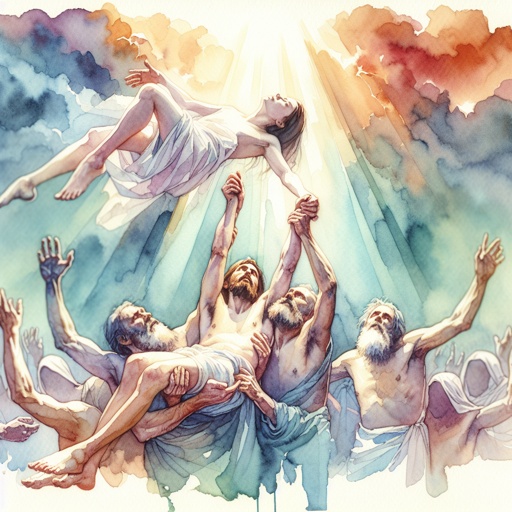
Romans 4:25 Artwork

Romans 4:25 - "Who was delivered for our offences, and was raised again for our justification."
"Who was delivered for our offences, and was raised again for our justification." - Romans 4:25

Romans 11:25-32

Romans 15:25 - "But now I go unto Jerusalem to minister unto the saints."

Romans 8:25 - "But if we hope for that we see not, then do we with patience wait for it."

Romans 2:4

Romans 4:3

Romans 4:4 - "Now to him that worketh is the reward not reckoned of grace, but of debt."
romans 12: 4-5

Romans 2:25 - "For circumcision verily profiteth, if thou keep the law: but if thou be a breaker of the law, thy circumcision is made uncircumcision."

Romans 5:4 - "And patience, experience; and experience, hope:"

Romans 4:22 - "And therefore it was imputed to him for righteousness."

Romans 1:25 - "Who changed the truth of God into a lie, and worshipped and served the creature more than the Creator, who is blessed for ever. Amen."

Romans 4:8 - "Blessed is the man to whom the Lord will not impute sin."

Romans 9:25 - "As he saith also in Osee, I will call them my people, which were not my people; and her beloved, which was not beloved."

Romans 4:15 - "Because the law worketh wrath: for where no law is, there is no transgression."

Romans 10:4 - "For Christ is the end of the law for righteousness to every one that believeth."

Romans 4:23 - "Now it was not written for his sake alone, that it was imputed to him;"

Romans 7:25 - "I thank God through Jesus Christ our Lord. So then with the mind I myself serve the law of God; but with the flesh the law of sin."
"But now I go unto Jerusalem to minister unto the saints." - Romans 15:25

"But if we hope for that we see not, then do we with patience wait for it." - Romans 8:25

Romans 4:7 - "Saying, Blessed are they whose iniquities are forgiven, and whose sins are covered."

"But Festus answered, that Paul should be kept at Caesarea, and that he himself would depart shortly thither." - Acts 25:4

"Now to him that worketh is the reward not reckoned of grace, but of debt." - Romans 4:4

Acts 22:25 - "And as they bound him with thongs, Paul said unto the centurion that stood by, Is it lawful for you to scourge a man that is a Roman, and uncondemned?"

Romans 3:25 - "Whom God hath set forth to be a propitiation through faith in his blood, to declare his righteousness for the remission of sins that are past, through the forbearance of God;"

Romans 4:10 - "How was it then reckoned? when he was in circumcision, or in uncircumcision? Not in circumcision, but in uncircumcision."

Genesis 25-4
(Romans 7:25) Thanks be to God, who delivers me through Jesus Christ our Lord!"

"And patience, experience; and experience, hope:" - Romans 5:4