What does Romans 16:14 mean?
"Salute Asyncritus, Phlegon, Hermas, Patrobas, Hermes, and the brethren which are with them." - Romans 16:14
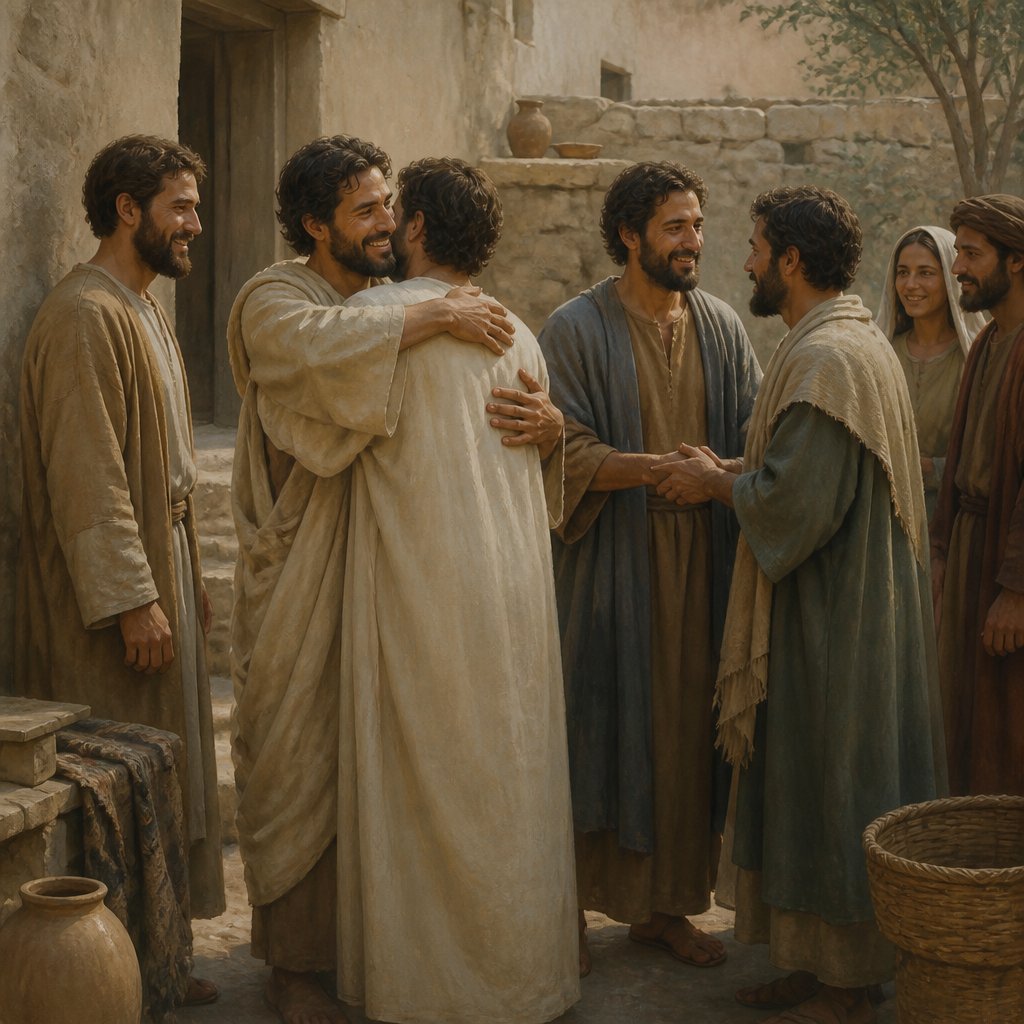
Romans 16:14 in the King James Version of the Bible reads, "Salute Asyncritus, Phlegon, Hermas, Patrobas, Hermes, and the brethren which are with them." This verse is part of the final chapter of the Book of Romans, where the apostle Paul is sending greetings to various individuals in the church at Rome.
In this particular verse, Paul is sending his greetings to six specific individuals: Asyncritus, Phlegon, Hermas, Patrobas, Hermes, and the brethren who are with them. Though these names may seem unfamiliar to modern readers, they were likely well-known and respected members of the early Christian community in Rome. By mentioning them by name, Paul is acknowledging their contributions and expressing his affection for them.
The greeting in Romans 16:14 is not just a casual salutation, but it also carries deeper significance. In the first century, greetings were a significant form of social interaction, and they played an important role in cultivating and maintaining relationships within the Christian community. By including these individuals in his greetings, Paul is demonstrating the importance of unity and fellowship among believers.
The names mentioned in this verse also hold symbolic meaning. Asyncritus, Phlegon, Hermas, Patrobas, and Hermes were likely leaders or prominent members of the church in Rome. Their inclusion in Paul's greetings highlights the diversity and inclusivity within the early Christian community. These individuals may have come from different backgrounds, social statuses, or even ethnicities, but they were all bound together by their faith in Christ.
Furthermore, the fact that Paul specifically mentions the brethren who were with these individuals emphasizes the communal aspect of the early church. Christianity was never meant to be a solitary pursuit, but rather a shared journey with fellow believers. The emphasis on community and fellowship is a recurring theme throughout the New Testament, and it is one that is particularly relevant in our modern society, where individualism often prevails.
The Book of Romans as a whole deals with theological and practical aspects of the Christian faith, and the final chapter, including verse 14, serves as a reminder of the importance of personal relationships and unity within the body of Christ. It underscores the idea that the Christian life is not just about individual beliefs and practices, but also about living in harmony and mutual support with other believers.
In a broader context, Romans 16:14 also reflects the universal nature of the gospel. The early Christian community in Rome was diverse, encompassing people from various cultural and social backgrounds. By extending his greetings to these individuals, Paul is affirming the global reach and impact of the Christian faith. This inclusivity and diversity are fundamental components of the Christian message, as it is a message that transcends cultural, social, and ethnic boundaries.
In conclusion, Romans 16:14 may seem like a simple greeting, but it carries profound significance in terms of community, fellowship, and the universal nature of the gospel. It serves as a reminder of the importance of personal relationships and unity within the body of Christ, and it underscores the diversity and inclusivity that are inherent in the Christian faith. As modern readers, we can draw inspiration from this verse to cultivate meaningful relationships within our own Christian communities and to embrace the diversity and inclusivity that are central to the gospel message.
Have questions about Romans 16:14?
Dive deeper into this scripture with Bible Chat — an AI-powered tool for exploring God's Word through conversation. Ask questions, get context, and grow in your understanding of the Bible.
Get Our Apps


Romans 16:14 Artwork

Romans 16:14 - "Salute Asyncritus, Phlegon, Hermas, Patrobas, Hermes, and the brethren which are with them."
"Salute Asyncritus, Phlegon, Hermas, Patrobas, Hermes, and the brethren which are with them." - Romans 16:14

Romans 14:16 - "Let not then your good be evil spoken of:"

"Let not then your good be evil spoken of:" - Romans 14:16

Romans 8:16

Romans 16:17

Romans 16:17

Romans 16:17

Romans 14:12

Romans 8:14

Romans 10:14

Romans 16:16 - "Salute one another with an holy kiss. The churches of Christ salute you."

Romans 8:15-16

Romans 3:16 - "Destruction and misery are in their ways:"

Romans 16:8 - "Greet Amplias my beloved in the Lord."

Romans 1:16 to the Jew first

Romans 3:14 - "Whose mouth is full of cursing and bitterness:"

Romans 16:6 - "Greet Mary, who bestowed much labour on us."

Romans 16:3 - "Greet Priscilla and Aquila my helpers in Christ Jesus:"

Romans 16:13 - "Salute Rufus chosen in the Lord, and his mother and mine."

Romans 8:14 - "For as many as are led by the Spirit of God, they are the sons of God."

"Destruction and misery are in their ways:" - Romans 3:16

Romans 14:7 - "For none of us liveth to himself, and no man dieth to himself."

depict the theme of Romans 13:8-14

Romans 16:24 - "The grace of our Lord Jesus Christ be with you all. Amen."

Romans 16:9 - "Salute Urbane, our helper in Christ, and Stachys my beloved."

Romans 16:22 - "I Tertius, who wrote this epistle, salute you in the Lord."

Romans 14:1 - "Him that is weak in the faith receive ye, but not to doubtful disputations."

Romans 12:14 - "Bless them which persecute you: bless, and curse not."

Romans 9:14 - "What shall we say then? Is there unrighteousness with God? God forbid."