What does Romans 12:10 mean?
"Be kindly affectioned one to another with brotherly love; in honour preferring one another;" - Romans 12:10

“Be kindly affectioned one to another with brotherly love; in honour preferring one another.” (Romans 12:10, KJV)
Romans 12:10 stands as a compact portrait of what renewed life in Christ is meant to look like when it is translated out of doctrine and into daily relationships. Paul is writing to believers in Rome after having spent the earlier chapters of Romans unfolding the mercies of God in the gospel: mankind’s need, God’s righteousness, justification by faith, the place of Israel and the Gentiles in God’s plan, and the surety of God’s saving purpose. When Romans 12 opens, the tone turns from explanation to exhortation: “I beseech you therefore, brethren, by the mercies of God” (Romans 12:1, KJV). That “therefore” matters. The love commanded in verse 10 is not presented as a method of earning God’s favor, but as the fitting fruit of having received God’s mercy. The verse belongs to a stream of practical instructions describing the transformed mind and the new community shaped by grace, where believers are pictured as “one body in Christ” with differing gifts but a single life shared together (Romans 12:4–5, KJV).
The first phrase, “Be kindly affectioned one to another,” reaches deeper than mere politeness. It speaks of tender-hearted warmth, a familial attachment that is not coldly dutiful. The verse does not call for detached civility, but for an affection that behaves like family affection—steady, personal, and protective. The next phrase, “with brotherly love,” intensifies this by naming the kind of love: the love that exists between brethren. In the setting of the church, this brotherhood is not grounded in bloodline or social similarity but in shared life in Christ. The symbolism of “brotherly” is the symbolism of adoption and household. God is not only Judge and Creator in Romans; he is also Father to those who are in Christ, and the church is to embody a household ethos rather than a crowd ethos. “Brotherly love” implies loyalty, patience with weakness, and a willingness to bear burdens, because brethren belong to one another. It is love that treats another believer not as a competitor, a tool, or an inconvenience, but as kin.
Yet Paul does not leave this affection as a feeling alone. He drives it into the realm of social posture and visible behavior: “in honour preferring one another.” In the world Paul is addressing, honour is a prized currency, often sought, guarded, and competed for. To “prefer” another in honour is to take the lower place willingly and to be intentional about lifting the other person up. The verse reverses the natural instinct to secure recognition for oneself. It does not mean denying the truth, flattering, or excusing sin; rather, it means choosing to give others the advantage in matters of esteem and consideration. It is the deliberate practice of counting another’s well-being and dignity as weighty. In a congregation made of different backgrounds and gifts, where envy, partiality, and status-seeking could easily fracture fellowship, this command functions like a safeguard: honour, instead of being hoarded, is shared; instead of being demanded, it is offered.
The broader context of Romans 12 shows that this is part of a unified portrait of sincere Christian love. Just before and after, Paul speaks of love without dissimulation, abhorring evil, cleaving to good, serving the Lord with fervency, blessing persecutors, living peaceably, and overcoming evil with good (Romans 12:9–21, KJV). In that stream, Romans 12:10 functions as the interpersonal heartbeat of the chapter. It ties inner transformation to communal health. If the mind is renewed and the body is one, then relationships must be marked by family affection and by an honour that moves outward. The verse also harmonizes with the earlier “one body” imagery: when believers are truly members one of another, preferring another in honour becomes as sensible as one part of the body protecting another. The symbolism is organic: the church is not a mere association but a living body, and the health of the whole is expressed in the care of each part for the others.
The significance, then, is that Romans 12:10 describes a distinctly Christian social ethic rooted in the gospel’s mercy and shaped by the new identity of God’s people. It calls the believer to cultivate a real, warm, family-like attachment to other believers, and to express that attachment through humble honour-giving—yielding precedence, granting respect, and seeking another’s good before one’s own acclaim. In doing so, the church becomes a visible witness of the mercies that began the chapter, showing in ordinary interactions what it means to live as those who have been transformed, gathered, and made brethren under one Lord.
Have questions about Romans 12:10?
Dive deeper into this scripture with Bible Chat — an AI-powered tool for exploring God's Word through conversation. Ask questions, get context, and grow in your understanding of the Bible.
Get Our Apps


Romans 12:10 Artwork

Romans 12:10 - "Be kindly affectioned one to another with brotherly love; in honour preferring one another;"

Romans 12:10-11 - "Be kindly affectionate to one another with brotherly love, in honor giving preference to one another; not lagging in diligence, fervent in spirit, serving the Lord."

"Be kindly affectioned one to another with brotherly love; in honour preferring one another;" - Romans 12:10
Romans 12:10 Be kindly affectionate to one another with brotherly love, in honor giving preference to one another;

Romans 12:10 KJV (10) Be kindly affectioned one to another with brotherly love; in honour preferring one another;

Romans 12:10 KJV (10) Be kindly affectioned one to another with brotherly love; in honour preferring one another;

Romans 12:10 KJV (10) Be kindly affectioned one to another with brotherly love; in honour preferring one another;

Romans 12:10 KJV (10) Be kindly affectioned one to another with brotherly love; in honour preferring one another;

Romans 12:10 KJV (10) Be kindly affectioned one to another with brotherly love; in honour preferring one another;

Romans 12:10 KJV (10) Be kindly affectioned one to another with brotherly love; in honour preferring one another;

Romans 12:10 KJV (10) Be kindly affectioned one to another with brotherly love; in honour preferring one another;

"Be kindly affectioned one to another with brotherly love; in honour preferring one another;" - Romans 12:10

Romans 12:10-13 - "Be devoted to one another in love. Honor one another above yourselves. Never be lacking in zeal, but keep your spiritual fervor, serving the Lord. Be joyful in hope, patient in affliction, faithful in prayer. Share with the Lord’s people who are in need. Practice hospitality."
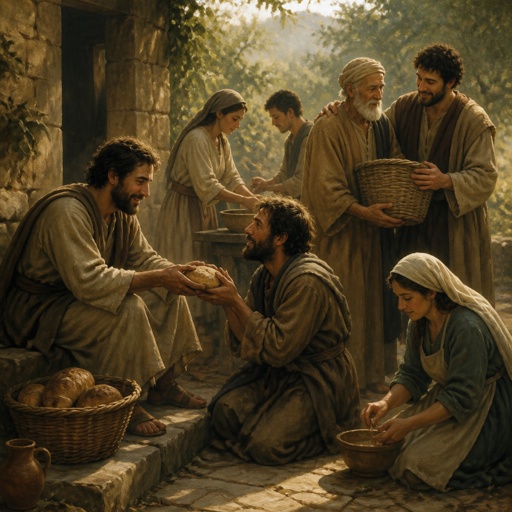
"Be kindly affectionate to one another with brotherly love, in honor giving preference to one another; not lagging in diligence, fervent in spirit, serving the Lord." - Romans 12:10-11

"Be devoted to one another in love. Honor one another above yourselves. Never be lacking in zeal, but keep your spiritual fervor, serving the Lord. Be joyful in hope, patient in affliction, faithful in prayer. Share with the Lord’s people who are in need. Practice hospitality." - Romans 12:10-13

romans 12:1-2

Romans 12:1-2

Romans 10:12 - "For there is no difference between the Jew and the Greek: for the same Lord over all is rich unto all that call upon him."

Romans 12:9-10 - "Love must be sincere. Hate what is evil; cling to what is good. Be devoted to one another in love. Honor one another above yourselves."

"Love must be sincere. Hate what is evil; cling to what is good. Be devoted to one another in love. Honor one another above yourselves." - Romans 12:9-10

Romans 12:2

Romans 12:2

Romans 12:2

Romans 12:2

Romans 12:2

Romans 12:2

Romans 12:2
Romans 12:9-10 (KJV) 9 Let love be without dissimulation. Abhor that which is evil; cleave to that which is good. 10 Be kindly affectioned one to another with brotherly love; in honour preferring one another;

Romans 10

Romans 12:2