What does Romans 11:3 mean?
"Lord, they have killed thy prophets, and digged down thine altars; and I am left alone, and they seek my life." - Romans 11:3
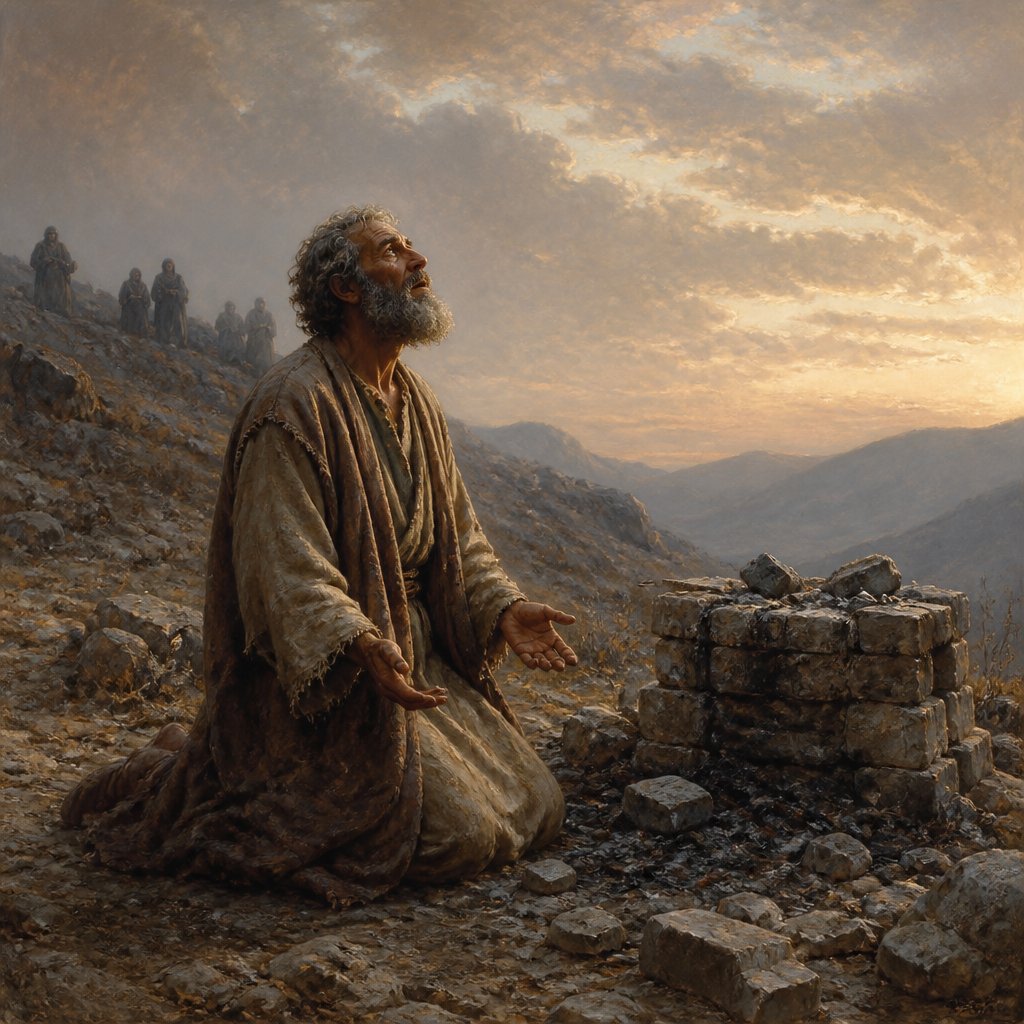
Romans 11:3 (KJV) says, "Lord, they have killed thy prophets, and digged down thine altars; and I am left alone, and they seek my life." This verse is a part of Paul's epistle to the Romans, in which he discusses the concept of God's faithfulness to Israel and the calling of the Gentiles. The verse specifically references a time in Israel's history when the prophet Elijah felt alone and abandoned by God, as he was the only one left who was faithful to the Lord.
In the context of the entire chapter of Romans 11, Paul addresses the issue of Israel's rejection of the gospel and God's ultimate plan for their salvation. He uses the analogy of the olive tree, with the natural branches representing Israel and the wild olive branches representing the Gentiles who have been grafted in. In verses 1-2, Paul asks if God has completely rejected His people, to which he emphatically responds by saying, "God forbid." This sets the stage for the verse in question, as Paul references the story of Elijah to illustrate his point about God's continued faithfulness to Israel.
The verse, "Lord, they have killed thy prophets, and digged down thine altars; and I am left alone, and they seek my life," is a direct quote from the Old Testament, specifically from 1 Kings 19:10. In this passage, Elijah is feeling discouraged and afraid after the confrontation with the prophets of Baal on Mount Carmel. He believed he was the only faithful follower of God left and that his life was in danger. This is a significant point of reference for Paul, as he is using it to demonstrate that even in Elijah's darkest moment, God was still present and faithful to him, and had preserved a remnant of faithful followers for Himself.
The themes found in Romans 11:3 include the faithfulness of God, the preservation of a remnant, and the tension between Israel and the Gentiles in God's redemptive plan. The faithfulness of God is a central theme throughout the Bible, and this verse serves as a reminder that even in the midst of persecution and apparent abandonment, God remains steadfast and true to His promises. The idea of a remnant is also significant, as it highlights the principle that God always preserves a faithful minority, even when the majority have turned away from Him.
The context of this verse is also important in understanding its significance. Paul is addressing the relationship between Israel and the Gentiles in God's plan of salvation. By referencing the story of Elijah, he is reminding the readers that even in times of apparent hopelessness and despair, God is still at work behind the scenes, preserving His chosen people and fulfilling His purposes. This provides hope for both the Jewish and Gentile believers in understanding God's sovereignty and faithfulness.
Furthermore, the symbolism found in the verse emphasizes the spiritual battle that is taking place. The killing of the prophets and the destruction of the altars represent the ongoing spiritual warfare between good and evil, and the persecution that the faithful often face. Elijah's feelings of being alone and hunted symbolize the sense of isolation and fear that believers may experience in their walk with God. However, as the story of Elijah ultimately reveals, God is always present and faithful, even in the midst of adversity.
In conclusion, Romans 11:3 is a powerful verse that encapsulates the themes of God's faithfulness, the preservation of a remnant, and the ongoing spiritual battle. Through the story of Elijah, Paul reminds the readers that God's plan of salvation extends to both Jews and Gentiles, and that His faithfulness endures even in the darkest moments of despair. This verse serves as a source of hope and encouragement for believers, as it affirms that God is always at work, even when it may seem that all is lost.
Have questions about Romans 11:3?
Dive deeper into this scripture with Bible Chat — an AI-powered tool for exploring God's Word through conversation. Ask questions, get context, and grow in your understanding of the Bible.
Get Our Apps


Romans 11:3 Artwork

Romans 11:3 - "Lord, they have killed thy prophets, and digged down thine altars; and I am left alone, and they seek my life."

"Lord, they have killed thy prophets, and digged down thine altars; and I am left alone, and they seek my life." - Romans 11:3

Romans 3:11 - "There is none that understandeth, there is none that seeketh after God."

"There is none that understandeth, there is none that seeketh after God." - Romans 3:11

Romans 11:11

Romans 11:18
Romans 11:18

Romans 11:18

Romans 11:18

Romans 11:18

Romans 11:18

Romans 11:18

Romans 8:11

Romans 5: 1-11

Romans 11:25-32

Romans 2:11 - "For there is no respect of persons with God."

Romans 5: 1-11

Romans 4:3

Romans 3:24

Romans 11:29 - "For the gifts and calling of God are without repentance."

Romans 3:16 - "Destruction and misery are in their ways:"

Romans 12:11 - "Not slothful in business; fervent in spirit; serving the Lord;"

Romans 3:17 - "And the way of peace have they not known:"

Romans 3:15 - "Their feet are swift to shed blood:"

Romans 3:10 - "As it is written, There is none righteous, no, not one:"

Romans 3:18 - "There is no fear of God before their eyes."

Romans 10:11 - "For the scripture saith, Whosoever believeth on him shall not be ashamed."

Romans 3:3 - "For what if some did not believe? shall their unbelief make the faith of God without effect?"

"For there is no respect of persons with God." - Romans 2:11

Romans 3:14 - "Whose mouth is full of cursing and bitterness:"