What does Romans 10:17 mean?
"So then faith cometh by hearing, and hearing by the word of God." - Romans 10:17
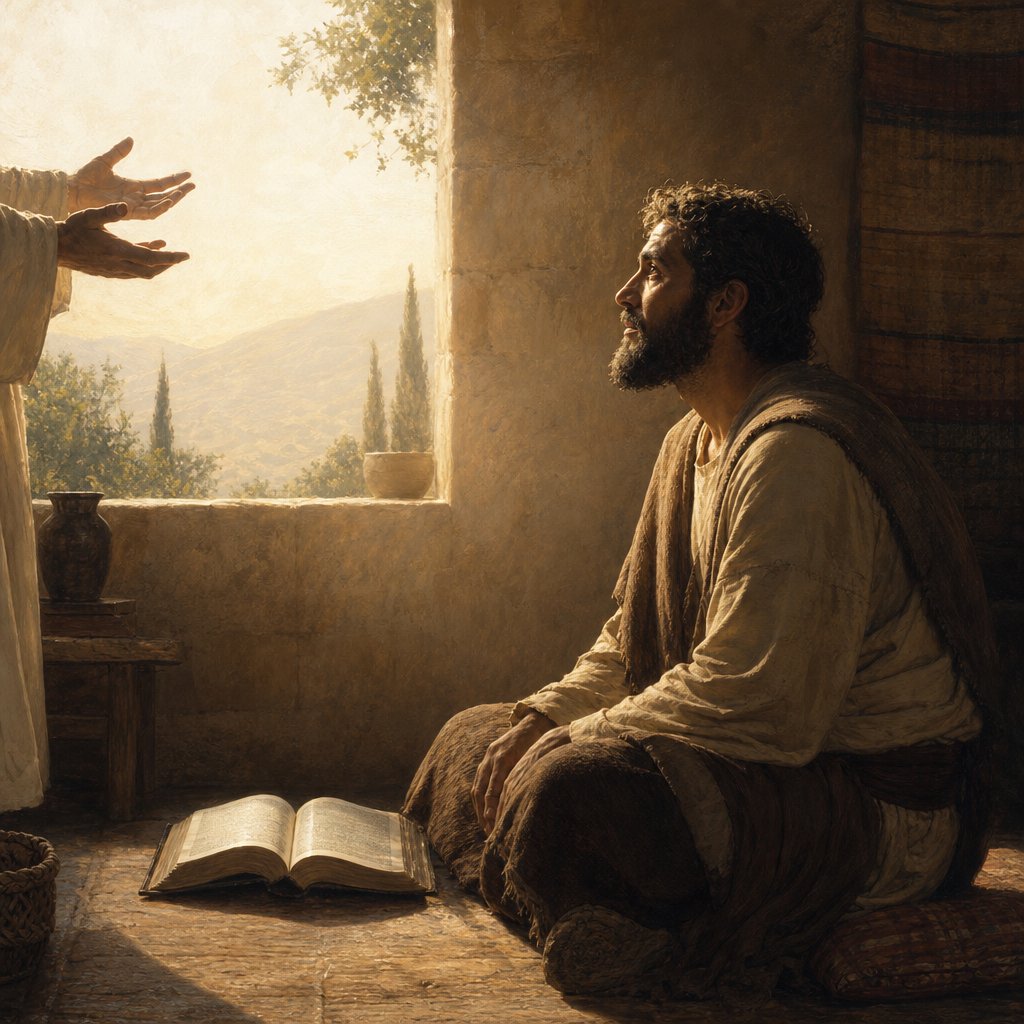
“Romans 10:17” in the King James Version reads, “So then faith cometh by hearing, and hearing by the word of God.” In the flow of Romans 10, Paul is explaining how God brings sinners to saving faith in Jesus Christ, and he is doing so with a steady, cause-and-effect kind of reasoning. The chapter is burdened with the question of Israel’s unbelief and the wider question of how anyone, Jew or Gentile, comes to call upon the Lord and be saved. Earlier in the same chapter Paul has already stated the promise, “For whosoever shall call upon the name of the Lord shall be saved” (Romans 10:13). But that raises practical and spiritual questions: How will people call on a Lord they do not believe in? How will they believe in one they have not heard? How will they hear without a preacher? And how will anyone preach unless sent? Romans 10:17 gathers those steps into a compact conclusion: faith arises in the God-appointed way, through hearing, and that hearing is produced “by the word of God.”
The verse’s main meaning is that true faith is not generated out of human imagination, private willpower, cultural inheritance, or vague spiritual instinct. Faith “cometh,” meaning it arrives from outside of us as something given and awakened in us, and God has chosen the channel by which it ordinarily comes: “hearing.” Paul’s emphasis is not merely on the physical act of sound entering the ear, but on receiving a proclaimed message. In Romans 10 the spoken message matters because salvation is tied to confessing with the mouth and believing in the heart the truth concerning Jesus Christ: “That if thou shalt confess with thy mouth the Lord Jesus, and shalt believe in thine heart that God hath raised him from the dead, thou shalt be saved” (Romans 10:9). The heart believes unto righteousness, but the heart does not invent the content it believes; it encounters the gospel from God’s own self-disclosure. That is why Paul immediately anchors hearing to its source: “hearing by the word of God.” The “word” is not a general religious word, nor simply moral advice, nor bare philosophy, but the divine message God speaks—His testimony, His promise, His command, and His gospel concerning His Son.
The verse also clarifies what Christian faith is. Faith is not blind optimism; it is trust resting on what God has said. The structure of the verse shows that the object and foundation of faith is the “word of God.” The word is first; faith follows. God speaks; man hears; faith comes. This keeps faith from being treated as a self-produced virtue that earns salvation. In Romans, Paul has already argued that righteousness is not attained by works but is received by faith, and that faith itself looks away from self and looks to God’s promise fulfilled in Christ. Romans 10:17, therefore, is not a motivational statement about believing harder; it is a declaration about God’s method: He creates and nourishes faith through His word.
The immediate context makes the “hearing” especially significant because Paul is dealing with the necessity of proclamation. The chapter highlights the beauty and urgency of preaching: “How beautiful are the feet of them that preach the gospel of peace, and bring glad tidings of good things!” (Romans 10:15). The gospel is not meant to remain hidden in private piety; it is meant to be announced. Faith comes in a relational, communicative way—God addressing man—rather than in an isolated inwardness where a person manufactures belief. This gives Romans 10:17 a missionary pulse. If faith comes by hearing, then silence is not neutral. The sending of preachers, the speaking of the message, and the hearing of that message are all part of God’s saving design. The verse dignifies the preached word: God uses it as an instrument to bring people to Himself.
There is also a sobering edge in the surrounding verses. Paul does not say that everyone who hears will believe; rather, he acknowledges that many refuse the message: “But they have not all obeyed the gospel. For Esaias saith, Lord, who hath believed our report?” (Romans 10:16). Then comes Romans 10:17, as if to say: the “report” is what people must hear, and this hearing is how faith comes, but the tragedy is that many hear and do not submit. This places responsibility on the listener as well as on the preacher. The word of God is sufficient and authoritative, but it must be received. The verse therefore carries both comfort and warning: comfort, because God has not left faith to chance—He provides His word; warning, because rejecting the word is rejecting the very means by which faith comes.
In its themes, Romans 10:17 is about revelation, not speculation. Christianity, as Paul presents it, is founded on God’s speech and God’s action in history—especially the death and resurrection of Christ—made known through God’s word. It is also about the ordinary means God uses. Paul does not point to hidden rites or secret knowledge; he points to something as plain as “hearing.” There is symbolism in that simplicity. Hearing implies receptivity. The ear does not create; it receives. In biblical imagery, the ear and the heart are often linked: to “hear” is to heed, to attend, to submit. Thus, “hearing by the word of God” suggests more than exposure to religious language; it suggests an encounter with God’s living address that calls for response. The word comes with divine authority, and faith is the human response God brings forth through that word.
The phrase “word of God” in Romans 10:17 also connects to the larger biblical idea that God’s word is active and effective. In Romans 10 itself, Paul has already spoken of “the word of faith, which we preach” (Romans 10:8), tying the preached gospel to the “word” that is “nigh thee, even in thy mouth, and in thy heart.” That nearness is important: God is not requiring an impossible ascent into heaven or descent into the deep to obtain salvation (Romans 10:6–7). Instead, God brings the saving message near through preaching, so that it can be heard, confessed, and believed. The symbolism of nearness underscores grace. Salvation is not a distant prize reached by human climbing; it is a gift announced by God and received by faith.
Finally, Romans 10:17 carries ongoing significance for the life of the believer and the church. If faith comes by hearing the word of God, then faith is sustained and strengthened in the same way. The Christian life does not move beyond the need for God’s word; it depends upon it. The verse honors the reading and preaching of Scripture, the public declaration of the gospel, and the personal attentiveness to what God has said. It insists that the content of faith must remain tethered to God’s word, so that faith is not reshaped by mere tradition, emotion, or the spirit of the age. In Paul’s logic and in the KJV’s plain cadence, Romans 10:17 presents a spiritual law of God’s kingdom: God speaks, and through that speaking He brings forth faith—“So then faith cometh by hearing, and hearing by the word of God.”
Have questions about Romans 10:17?
Dive deeper into this scripture with Bible Chat — an AI-powered tool for exploring God's Word through conversation. Ask questions, get context, and grow in your understanding of the Bible.
Get Our Apps


Romans 10:17 Artwork

Romans 10:17

Romans 10:17

Romans 10:17

Romans 10:17

Romans 10:17

Romans 10:17

Romans 10:17

Romans 10:17

Romans 10:17 - "So then faith cometh by hearing, and hearing by the word of God."

"So then faith cometh by hearing, and hearing by the word of God." - Romans 10:17

"So then faith cometh by hearing, and hearing by the word of God." - Romans 10:17

Romans 16:17

Romans 16:17

Romans 16:17

Romans 10

Romans 3:17 - "And the way of peace have they not known:"

Romans 10:14

Romans 10:9

Romans 10:9

Romans 10:13-15

Romans 7:17 - "Now then it is no more I that do it, but sin that dwelleth in me."

Romans 10:10 - "For with the heart man believeth unto righteousness; and with the mouth confession is made unto salvation."

Romans 3:10 - "As it is written, There is none righteous, no, not one:"

"And the way of peace have they not known:" - Romans 3:17

Romans 14:17 - "For the kingdom of God is not meat and drink; but righteousness, and peace, and joy in the Holy Ghost."

Romans 2:17 - "Behold, thou art called a Jew, and restest in the law, and makest thy boast of God,"

Romans 12:17 - "Recompense to no man evil for evil. Provide things honest in the sight of all men."

Romans 10:4 - "For Christ is the end of the law for righteousness to every one that believeth."

Romans 10:11 - "For the scripture saith, Whosoever believeth on him shall not be ashamed."

Romans 1:17 - "For therein is the righteousness of God revealed from faith to faith: as it is written, The just shall live by faith."