What does Revelation 7:9 mean?
"After this I beheld, and, lo, a great multitude, which no man could number, of all nations, and kindreds, and people, and tongues, stood before the throne, and before the Lamb, clothed with white robes, and palms in their hands;" - Revelation 7:9
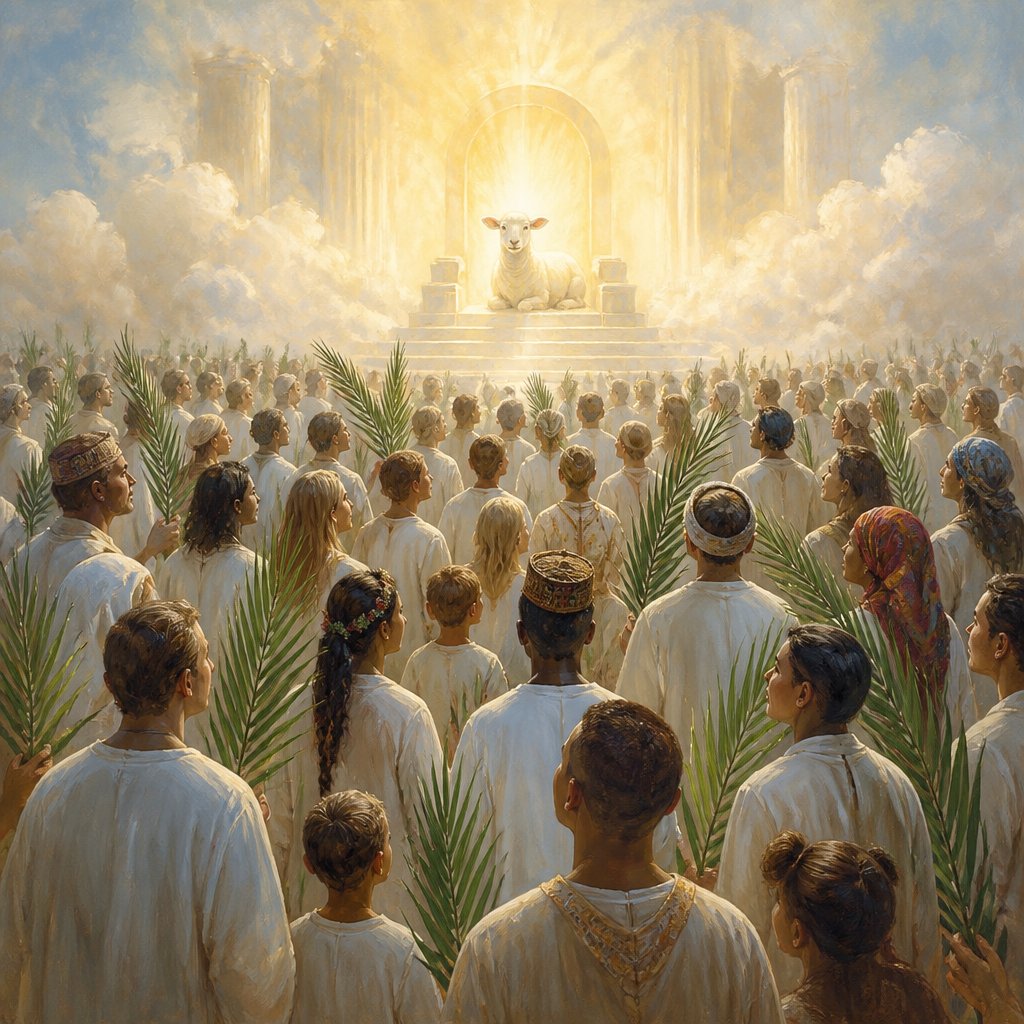
Revelation 7:9 in the King James Version reads, “After this I beheld, and, lo, a great multitude, which no man could number, of all nations, and kindreds, and people, and tongues, stood before the throne, and before the Lamb, clothed with white robes, and palms in their hands.” Its meaning unfolds most clearly when it is heard as part of John’s vision in Revelation 7, where God gives a pastoral, hope-filled answer to an anxious question raised just before it: in Revelation 6 the powers of earth tremble at the day of wrath and ask, “For the great day of his wrath is come; and who shall be able to stand?” Revelation 7 responds by showing who can stand, not by human strength, but by divine mercy. The verse is a window into the final outcome of redemption, where the saved are seen not struggling on earth but standing in safety and honor in the presence of God and of “the Lamb.”
The opening words, “After this I beheld,” mark a shift of scene in the vision. John is not merely describing a theological idea but reporting what he sees: a reality God reveals. What he sees first is “a great multitude, which no man could number.” The phrase emphasizes both abundance and completeness. It is not a small remnant scraped together by chance, nor a crowd that can be tallied by human measure; it is the immense harvest of grace, beyond the reach of human census and beyond the boundaries that people use to measure importance. The unnumbered multitude also answers the fear of scarcity: when the world is shaken and judgment is in view, heaven is not empty of the redeemed. God’s saving purpose has not failed.
This multitude is described as coming “of all nations, and kindreds, and people, and tongues.” In the language of Revelation, this fourfold expression stresses universality. It declares that the worship before God’s throne is not restricted to one ethnic group, one social class, one language, or one culture. The verse therefore carries a strong theme of the worldwide reach of the gospel and the gathering work of God. The diversity is not erased in heaven; it is gathered and harmonized in worship. The fact that they are from “all nations” while standing together before the throne shows unity without uniformity, a redeemed humanity brought into one fellowship under one Lord.
John then locates them: they “stood before the throne, and before the Lamb.” To stand before a throne is to be admitted into the presence of sovereign authority, but here it is not to be condemned; it is to be received. They are not hiding from the throne; they are placed before it. This is significance in itself, because the throne in Revelation is the seat of God’s rule over history, and “the Lamb” is the crucified and exalted Christ who is central to salvation in this book. Being “before the Lamb” means their acceptance is inseparable from him. The Lamb is the one by whom they have access, the one whose victory over sin and death brings them into the presence of God. The verse quietly sets the pattern of Christian assurance: the redeemed can stand in the presence of holiness because they stand in relation to the Lamb.
The clothing of the multitude is also symbolic: they are “clothed with white robes.” In Revelation, white commonly signifies purity, victory, and heavenly acceptance. White robes depict a righteousness they possess as a gift, not as a boast. The broader context of this same chapter explains the meaning more plainly when it says they “have washed their robes, and made them white in the blood of the Lamb.” The paradox is deliberate: blood does not make fabric white by nature, but the blood of the Lamb signifies atonement that cleanses. The white robes therefore proclaim forgiveness, cleansing from sin, and the status of those who have come through suffering and temptation and have been made fit for God’s presence. They are not merely survivors; they are purified worshippers.
The final image is that they have “palms in their hands.” Palms in Scripture are associated with rejoicing, celebration, and triumph. Here the palms function as signs of victory and festal worship. The multitude is pictured like a procession celebrating deliverance, holding the tokens of triumph in the presence of the King. The palms also evoke the idea of welcome and homage, as subjects honor the one who has saved them. In Revelation’s setting, where conflict, persecution, and spiritual warfare are real, palms in the hands of the redeemed indicate that the struggle has reached its appointed end and that God’s people share in the Lamb’s victory.
The verse also carries an important contextual balance with what comes immediately before it in Revelation 7. Earlier in the chapter John hears of a numbered company “sealed” from the tribes of Israel. Then, “after this,” he sees an unnumbered multitude from every nation. The movement from the counted to the countless, from a specific listing to worldwide diversity, communicates fullness and security in God’s saving work. Sealing suggests protection and ownership; standing before the throne suggests arrival and acceptance. Revelation 7:9 therefore participates in a larger theme: God knows and keeps his people, and at the end he gathers them into open, joyful worship.
In sum, Revelation 7:9 is a vision of the church triumphant and the redeemed humanity made one in worship. It assures the reader that the Lamb’s redemption is effective, that God’s kingdom is not limited by earthly borders, and that those who belong to Christ will not only endure but will stand, cleansed and victorious, in the very presence of God. It invites suffering believers to interpret their trials in light of the throne and the Lamb, and it offers the final picture of hope: an innumerable, diverse multitude, united in purity and praise, celebrating the salvation of God.
Have questions about Revelation 7:9?
Dive deeper into this scripture with Bible Chat — an AI-powered tool for exploring God's Word through conversation. Ask questions, get context, and grow in your understanding of the Bible.
Get Our Apps


Revelation 7:9 Artwork
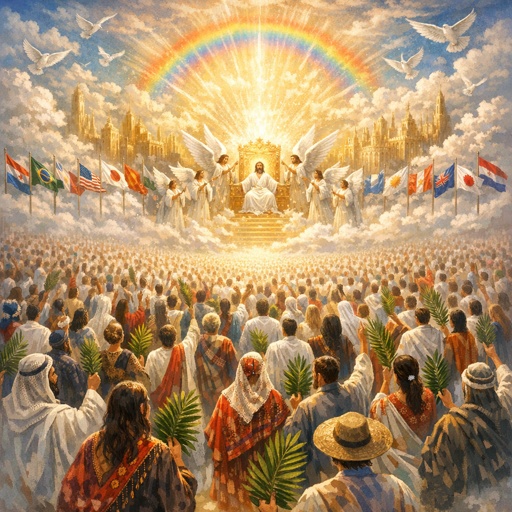
"After this I beheld, and, lo, a great multitude, which no man could number, of all nations, and kindreds, and people, and tongues, stood before the throne, and before the Lamb, clothed with white robes, and palms in their hands;" - Revelation 7:9

Revelation 7:9 - "After this I beheld, and, lo, a great multitude, which no man could number, of all nations, and kindreds, and people, and tongues, stood before the throne, and before the Lamb, clothed with white robes, and palms in their hands;"

Illustrate a powerful scene based on Revelation 7:9 "After this I looked, and there before me was a great multitude that no one could count, from every nation, tribe, people and language, standing before the throne and before the Lamb. They were wearing white robes and were holding palm branches in their hands."

Revelation 7:9-10 - "After this I looked, and there before me was a great multitude that no one could count, from every nation, tribe, people and language, standing before the throne and before the Lamb. They were wearing white robes and were holding palm branches in their hands. And they cried out in a loud voice: “Salvation belongs to our God, who sits on the throne, and to the Lamb.”"
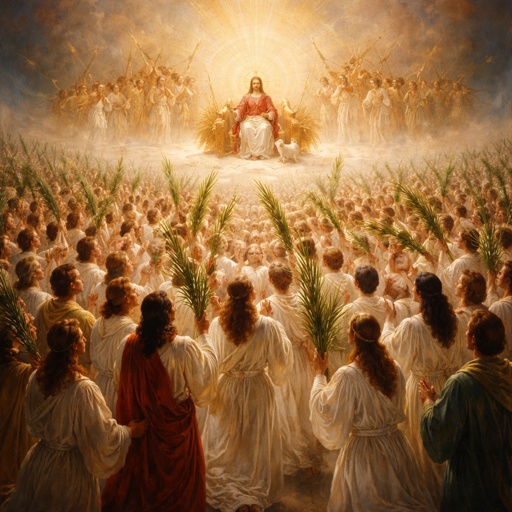
After this I looked and there before me was a great multitude that no one could count, from every nation, tribe, people and language, standing before the throne and in front of the Lamb. They were wearing white robes and were holding palm branches in their hands. And they cried out in a loud voice: “Salvation belongs to our God, who sits on the throne, and to the Lamb.” Revelation 7:9-10 NIV 1984
"After this I beheld, and, lo, a great multitude, which no man could number, of all nations, and kindreds, and people, and tongues, stood before the throne, and before the Lamb, clothed with white robes, and palms in their hands;" - Revelation 7:9

Revelation 7:9-17 - "After this I looked, and there before me was a great multitude that no one could count, from every nation, tribe, people and language, standing before the throne and before the Lamb. They were wearing white robes and were holding palm branches in their hands. And they cried out in a loud voice: "Salvation belongs to our God, who sits on the throne, and to the Lamb." All the angels were standing around the throne and around the elders and the four living creatures. They fell down on their faces before the throne and worshiped God, saying: "Amen! Praise and glory and wisdom and thanks and honor and power and strength be to our God for ever and ever. Amen!" Then one of the elders asked me, "These in white robes—who are they, and where did they come from?" I answered, "Sir, you know." And he said, "These are they who have come out of the great tribulation; they have washed their robes and made them white in the blood of the Lamb. Therefore, they are before the throne of God and serve him day and night in his temple; and he who sits on the throne will shelter them with his presence. 'Never again will they hunger; never again will they thirst. The sun will not beat down on them,' nor any scorching heat. For the Lamb at the center of the throne will be their shepherd; 'he will lead them to springs of living water.' 'And God will wipe away every tear from their eyes.'" "
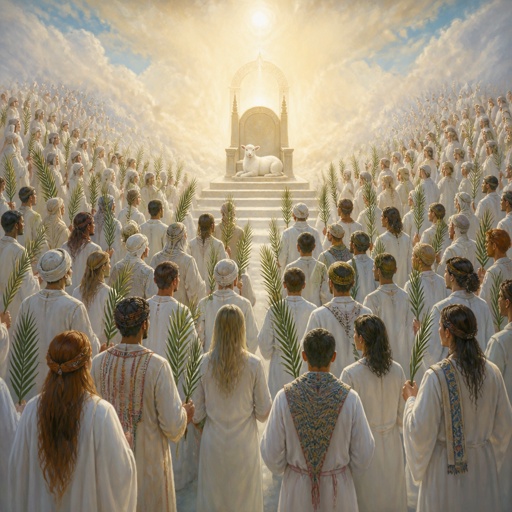
"After this I looked, and there before me was a great multitude that no one could count, from every nation, tribe, people and language, standing before the throne and before the Lamb. They were wearing white robes and were holding palm branches in their hands. And they cried out in a loud voice: “Salvation belongs to our God, who sits on the throne, and to the Lamb.”" - Revelation 7:9-10
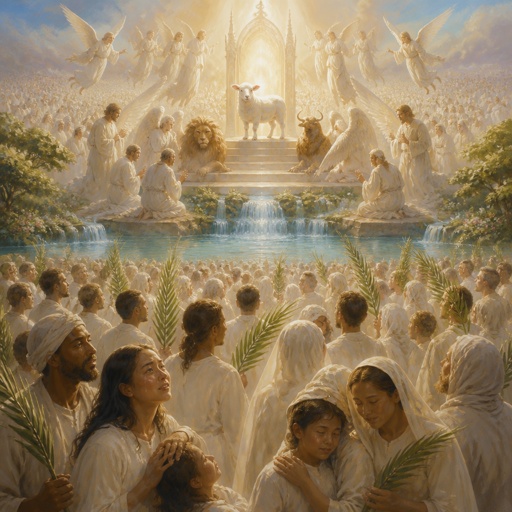
"After this I looked, and there before me was a great multitude that no one could count, from every nation, tribe, people and language, standing before the throne and before the Lamb. They were wearing white robes and were holding palm branches in their hands. And they cried out in a loud voice: "Salvation belongs to our God, who sits on the throne, and to the Lamb." All the angels were standing around the throne and around the elders and the four living creatures. They fell down on their faces before the throne and worshiped God, saying: "Amen! Praise and glory and wisdom and thanks and honor and power and strength be to our God for ever and ever. Amen!" Then one of the elders asked me, "These in white robes—who are they, and where did they come from?" I answered, "Sir, you know." And he said, "These are they who have come out of the great tribulation; they have washed their robes and made them white in the blood of the Lamb. Therefore, they are before the throne of God and serve him day and night in his temple; and he who sits on the throne will shelter them with his presence. 'Never again will they hunger; never again will they thirst. The sun will not beat down on them,' nor any scorching heat. For the Lamb at the center of the throne will be their shepherd; 'he will lead them to springs of living water.' 'And God will wipe away every tear from their eyes.'" " - Revelation 7:9-17

Revelation 9:7-10

Revelation 9:7 - "And the shapes of the locusts were like unto horses prepared unto battle; and on their heads were as it were crowns like gold, and their faces were as the faces of men."

marriage feast with Christ all arrayed in fine line clean and white revelations 19:7-9

Revelation 12:3-9 Please show the dragon like a mythical hydra with 7 heads crowned 10 horns total on the dragon.

Revelation 11:9

Revelation 9:11

Revelation 1:7

Revelation 20:7

Revelation 7:22

Revelation 20:7

Revelation 20:7

Revelation 1:7

Revelation 3:7

Revelation 20:7

REVELATION 4:7

Revelation 12:7

Revelation 12:3-9

Revelations 7
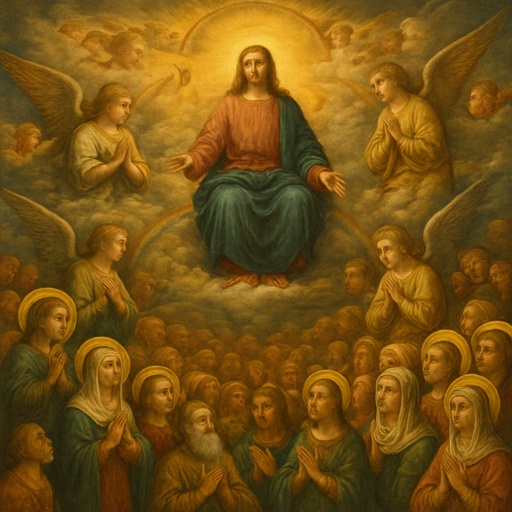
Revelations 7

Revelation 12:3-9 Please show the dragon like a mythical hydra with 7 heads crowned 10 horns total on the dragon.

Revelations 7:11