What does Revelation 4:10 mean?
"The four and twenty elders fall down before him that sat on the throne, and worship him that liveth for ever and ever, and cast their crowns before the throne, saying," - Revelation 4:10
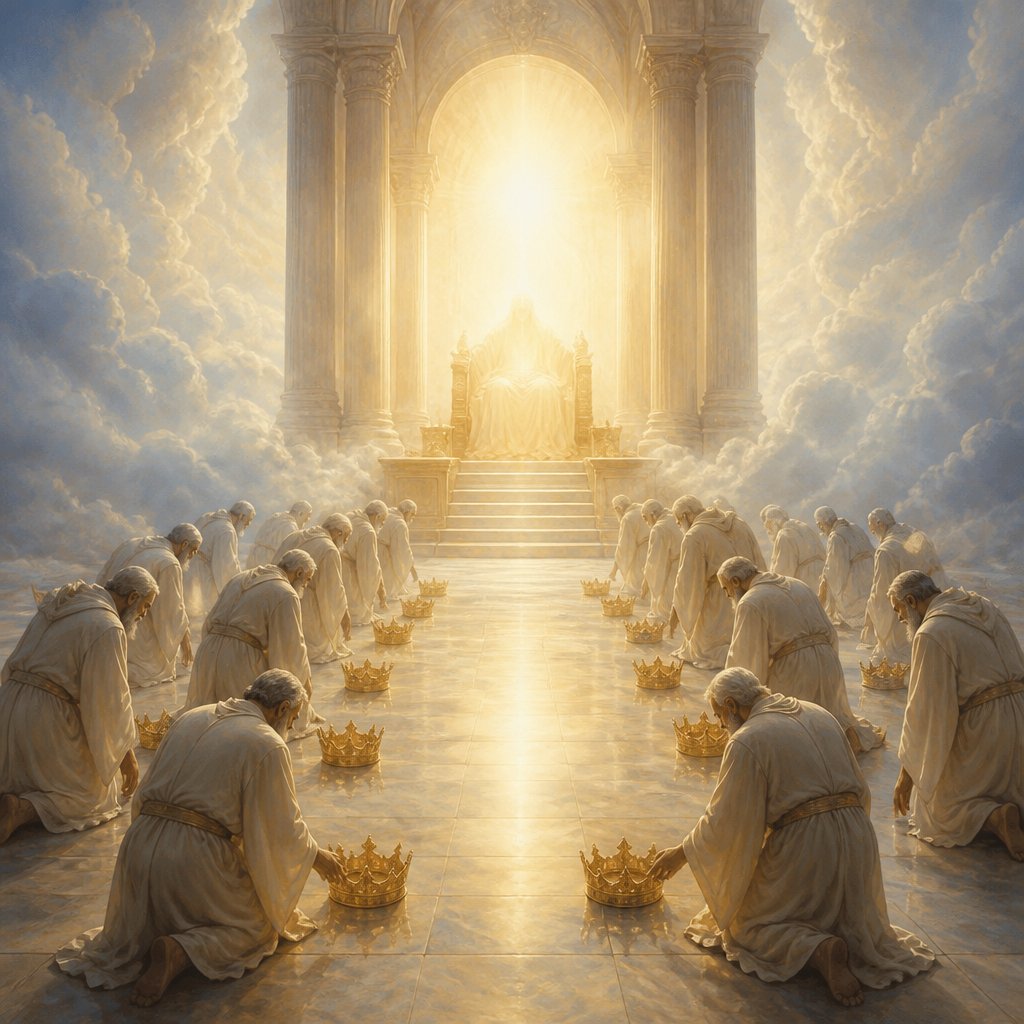
Revelation 4:10 (KJV) states, "The four and twenty elders fall down before him that sat on the throne, and worship him that liveth forever and ever, and cast their crowns before the throne, saying,"
This verse comes from the Book of Revelation, which is the last book of the Bible and is often referred to as the Apocalypse. It is a highly symbolic, apocalyptic and prophetic work that is rich in imagery and filled with intricate and complex symbolism. The verse in question is part of a larger passage that describes the scene in heaven, where John, the author of the Book of Revelation, is given a vision of the throne of God and the heavenly worship that takes place there. The four and twenty elders mentioned here are believed to represent the redeemed of all ages, both from the Old and New Testaments, and they are seen as symbols of the church.
The verse describes the elders falling down before God, who is sitting on the throne, in an act of worship and adoration. This act of bowing down indicates the reverence and awe that the elders have for God, acknowledging his supreme authority and sovereignty. The phrase "worship him that liveth forever and ever" emphasizes the eternal nature of God, highlighting his immortality and everlasting existence. This serves as a reminder of God's omnipotence and timeless nature, and the elders' worship is a response to his eternal nature.
The act of casting their crowns before the throne further illustrates the elders' humility and recognition of God's supreme majesty and glory. In ancient times, crowns were symbols of authority and power, but in this context, the elders laying down their crowns signifies their acknowledgement that all honor and glory belongs to God alone. It is a symbolic gesture of surrendering their own accomplishments and achievements before the greatness of God.
The phrase "saying" indicates that the elders are uttering a verbal declaration as they perform these actions. The specifics of what they are saying are not provided in this particular verse, but the following verses in Revelation 4 and 5 reveal that they are praising and exalting God for his worthiness and creative acts, among other things. This verbal declaration is an integral part of their worship, as they vocalize their adoration and reverence for God in the heavenly throne room.
In terms of themes, this verse encapsulates several key themes found throughout the Book of Revelation. One prominent theme is the sovereignty of God, which is vividly displayed in the heavenly scene described here. The elders' worship and submission to God's authority underscore the overarching theme of God's absolute dominion over all creation. Another theme is worship, as the elders' actions and words demonstrate the exalted nature of God and the response of adoration and praise that is fitting for him. Additionally, the eternal nature of God is emphasized, serving as a backdrop to the entire scene and reinforcing the timelessness of God's existence.
Symbolism is abundant in this verse, as is typical of the Book of Revelation. The elders represent the redeemed people of God, who have been saved by the grace of Jesus Christ. Their position before the throne symbolizes their privileged standing in God's presence and their role in worshiping him. The crowns symbolize their authority and victory through Christ, but their act of laying them down symbolizes their acknowledgment that all honor ultimately belongs to God. The throne itself is a symbol of God's power and authority, and the act of falling down before it is a gesture of submission and reverence.
In conclusion, Revelation 4:10 is a profound and richly symbolic verse that encapsulates key themes of sovereignty, worship, and the eternal nature of God. It offers a glimpse into the heavenly worship that takes place before the throne of God and serves as a reminder of the exalted nature of God and the appropriate response of awe and adoration from his people. Through its vivid imagery and symbolism, this verse invites believers to reflect on the majesty and greatness of God and to respond in worship and surrender before him.
Have questions about Revelation 4:10?
Dive deeper into this scripture with Bible Chat — an AI-powered tool for exploring God's Word through conversation. Ask questions, get context, and grow in your understanding of the Bible.
Get Our Apps


Revelation 4:10 Artwork

Revelation 4:10 - "The four and twenty elders fall down before him that sat on the throne, and worship him that liveth for ever and ever, and cast their crowns before the throne, saying,"
"The four and twenty elders fall down before him that sat on the throne, and worship him that liveth for ever and ever, and cast their crowns before the throne, saying," - Revelation 4:10

Revelation 4

Revelation 20:10

Revelation 13:10

Revelation 21: 10

REVELATION 4:8

REVELATION 4:8

REVELATION 4:8

REVELATION 4:8

REVELATION 4:8

REVELATION 4:8

REVELATION 4:8

Revelation 10:4 - "And when the seven thunders had uttered their voices, I was about to write: and I heard a voice from heaven saying unto me, Seal up those things which the seven thunders uttered, and write them not."

Revelation 9:7-10

Revelation 20:4

Revelation 20:4

Revelation 4:8

REVELATION 4:7

Revelation 20:4

Revelation 21:4

Revelation 20:4

Revelation 20:4

Revelation 19:4

Revelation 4:8

Revelation 5:1-10

Revelation 15:1-4

Revelation 17:3-4

Revelation 17:3-4

Revelations 21:4