What does Revelation 3:1 mean?
"And unto the angel of the church in Sardis write; These things saith he that hath the seven Spirits of God, and the seven stars; I know thy works, that thou hast a name that thou livest, and art dead." - Revelation 3:1
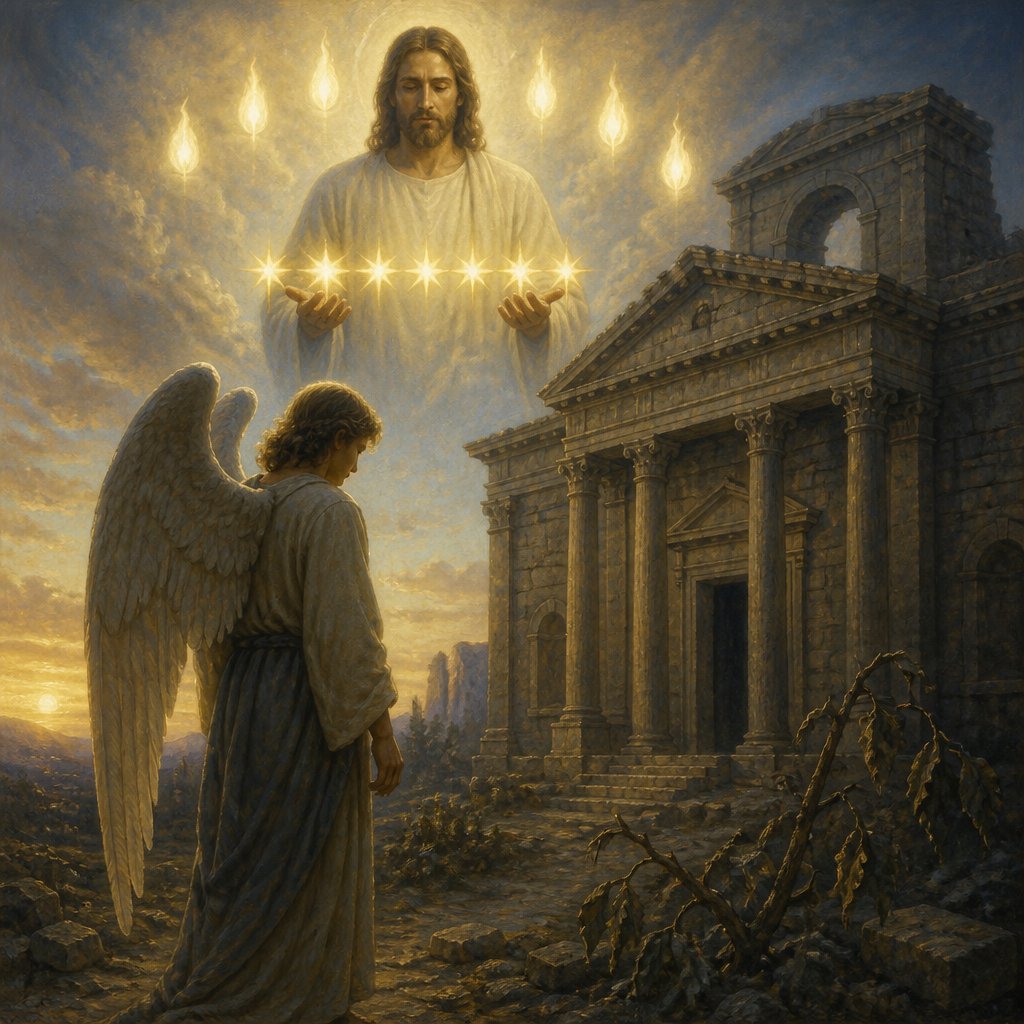
The Bible verse Revelation 3:1 in the King James Version (KJV) states: "And unto the angel of the church in Sardis write; These things saith he that hath the seven Spirits of God, and the seven stars; I know thy works, that thou hast a name that thou livest, and art dead."
This verse is part of a larger passage in the book of Revelation, which is the final book of the New Testament. Written by the apostle John, the book of Revelation is a complex and enigmatic text that is filled with apocalyptic imagery and symbolism. The book is often interpreted as a prophecy of the end times and the second coming of Christ, and it is a profound and mysterious conclusion to the Bible.
In Revelation 3:1, the message is addressed to the angel of the church in Sardis. The use of the term "angel" here has sparked much debate among theologians, as it could refer to a literal angel or to a human messenger. Regardless, the message is from "he that hath the seven Spirits of God, and the seven stars," which is a reference to Jesus Christ, who is depicted as holding the seven spirits of God and the seven stars in his right hand in Revelation 1:16.
The verse then goes on to say, "I know thy works, that thou hast a name that thou livest, and art dead." This phrase captures the central theme of this message to the church in Sardis, which is a warning about spiritual complacency and hypocrisy. The church in Sardis had a reputation for being spiritually alive, but Jesus, through his message to the church, reveals that they are actually spiritually dead.
The context of this passage is important for understanding its meaning. Sardis was a wealthy and powerful city in ancient Lydia, located in what is now western Turkey. The church in Sardis had likely become complacent and comfortable in their position of influence, and as a result, they had become spiritually stagnant.
The symbolism in this verse is rich and meaningful. The reference to the "seven Spirits of God" may allude to the Holy Spirit in its fullness and completeness, as the number seven often symbolizes perfection or completeness in the Bible. Additionally, the mention of the "seven stars" may refer to the seven angels or messengers of the seven churches mentioned in Revelation 1:20.
The imagery of being spiritually alive but actually dead is a powerful warning against the danger of outward appearances and religious hypocrisy. The church in Sardis had a reputation for vitality and zeal, but in reality, they had become complacent and lukewarm in their faith. This message serves as a sobering reminder that true spiritual life is found in genuine faith and obedience, not in empty religious rituals or appearances.
Overall, Revelation 3:1 is a profound and cautionary message that speaks to the timeless struggle of maintaining true spiritual vitality and authenticity in the face of complacency and hypocrisy. The verse challenges believers to examine their own hearts and to strive for genuine faith and obedience, rather than being content with empty religious practices and appearances. This message continues to resonate with readers today, reminding them of the importance of sincerity and authenticity in their walk with God.
Have questions about Revelation 3:1?
Dive deeper into this scripture with Bible Chat — an AI-powered tool for exploring God's Word through conversation. Ask questions, get context, and grow in your understanding of the Bible.
Get Our Apps


Revelation 3:1 Artwork

Revelation 3:1 - "And unto the angel of the church in Sardis write; These things saith he that hath the seven Spirits of God, and the seven stars; I know thy works, that thou hast a name that thou livest, and art dead."
"And unto the angel of the church in Sardis write; These things saith he that hath the seven Spirits of God, and the seven stars; I know thy works, that thou hast a name that thou livest, and art dead." - Revelation 3:1

Revelation 3:20

Revelation 12:3

Revelation 21:3

Revelation 3:20

revelation 12:1-3

Revelation 15:1-3

Revelation 12:3-9

revelations 22:1-3

Revelation 1:3 - "Blessed is he that readeth, and they that hear the words of this prophecy, and keep those things which are written therein: for the time is at hand."

Revelation 3:7

Revelation 3:16

Revelation 3:20

Revelation 14:3

Revelation 21:3

revelation study 3

Revelation 17:3-4

Revelation 17:3-6

Revelation 17:3-6

Revelation 17:3-6

Revelation 17:3-6

Revelation 17:3-4

Revelation 17:3-6

Revelation 1:3 Blessed is he that readeth, and they that hear the words of this prophecy, and keep those things which are written therein: for the time is at hand.

Revelation 1:1-3 - "The Revelation of Jesus Christ, which God gave unto him, to shew unto his servants things which must shortly come to pass; and he sent and signified it by his angel unto his servant John: Who bare record of the word of God, and of the testimony of Jesus Christ, and of all things that he saw. Blessed is he that readeth, and they that hear the words of this prophecy, and keep those things which are written therein: for the time is at hand."

Revelation 1

Ephesians 3:3 - "How that by revelation he made known unto me the mystery; (as I wrote afore in few words,"

Revelation 1:1

Revelation 12:3-9 Please show the dragon like a mythical hydra with 7 heads crowned 10 horns total on the dragon.