What does Revelation 2:1-4 mean?
"Revelation 2:1-4: 1 Unto the angel of the church of Ephesus write; These things saith he that holdeth the seven stars in his right hand, who walketh in the midst of the seven golden candlesticks; 2 I know thy works, and thy labour, and thy patience, and how thou canst not bear them which are evil: and thou hast tried them which say they are apostles, and are not, and hast found them liars: 3 And hast borne, and hast patience, and for my name's sake hast laboured, and hast not fainted. 4 Nevertheless I have somewhat against thee, because thou hast left thy first love." - Revelation 2:1-4
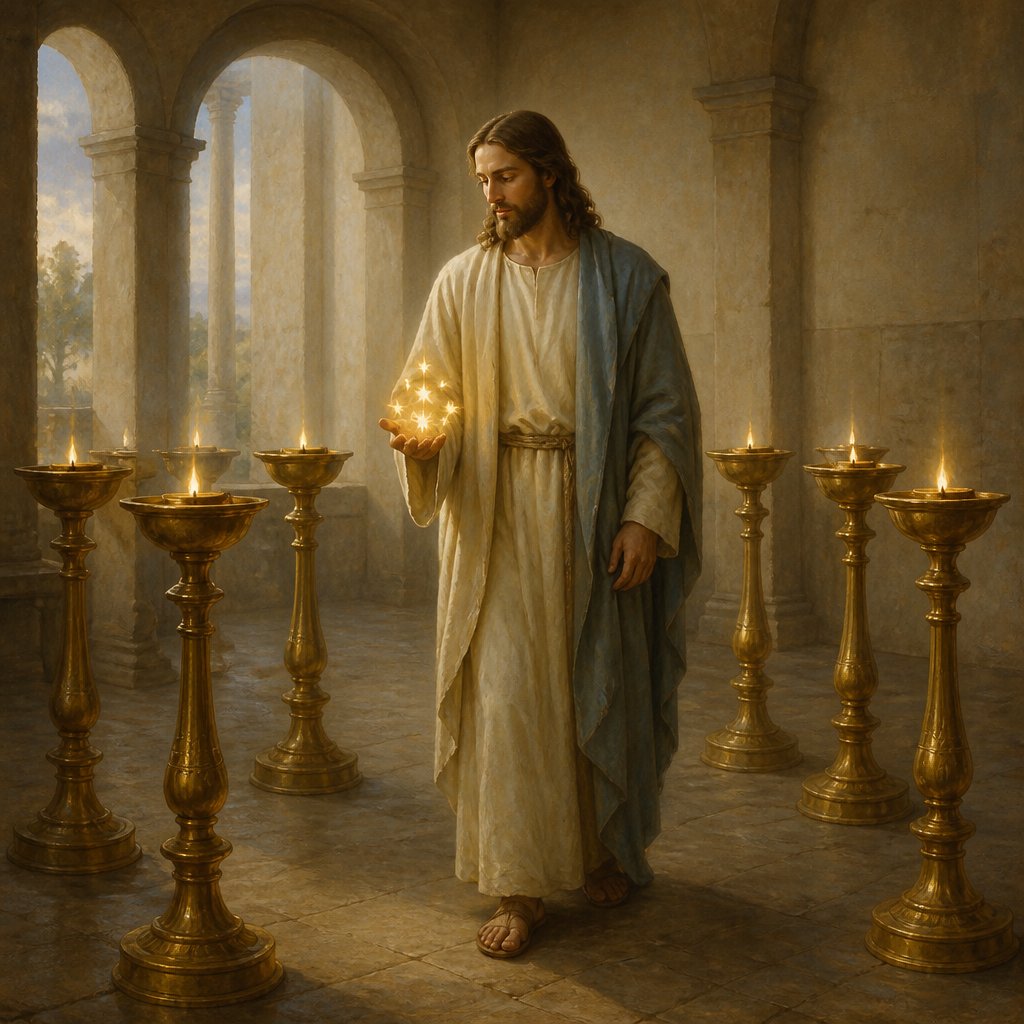
The book of Revelation, also known as the Apocalypse, is the final book of the New Testament and is attributed to the apostle John. It is a prophetic and apocalyptic text that is filled with symbolism and imagery, and is often interpreted as a vision of the end times and the final judgment. The book begins with a series of letters to the seven churches of Asia, which were likely written to provide encouragement and warnings to the early Christian communities.
Revelation 2:1-4, part of the first letter to the church in Ephesus, is a passage that addresses the church's strengths and weaknesses. In the King James Version, it reads:
"Unto the angel of the church of Ephesus write; These things saith he that holdeth the seven stars in his right hand, who walketh in the midst of the seven golden candlesticks; I know thy works, and thy labour, and thy patience, and how thou canst not bear them which are evil: and thou hast tried them which say they are apostles, and are not, and hast found them liars: And hast borne, and hast patience, and for my name's sake hast laboured, and hast not fainted. Nevertheless I have somewhat against thee, because thou hast left thy first love."
The passage begins with a description of the one who is speaking, who holds the seven stars in his right hand and walks in the midst of the seven golden candlesticks. This imagery is drawn from the vision of the risen Christ that appears in the opening chapter of Revelation, where he is described as holding seven stars and walking among seven golden lampstands, which are interpreted as representing the seven churches to which the letters are addressed.
The passage then goes on to commend the church in Ephesus for its good works, labor, patience, and discernment in identifying false apostles. The church is praised for its perseverance and unwavering dedication to the name of Christ. However, despite these commendations, the passage concludes with a warning, stating that the church has forsaken its first love.
The themes present in this passage are multifaceted and deeply significant. The most conspicuous theme is that of love. The church is commended for its deeds and discernment, yet it is rebuked for forsaking its first love. This serves as a powerful reminder of the primacy of love in the Christian life. The church's works and labors, though commendable, are not enough if they are not rooted in love. In the New Testament, love is often presented as the highest virtue, and the failure to maintain it can lead to spiritual poverty and stagnation.
Another important theme is that of discernment. The church in Ephesus is praised for its ability to discern false apostles and expose their lies. This underscores the importance of discernment in the Christian faith, as it is necessary to recognize and reject falsehood and deception. However, despite their discernment, the church is still rebuked for leaving its first love. This serves as a cautionary tale, reminding believers that even the most noble deeds and discernment are insufficient if they are not accompanied by love.
The symbolic imagery in this passage is also highly significant. The seven stars and seven golden candlesticks, as mentioned earlier, are drawn from the vision of the risen Christ in the opening chapter of Revelation. The stars are said to represent the angels of the seven churches, while the candlesticks symbolize the churches themselves. The image of Christ walking among the lampstands symbolizes his presence and oversight of the churches. This imagery serves to remind the church in Ephesus that Christ is intimately involved in their affairs and is aware of their actions and spiritual condition.
In conclusion, Revelation 2:1-4 is a passage that carries profound and timeless significance. It urges believers to prioritize love above all else, reminding them that without love, even the most commendable deeds and discernment are ultimately in vain. The passage also underscores the importance of Christ's presence and oversight in the life of the church. It serves as a cautionary tale and a source of encouragement for believers, calling them to examine their actions and motivations, and to prioritize love in their pursuit of faith.
Have questions about Revelation 2:1-4?
Dive deeper into this scripture with Bible Chat — an AI-powered tool for exploring God's Word through conversation. Ask questions, get context, and grow in your understanding of the Bible.
Get Our Apps


Revelation 2:1-4 Artwork

Revelation 2:1-4 - "Unto the angel of the church of Ephesus write; These things saith he that holdeth the seven stars in his right hand, who walketh in the midst of the seven golden candlesticks; I know thy works, and thy labour, and thy patience, and how thou canst not bear them which are evil: and thou hast tried them which say they are apostles, and are not, and hast found them liars: And hast borne, and hast patience, and for my name's sake hast laboured, and hast not fainted. Nevertheless I have somewhat against thee, because thou hast left thy first love."
"Unto the angel of the church of Ephesus write; These things saith he that holdeth the seven stars in his right hand, who walketh in the midst of the seven golden candlesticks; I know thy works, and thy labour, and thy patience, and how thou canst not bear them which are evil: and thou hast tried them which say they are apostles, and are not, and hast found them liars: And hast borne, and hast patience, and for my name's sake hast laboured, and hast not fainted. Nevertheless I have somewhat against thee, because thou hast left thy first love." - Revelation 2:1-4

Revelation 2:1

Revelation 15:1-4

Revelation 21:4

revelations 4:1

Revelations 21:4

Revelations 21:4

Revelation 21:2

Revelation 21:2

Revelation 21:2

Revelation 21:2

Revelation 4:2 - "And immediately I was in the spirit: and, behold, a throne was set in heaven, and one sat on the throne."

Revelation 2:4 - "Nevertheless I have somewhat against thee, because thou hast left thy first love."

Revelation 2:1 - "Unto the angel of the church of Ephesus write; These things saith he that holdeth the seven stars in his right hand, who walketh in the midst of the seven golden candlesticks;"

Revelation 22:4 (FBV) They will see his face, and his name will be on their foreheads.

Revelation 22:4 (FBV) They will see his face, and his name will be on their foreheads.
Revelation 4, digital art to describe the throne of God, no letter, with majesty And glory

Revelation 4

REVELATION 4:8

REVELATION 4:8

REVELATION 4:8

REVELATION 4:8

REVELATION 4:8

REVELATION 4:8

REVELATION 4:8

Revelation 4:2 - "And immediately I was in the spirit: and, behold, a throne was set in heaven, and one sat on the throne."

Revelation 4:2 - "And immediately I was in the spirit: and, behold, a throne was set in heaven, and one sat on the throne."
"Nevertheless I have somewhat against thee, because thou hast left thy first love." - Revelation 2:4

Revelation 1:2 - "Who bare record of the word of God, and of the testimony of Jesus Christ, and of all things that he saw."