What does Revelation 19:11 mean?
"And I saw heaven opened, and behold a white horse; and he that sat upon him was called Faithful and True, and in righteousness he doth judge and make war." - Revelation 19:11
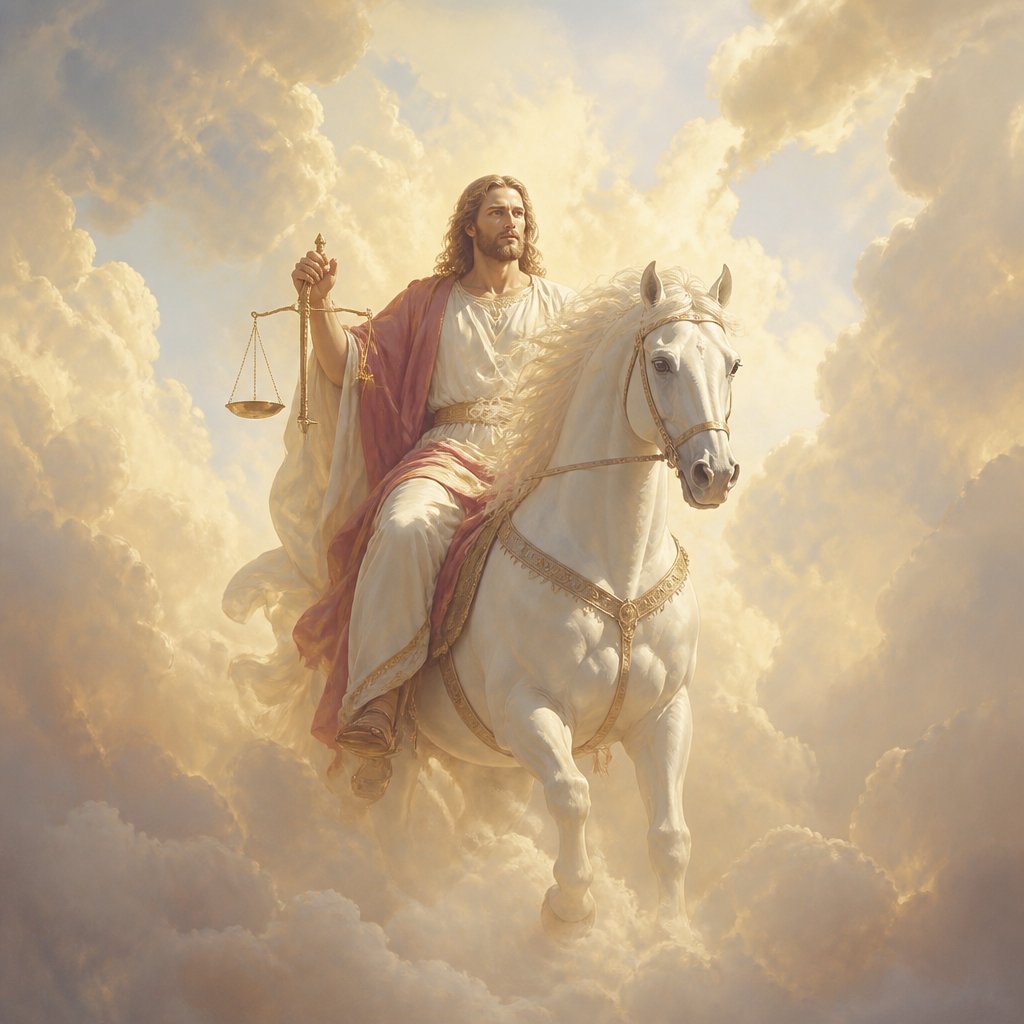
Revelation 19:11 in the King James Version reads, “And I saw heaven opened, and behold a white horse; and he that sat upon him was called Faithful and True, and in righteousness he doth judge and make war.” In the flow of Revelation, this verse functions like a great curtain being drawn back: John is shown “heaven opened,” meaning that what follows is not merely earthly conflict or human politics, but the unveiling of God’s decisive action from the heavenly realm. Earlier in the book John had seen an opened door in heaven (Revelation 4:1), but here the opening is presented as the immediate prelude to the appearing of a conquering figure whose authority is not derived from the earth. The opening of heaven signals that the final phase of judgment and deliverance is initiated by God, not achieved by human striving.
The “white horse” is rich with biblical symbolism. In Scripture, whiteness commonly signifies purity, holiness, and victory. A horse in apocalyptic imagery often suggests power and the forward motion of conquest. Here the horse is not presented as a threat to God’s people but as the vehicle of God’s victorious intervention. Unlike the earlier horsemen imagery in Revelation 6, which portrays calamities loosed upon the earth, this rider appears as the culmination and correction of all false powers: he comes not as one more agent of chaos, but as the rightful conqueror whose coming ends the reign of deception and tyranny.
The rider’s names, “Faithful and True,” are central to the meaning of the verse. In Revelation, names are never ornamental; they reveal character and mission. “Faithful” speaks to steadfastness and covenant reliability: God’s promises do not fail, and the one who rides forth embodies that unwavering constancy. “True” speaks to ultimate reality and perfect integrity, standing in direct opposition to the lies, counterfeit miracles, and seductions associated with the beast and false prophet elsewhere in Revelation. The verse therefore frames the coming judgment not as capricious violence, but as the arrival of the One whose faithfulness guarantees that every divine promise of justice and redemption will be carried through, and whose truth exposes and ends all deception.
The final clause, “and in righteousness he doth judge and make war,” holds together two ideas that might otherwise be separated: judgment and warfare. Revelation portrays a world in which evil is not merely an unfortunate imbalance but an active rebellion, a violent and idolatrous opposition to God. For that reason, the rider “doth judge,” and he also “make war,” but the moral qualifier is crucial: it is “in righteousness.” This is war that proceeds from righteous judgment, not from ambition, cruelty, or vengeance. The phrase emphasizes that his actions are governed by rightness—by the standard of God’s own holiness and justice—so that the conflict he wages is the necessary overthrow of what oppresses, corrupts, and destroys. The significance of this line is that divine judgment is presented as morally coherent: it is not the abandonment of justice but its enactment, and it is not merely punitive but corrective in the sense that it ends the reign of wickedness.
In context, Revelation 19 is the chapter of climactic transition from heavenly rejoicing to decisive intervention. Just prior to this verse, heaven is filled with praise (Revelation 19:1–10) and the marriage imagery appears, including the bride’s fine linen, “the righteousness of saints” (Revelation 19:8). That celebratory setting matters because it shows the rider’s coming as the answer to the longing for God’s kingdom to be manifested openly and for wrong to be set right. The opened heaven does not introduce a random act of aggression, but the public vindication of God’s holiness, the deliverance of his people, and the decisive answer to the defiance of worldly powers. It is also significant that the rider’s first described actions are judicial: he “doth judge,” implying that his warfare is not blind destruction but the outworking of a verdict already grounded in righteousness.
Symbolically, the verse gathers several themes that run throughout Revelation: unveiling, victory, truth over deception, and righteous judgment over corrupt dominion. The opened heaven underscores revelation itself—things hidden are made known, and God’s rule is shown to be the ultimate reality behind history. The white horse underscores victorious authority. The names “Faithful and True” underscore the trustworthiness of God’s word in contrast to the falsehoods of evil. And the statement about judging and making war “in righteousness” underscores that the final confrontation is ethical at its core: it is the triumph of God’s righteous rule over every form of injustice. The significance of Revelation 19:11, therefore, is that it introduces the final divine intervention as morally pure, covenantally reliable, and invincibly victorious, assuring the reader that history is not left to the strongest deceiver, but brought to its appointed end by the One who is Faithful and True.
Have questions about Revelation 19:11?
Dive deeper into this scripture with Bible Chat — an AI-powered tool for exploring God's Word through conversation. Ask questions, get context, and grow in your understanding of the Bible.
Get Our Apps


Revelation 19:11 Artwork

Revelation 19:11 – "I saw heaven standing open and there before me was a white horse, whose rider is called Faithful and True."

Revelation 19:11 – "I saw heaven standing open and there before me was a white horse, whose rider is called Faithful and True."

Revelation 19:11 - "And I saw heaven opened, and behold a white horse; and he that sat upon him was called Faithful and True, and in righteousness he doth judge and make war."
!["And I saw heaven opened, and behold a white horse; and he that sat upon him [was] called Faithful and True, and in righteousness he doth judge and make war." - Revelation 19:11](https://media.bible.art/e9457eee-712e-45ea-8db9-f5cf0934b672-thumbnail.jpg)
"And I saw heaven opened, and behold a white horse; and he that sat upon him [was] called Faithful and True, and in righteousness he doth judge and make war." - Revelation 19:11

Revelation 19:11 (ESV) Then I saw heaven opened, and behold, a white horse! The one sitting on it is called Faithful and True, and in righteousness he judges and makes war.

Revelation 19:11 (ESV) Then I saw heaven opened, and behold, a white horse! The one sitting on it is called Faithful and True, and in righteousness he judges and makes war.
"And I saw heaven opened, and behold a white horse; and he that sat upon him was called Faithful and True, and in righteousness he doth judge and make war." - Revelation 19:11

Revelation 19:11-16 - "And I saw heaven opened, and behold a white horse; and he that sat upon him was called Faithful and True, and in righteousness he doth judge and make war. His eyes were as a flame of fire, and on his head were many crowns; and he had a name written, that no man knew, but he himself. And he was clothed with a vesture dipped in blood: and his name is called The Word of God. And the armies which were in heaven followed him upon white horses, clothed in fine linen, white and clean. And out of his mouth goeth a sharp sword, that with it he should smite the nations: and he shall rule them with a rod of iron: and he treadeth the winepress of the fierceness and wrath of Almighty God. And he hath on his vesture and on his thigh a name written, KING OF KINGS, AND LORD OF LORDS."
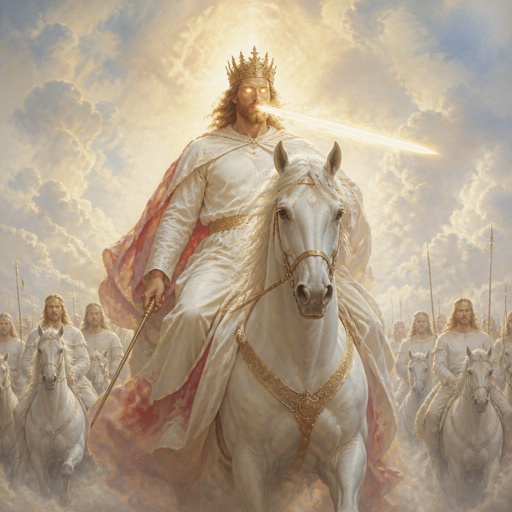
"And I saw heaven opened, and behold a white horse; and he that sat upon him was called Faithful and True, and in righteousness he doth judge and make war. His eyes were as a flame of fire, and on his head were many crowns; and he had a name written, that no man knew, but he himself. And he was clothed with a vesture dipped in blood: and his name is called The Word of God. And the armies which were in heaven followed him upon white horses, clothed in fine linen, white and clean. And out of his mouth goeth a sharp sword, that with it he should smite the nations: and he shall rule them with a rod of iron: and he treadeth the winepress of the fierceness and wrath of Almighty God. And he hath on his vesture and on his thigh a name written, KING OF KINGS, AND LORD OF LORDS." - Revelation 19:11-16

Revelation 19:11-16 - "And I saw heaven opened, and behold a white horse; and he that sat upon him was called Faithful and True, and in righteousness he doth judge and make war. His eyes were as a flame of fire, and on his head were many crowns; and he had a name written, that no man knew, but he himself. And he was clothed with a vesture dipped in blood: and his name is called The Word of God. And the armies which were in heaven followed him upon white horses, clothed in fine linen, white and clean. And out of his mouth goeth a sharp sword, that with it he should smite the nations: and he shall rule them with a rod of iron: and he treadeth the winepress of the fierceness and wrath of Almighty God. And he hath on his vesture and on his thigh a name written, KING OF KINGS, AND LORD OF LORDS."

Revelation 11:19 - "And the temple of God was opened in heaven, and there was seen in his temple the ark of his testament: and there were lightnings, and voices, and thunderings, and an earthquake, and great hail."

Revelation 19:19-21

Revelation 19:19-21

Revelation 19:19-21

1 Corinthians 11:19 - "For there must be also heresies among you, that they which are approved may be made manifest among you."

Revelation 19:4

Revelation 1:11

Revelation 21:11

Revelation 11:9

Revelation 21:11

Revelation 1:11

Revelation 1:11

Revelation 9:11

Luke 19:11 - "And as they heard these things, he added and spake a parable, because he was nigh to Jerusalem, and because they thought that the kingdom of God should immediately appear."

Revelations 7:11

Revelation 19:19 - "And I saw the beast, and the kings of the earth, and their armies, gathered together to make war against him that sat on the horse, and against his army."
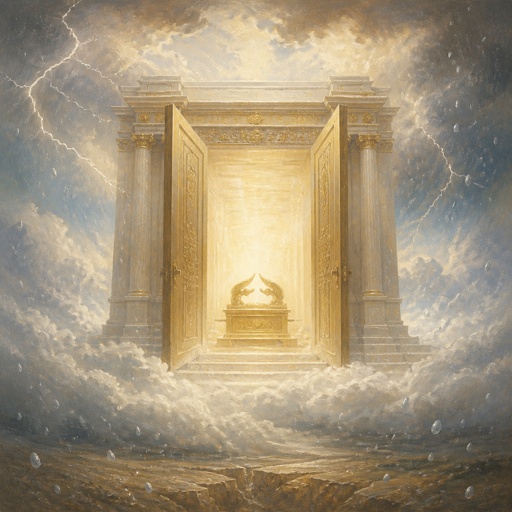
"And the temple of God was opened in heaven, and there was seen in his temple the ark of his testament: and there were lightnings, and voices, and thunderings, and an earthquake, and great hail." - Revelation 11:19

Revelation 3:19 - "As many as I love, I rebuke and chasten: be zealous therefore, and repent."

Revelation 19:3 - "And again they said, Alleluia. And her smoke rose up for ever and ever."

lake of fire from the Bible at Revelation 19:20