What does Revelation 15:3 mean?
"And they sing the song of Moses the servant of God, and the song of the Lamb, saying, Great and marvellous are thy works, Lord God Almighty; just and true are thy ways, thou King of saints." - Revelation 15:3
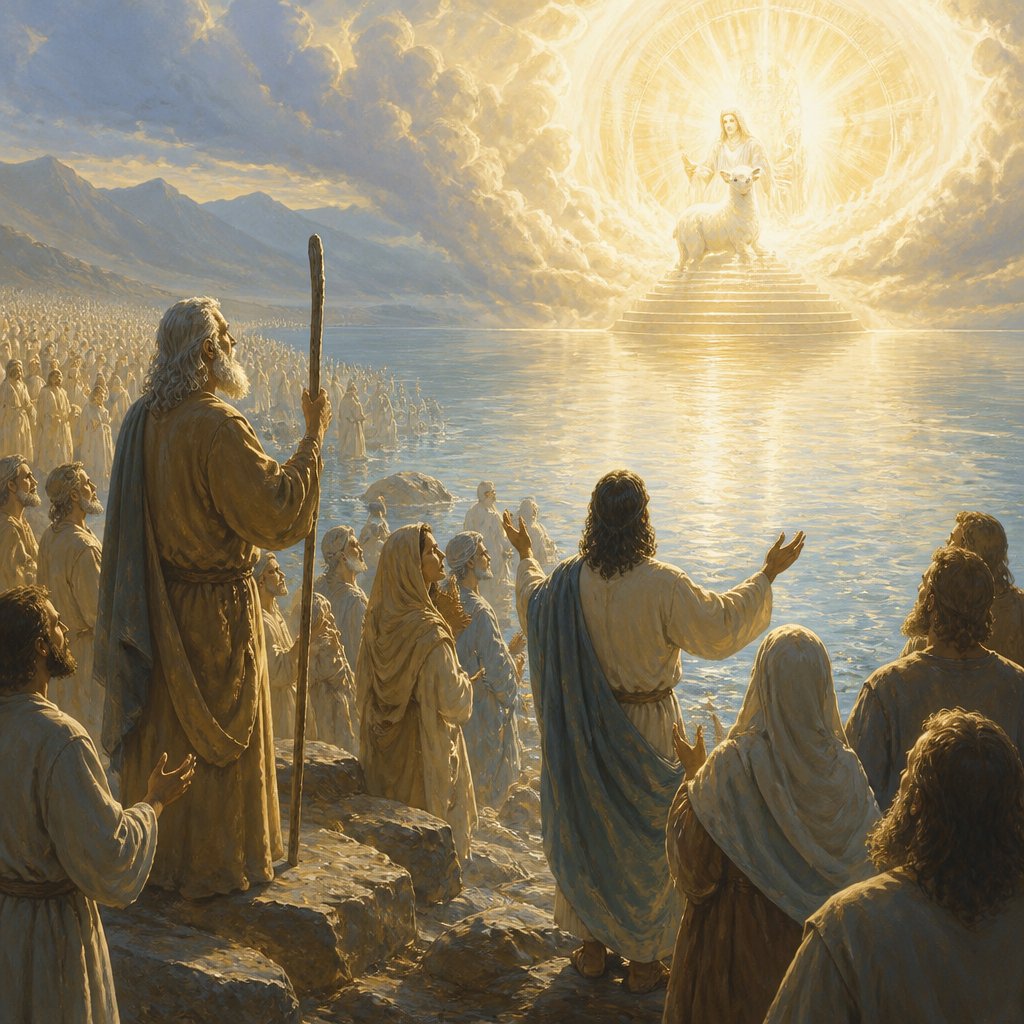
Revelation 15:3 in the King James Version of the Bible reads, "And they sing the song of Moses the servant of God, and the song of the Lamb, saying, Great and marvelous are thy works, Lord God Almighty; just and true are thy ways, thou King of saints." This verse is part of the description of a scene in heaven, where those who have been victorious over the beast and its image stand beside the sea of glass, holding harps and singing the song of Moses and the song of the Lamb.
The mention of the song of Moses is a reference to the deliverance of the Israelites from Egypt, particularly the song of Moses sung after the Israelites' miraculous crossing of the Red Sea and the subsequent destruction of Pharaoh's army. This song, found in Exodus 15, is a celebration of God's victory and salvation, praising him as a warrior and a deliverer. The inclusion of the song of Moses in this heavenly scene is significant, as it connects the victory of the believers in Revelation to the ancient deliverance of the Israelites. It underscores the timeless and universal nature of God's saving power and emphasizes the continuity of God's faithfulness throughout history.
The mentioning of the "song of the Lamb" points to the significance of Jesus Christ as the ultimate savior and deliverer. In Christian theology, Jesus is often referred to as the "Lamb of God" who takes away the sins of the world. By combining the song of Moses with the song of the Lamb, this verse highlights the continuity between the Old Testament and the New Testament, and underscores the role of Christ as the fulfillment of the promises and deliverance found in the Old Testament.
The declaration "Great and marvelous are thy works, Lord God Almighty; just and true are thy ways, thou King of saints" is a declaration of praise and adoration for God. It acknowledges the greatness and marvelous nature of God's works, affirming his sovereignty and power as the Lord God Almighty. The description of God as the King of saints emphasizes his holiness and righteousness, underscoring the moral perfection of his character. This affirmation of the justice and truth of God's ways is a powerful declaration of faith, even in the midst of the chaos and turmoil depicted in the book of Revelation.
In this verse, we see themes of victory, deliverance, and faithfulness, as well as the continuity between the Old and New Testaments. The imagery of singing, harps, and a sea of glass sets a scene of celestial worship and praise, highlighting the joy and celebration that accompanies the triumph of God's people. The use of symbolic language and allusions to Old Testament events adds depth and richness to the message, connecting the heavenly vision to the broader biblical narrative.
The use of imagery and symbolism in Revelation 15:3 is also significant. The sea of glass, for example, is a recurring image in the book of Revelation, often associated with purity and holiness. The harps held by the victorious ones symbolize worship and praise, emphasizing the central role of adoration in the heavenly scene. The combination of these elements creates a powerful and evocative tableau, conveying the sense of awe, reverence, and jubilation that characterizes the heavenly worship.
In conclusion, Revelation 15:3 is a rich and evocative verse that conveys the themes of victory, deliverance, and worship. By invoking the song of Moses and the song of the Lamb, and by affirming the greatness, justice, and truth of God, this verse ties together the Old and New Testaments, emphasizing the continuity of God's saving power and the central role of Jesus Christ as the ultimate deliverer. The imagery and symbolism used in this passage create a vivid and compelling portrait of heavenly worship and praise, underscoring the profound significance of the victory of the saints and the sovereignty of God.
Have questions about Revelation 15:3?
Dive deeper into this scripture with Bible Chat — an AI-powered tool for exploring God's Word through conversation. Ask questions, get context, and grow in your understanding of the Bible.
Get Our Apps


Revelation 15:3 Artwork

Revelation 15:3 - "And they sing the song of Moses the servant of God, and the song of the Lamb, saying, Great and marvellous are thy works, Lord God Almighty; just and true are thy ways, thou King of saints."
"And they sing the song of Moses the servant of God, and the song of the Lamb, saying, Great and marvellous are thy works, Lord God Almighty; just and true are thy ways, thou King of saints." - Revelation 15:3

Revelation 15:1-3

Revelation 3:15 - "I know thy works, that thou art neither cold nor hot: I would thou wert cold or hot."

Revelation 15:5-8

Revelation 15:1-4

Revelation 15:5-8

Revelation 15:5-8

Philippians 3:15 - "Let us therefore, as many as be perfect, be thus minded: and if in any thing ye be otherwise minded, God shall reveal even this unto you."

Revelations 1:15

Revelation 3:20

Revelation 3:7

Revelation 12:3

Revelation 3:16

Revelation 3:20

Revelation 21:3

Revelation 14:3

Revelation 3:20

Revelation 21:3

revelation study 3

Revelation 3:15-16 - "I know your deeds, that you are neither cold nor hot. I wish you were either one or the other! So, because you are lukewarm—neither hot nor cold—I am about to spit you out of my mouth."

Revelation 17:3-4

Revelation 17:3-6

revelation 12:1-3

Revelation 12:3-9

Revelation 17:3-6

Revelation 17:3-6

Revelation 17:3-6

Revelation 17:3-4

Revelation 17:3-6