What does Psalms 77:8 mean?
"Is his mercy clean gone for ever? doth his promise fail for evermore?" - Psalms 77:8

The Bible verse Psalms 77:8 in the King James Version (KJV) reads: "Is his mercy clean gone forever? doth his promise fail for evermore?"
This verse comes from Psalm 77, which is a lament psalm written by Asaph, who was one of the chief musicians and poets of King David's and Solomon's era. This psalm was written during a time of great distress and spiritual crisis, as Asaph wrestled with feelings of abandonment by God. The psalm is filled with deep emotion and soul-searching as the author grapples with his own doubts and fears, yet ultimately finds consolation and hope in God's faithfulness and redemptive power.
The verse in question, Psalm 77:8, reveals the heart of Asaph's inner turmoil as he questions the endurance of God's mercy and promises. The repetition of the questions "Is his mercy clean gone forever? doth his promise fail for evermore?" underscores the depth of Asaph's despair and doubt, as he struggles to reconcile his present suffering with his understanding of God's character.
The theme of this verse revolves around the struggle with doubt and the larger theological concept of God's faithfulness. Asaph's questions highlight the age-old human dilemma of reconciling the reality of suffering and adversity with the belief in a loving and sovereign God. This theme is timeless and universal, as it is something that all believers grapple with at some point in their spiritual journey.
The context of this verse within Psalm 77 is crucial to understanding its full significance. Asaph begins the psalm by expressing his distress and desperation, crying out to God and seeking his presence in the midst of his affliction. He reflects on past experiences of God's deliverance and faithfulness, yet finds himself in a place of deep anguish and bewilderment. It is within this context of inner turmoil and questioning that Asaph utters the words of Psalm 77:8, illustrating the rawness and intensity of his spiritual struggle.
In terms of symbolism, the questions posed in this verse point to the broader symbolism of God's mercy and promises. The mercy of God is often symbolized as a source of cleansing and renewal, as it represents God's compassion and forgiveness towards his people. The questioning of whether God's mercy is "clean gone forever" reflects a deep sense of hopelessness and despair, as Asaph wrestles with the apparent absence of God's mercy in his life.
Likewise, the questioning of whether God's promise fails "for evermore" symbolizes the doubts surrounding the enduring nature of God's faithfulness and covenant with his people. God's promises are a central theme throughout the Bible, and they symbolize his unchanging nature and commitment to his people. As Asaph grapples with the seeming failure of God's promises, he confronts the very core of his faith and trust in God.
Ultimately, Psalm 77:8 encapsulates the profound struggle with doubt and the human experience of spiritual crisis. Asaph's raw and honest lamentations serve as a poignant reflection of the depth and complexity of the believer's relationship with God. The verse invites us to confront our own doubts and fears, and to find solace in the unchanging nature of God's mercy and promises, even in the midst of life's greatest challenges. This verse reminds us that it is natural to question and wrestle with our faith, but ultimately, God's faithfulness endures forever.
Have questions about Psalms 77:8?
Dive deeper into this scripture with Bible Chat — an AI-powered tool for exploring God's Word through conversation. Ask questions, get context, and grow in your understanding of the Bible.
Get Our Apps


Psalms 77:8 Artwork

Psalms 77:8 - "Is his mercy clean gone for ever? doth his promise fail for evermore?"

"Is his mercy clean gone for ever? doth his promise fail for evermore?" - Psalms 77:8

"I have considered the days of old, the years of ancient times." - Psalms 77:5

Psalms 77:7 - "Will the Lord cast off for ever? and will he be favourable no more?"

"Will the Lord cast off for ever? and will he be favourable no more?" - Psalms 77:7

Psalms 77:5 - "I have considered the days of old, the years of ancient times."

Psalms 77:3 - "I remembered God, and was troubled: I complained, and my spirit was overwhelmed. Selah."

Psalms 77:18 - "The voice of thy thunder was in the heaven: the lightnings lightened the world: the earth trembled and shook."

Psalms 77:11 - "I will remember the works of the LORD: surely I will remember thy wonders of old."

Psalms 77:20 - "Thou leddest thy people like a flock by the hand of Moses and Aaron."

Psalms 77:12 - "I will meditate also of all thy work, and talk of thy doings."

"I will meditate also of all thy work, and talk of thy doings." - Psalms 77:12

Psalms 77:15 - "Thou hast with thine arm redeemed thy people, the sons of Jacob and Joseph. Selah."

Psalms 77:13 - "Thy way, O God, is in the sanctuary: who is so great a God as our God?"

Psalms 77:19 - "Thy way is in the sea, and thy path in the great waters, and thy footsteps are not known."

"Thou hast with thine arm redeemed thy people, the sons of Jacob and Joseph. Selah." - Psalms 77:15

Psalms 77:14 - "Thou art the God that doest wonders: thou hast declared thy strength among the people."

"Thy way, O God, is in the sanctuary: who is so great a God as our God?" - Psalms 77:13

Psalms 77:10 - "And I said, This is my infirmity: but I will remember the years of the right hand of the most High."

Psalms 77:4 - "Thou holdest mine eyes waking: I am so troubled that I cannot speak."

Psalms 119:77 - "Let thy tender mercies come unto me, that I may live: for thy law is my delight."

Psalms 77:9 - "Hath God forgotten to be gracious? hath he in anger shut up his tender mercies? Selah."

Psalms 77:17 - "The clouds poured out water: the skies sent out a sound: thine arrows also went abroad."

Psalms 77:2 - "In the day of my trouble I sought the Lord: my sore ran in the night, and ceased not: my soul refused to be comforted."

"Thou art the God that doest wonders: thou hast declared thy strength among the people." - Psalms 77:14
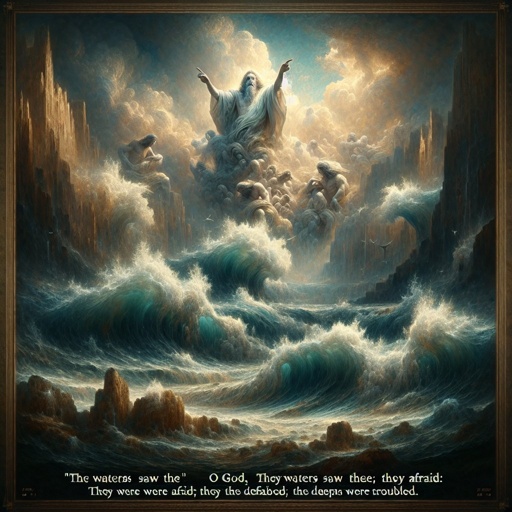
Psalms 77:16 - "The waters saw thee, O God, the waters saw thee; they were afraid: the depths also were troubled."

Psalms 77:6 - "I call to remembrance my song in the night: I commune with mine own heart: and my spirit made diligent search."

"The clouds poured out water: the skies sent out a sound: thine arrows also went abroad." - Psalms 77:17

Psalms 77:1 - "I cried unto God with my voice, even unto God with my voice; and he gave ear unto me."

"I cried unto God with my voice, even unto God with my voice; and he gave ear unto me." - Psalms 77:1