What does Psalms 59:17 mean?
"Unto thee, O my strength, will I sing: for God is my defence, and the God of my mercy." - Psalms 59:17

Psalm 59 is a psalm “of David” written out of danger, and the title supplied in the KJV points the reader to the moment “when Saul sent, and they watched the house to kill him.” In that setting the psalm moves like a night watch: enemies surround, the righteous man is hunted, and yet faith refuses to let fear have the last word. By the time you reach the closing sentence, the whole struggle has been gathered into worship. Psalms 59:17 in the KJV reads, “Unto thee, O my strength, will I sing: for God is my defence, and the God of my mercy.”
The verse begins with a deliberate turning of the heart: “Unto thee.” David does not merely describe God; he addresses Him. This is the language of prayer and praise aimed directly at the Lord, and it is important in a psalm where the threats feel immediate and personal. The enemies are near, but David’s first and final orientation is toward God Himself. Then he names God, not as a distant power, but as present help: “O my strength.” In the world of the psalm, David’s own strength is not enough; the watchmen and violent men are too many, and their malice too relentless. Calling God “my strength” is more than a compliment; it is confession. It declares that what sustains David in danger is not his skill, not his allies, not his plans, but the Lord as the source of endurance and courage. The possessive “my” matters too: it speaks of covenant nearness and personal reliance, not abstract theology.
“Will I sing” shows what faith does with that confession. David’s response to threat is worship. Singing in the psalms is not entertainment; it is testimony and spiritual warfare of another kind, a public and personal way of declaring who God is when circumstances argue the opposite. In Psalm 59 the enemies are loud, prowling, and boastful; David answers with song. The future sense of “will I sing” carries resolve. It reads like a settled decision made before the outcome is seen: whatever the night holds, praise will be offered. It also suggests that deliverance is expected, because in Scripture singing often accompanies God’s saving acts, either in anticipation or in remembrance.
The reason for the song is given plainly: “for God is my defence.” Throughout Psalm 59 the danger is described in images of pursuit, ambush, and surrounding forces. Against that, “defence” is the language of safety, refuge, and fortified shelter. The KJV’s word points to God as the one who stands between David and destruction, not merely as a helper who gives advice from afar. In the context of Saul’s men watching the house, the symbolism becomes vivid: David may be trapped within walls, but God is the greater wall around him. When human structures cannot secure, the Lord Himself becomes the strong place. This fits the psalm’s repeated appeal to God to “deliver” and “defend,” and it clarifies that the deepest security is not the absence of enemies but the presence of God as protector.
Then the verse deepens from protection to character: “and the God of my mercy.” David does not only need shelter; he needs grace. “Mercy” in the psalms often carries the sense of lovingkindness, steadfast favor, and compassionate loyalty. By saying “the God of my mercy,” David acknowledges that any hope he has rests on God’s merciful disposition toward him. The phrase also keeps David’s confidence from turning into pride. If God defends him, it is not because David has earned invulnerability; it is because God is merciful. This matters in a psalm that contains strong words about enemies. Mercy frames the whole moral universe: God’s protection is not random power; it is righteous care expressed through covenant love.
Taken together, the verse gathers the main themes of Psalm 59 into a final act of faith. It holds strength and song together, showing that true strength is found in God and expressed in worship. It holds defence and mercy together, showing that God’s protection is not cold force but compassionate commitment. It also resolves the tension of the psalm: the night may be full of watchers and violent men, but David ends by placing the last word in God’s mouth, not theirs. Psalms 59:17 is therefore both conclusion and confession: David’s life is surrounded, but his soul is sheltered; his circumstances threaten, but his God remains “my strength,” “my defence,” and “the God of my mercy.”
Have questions about Psalms 59:17?
Dive deeper into this scripture with Bible Chat — an AI-powered tool for exploring God's Word through conversation. Ask questions, get context, and grow in your understanding of the Bible.
Get Our Apps


Psalms 59:17 Artwork

Psalms 59:17 - "Unto thee, O my strength, will I sing: for God is my defence, and the God of my mercy."

"Unto thee, O my strength, will I sing: for God is my defence, and the God of my mercy." - Psalms 59:17

"Unto thee, O my strength, will I sing: for God is my defence, and the God of my mercy." - Psalms 59:17

"Unto thee, O my strength, will I sing: for God is my defence, and the God of my mercy." - Psalms 59:17

Psalms 59:9 - "Because of his strength will I wait upon thee: for God is my defence."

Psalms 59:14 - "And at evening let them return; and let them make a noise like a dog, and go round about the city."

"When God heard this, he was wroth, and greatly abhorred Israel:" - Psalms 78:59

Psalms 78:59 - "When God heard this, he was wroth, and greatly abhorred Israel:"

Psalms 59:15 - "Let them wander up and down for meat, and grudge if they be not satisfied."

Psalms 59:4 - "They run and prepare themselves without my fault: awake to help me, and behold."

Psalms 59:6 - "They return at evening: they make a noise like a dog, and go round about the city."

Psalms 59:7 - "Behold, they belch out with their mouth: swords are in their lips: for who, say they, doth hear?"

Psalms 59:2 - "Deliver me from the workers of iniquity, and save me from bloody men."

Psalms 119:59 - "I thought on my ways, and turned my feet unto thy testimonies."
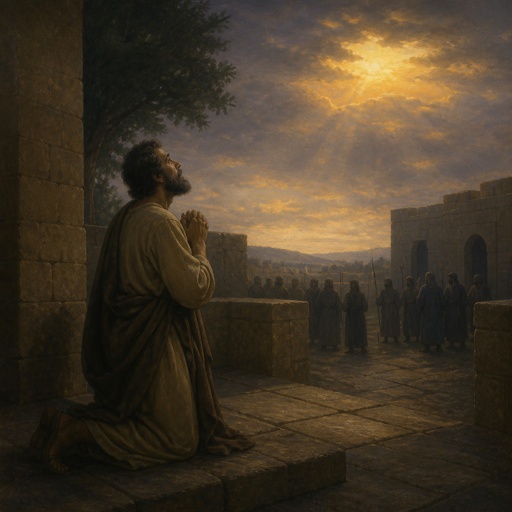
"They run and prepare themselves without my fault: awake to help me, and behold." - Psalms 59:4

Psalms 59:8 - "But thou, O LORD, shalt laugh at them; thou shalt have all the heathen in derision."

Psalms 59:12 - "For the sin of their mouth and the words of their lips let them even be taken in their pride: and for cursing and lying which they speak."

Psalms 59:10 - "The God of my mercy shall prevent me: God shall let me see my desire upon mine enemies."

Psalms 59:13 - "Consume them in wrath, consume them, that they may not be: and let them know that God ruleth in Jacob unto the ends of the earth. Selah."

Psalms 59:1 - "Deliver me from mine enemies, O my God: defend me from them that rise up against me."

Psalms 59:3 - "For, lo, they lie in wait for my soul: the mighty are gathered against me; not for my transgression, nor for my sin, O LORD."

Psalms 59:11 - "Slay them not, lest my people forget: scatter them by thy power; and bring them down, O Lord our shield."

Psalms 59:5 - "Thou therefore, O LORD God of hosts, the God of Israel, awake to visit all the heathen: be not merciful to any wicked transgressors. Selah."

"Let them wander up and down for meat, and grudge if they be not satisfied." - Psalms 59:15

"Slay them not, lest my people forget: scatter them by thy power; and bring them down, O Lord our shield." - Psalms 59:11

"The God of my mercy shall prevent me: God shall let me see my desire upon mine enemies." - Psalms 59:10

Psalms 17:5 - "Hold up my goings in thy paths, that my footsteps slip not."

Psalms 59:16 - "But I will sing of thy power; yea, I will sing aloud of thy mercy in the morning: for thou hast been my defence and refuge in the day of my trouble."

Psalms 136:17 - "To him which smote great kings: for his mercy endureth for ever:"

"Thou therefore, O LORD God of hosts, the God of Israel, awake to visit all the heathen: be not merciful to any wicked transgressors. Selah." - Psalms 59:5