What does Psalms 55:6 mean?
"And I said, Oh that I had wings like a dove! for then would I fly away, and be at rest." - Psalms 55:6

Psalm 55 is a psalm of David spoken from the inside of distress. The speaker is not merely inconvenienced; he is overwhelmed, hunted by trouble, and painfully aware that his danger is not only “out there” in the city but also “in here” in the form of fear, grief, and agitation. The chapter begins with a plea that God would hear and not hide himself, because the noise of the enemy and the oppression of the wicked have risen up against him. His heart is “sore pained,” and “fearfulness and trembling” have come upon him. In that setting Psalm 55:6 appears as one of the most human cries in all of Scripture, a moment when the faithful man admits the strength of his desire to escape: “And I said, Oh that I had wings like a dove! for then would I fly away, and be at rest.”
In the KJV wording, the verse is a wish, not a plan. “Oh that I had” expresses longing rather than strategy, and it shows that the psalm is not pretending that spiritual life is free from the impulse to flee. David’s first instinct in the pressure of betrayal and violence is not triumphal speech but the ache to get away, to be beyond reach of what torments him. The verse gives voice to a temptation many experience: when conflict becomes unbearable, the soul imagines a clean exit, a place where the heart can stop racing and the mind can stop replaying threats. That is why the closing phrase matters: “and be at rest.” The flight he imagines is not for adventure or conquest, but for rest—quietness, safety, relief from inner turmoil as much as outer danger.
The dove is chosen with moral and spiritual precision. David does not wish for the wings of an eagle, which would suggest power, dominance, or predatory victory. He longs for “wings like a dove,” and the dove in Scripture commonly evokes gentleness and vulnerability, a creature that does not fight its way through trouble but seeks refuge. In the KJV Bible the dove is associated with innocence and harmlessness, and it also carries the memory of the flood narrative, where the dove became a sign of the possibility of peace and a new beginning. To desire wings like a dove is to desire a kind of escape marked by purity and peace rather than revenge. It is a cry for deliverance without becoming like the violent world pressing in on him.
The symbolism also communicates the depth of David’s weariness. A man who asks for wings is admitting that ordinary means feel insufficient. Feet are too slow; walls are too thin; friends are too unreliable. He wants a supernatural removal from the scene, the ability to leave the whole field of conflict behind. Yet the verse does not praise escapism as a virtue; it exposes it as a real emotion that must be carried into prayer. Psalm 55 is full of direct speech to God, and this line is part of that honesty. Instead of hiding his longing to disappear, he places it before the Lord, which is itself an act of faith. The verse therefore stands as an example of how Scripture teaches believers to pray: with truth, not with performance.
The broader context clarifies what drives such a yearning. David is surrounded by “violence and strife” in the city, and “mischief” and “sorrow” are within it. But most piercing is the wound of betrayal. Later in the psalm he says it was not an open enemy who reproached him; it was a familiar companion, someone with whom he took “sweet counsel” and walked “unto the house of God in company.” Psalm 55:6 sits near the beginning of that emotional descent. It is the reflex of a wounded heart that has discovered that even close relationships can become dangerous. When trust collapses, the desire to fly away is not only fear of enemies; it is grief over the loss of fellowship.
The verse’s significance is heightened by what follows. Immediately after expressing the wish for wings, the psalm continues with the thought of fleeing “far off,” lodging “in the wilderness,” and “hast[ing]” escape “from the windy storm and tempest.” That language shows that the rest he seeks is not laziness, but shelter from chaos. The “windy storm and tempest” can be read as the external turbulence of threats and slander, and also as the internal turbulence of anxiety and shaking. David’s inward condition is described earlier: “horror hath overwhelmed me.” Psalm 55:6 therefore captures a turning point where fear could become despair, but instead is voiced in prayer, and that prayer eventually moves toward exhortation and trust: “Cast thy burden upon the LORD, and he shall sustain thee.”
In prose, then, Psalm 55:6 is the sound of a faithful man admitting that his soul craves relief so intensely he imagines transformation—wings—to reach what he cannot reach by strength alone: rest. The dove symbolizes a longing for peace, gentleness, and safe refuge rather than domination. The verse sits within a lament shaped by oppression and the sting of betrayal, and it reveals that Scripture does not deny the believer’s instinct to run; it redeems it by turning it into prayer. David’s wish to “fly away” is ultimately framed by the psalm’s larger movement: distress is real, escape is tempting, but the final ground of rest is not distance alone. The psalm will press beyond the fantasy of flight to the deeper answer of faith—bringing the burden to the LORD who sustains—yet it begins by letting the wounded heart speak its true desire for peace.
Have questions about Psalms 55:6?
Dive deeper into this scripture with Bible Chat — an AI-powered tool for exploring God's Word through conversation. Ask questions, get context, and grow in your understanding of the Bible.
Get Our Apps


Psalms 55:6 Artwork

Psalms 55:6 - "And I said, Oh that I had wings like a dove! for then would I fly away, and be at rest."

"And I said, Oh that I had wings like a dove! for then would I fly away, and be at rest." - Psalms 55:6

Psalms 55:1 - "Give ear to my prayer, O God; and hide not thyself from my supplication."

"I would hasten my escape from the windy storm and tempest." - Psalms 55:8

Psalms 55:13 - "But it was thou, a man mine equal, my guide, and mine acquaintance."

"Fearfulness and trembling are come upon me, and horror hath overwhelmed me." - Psalms 55:5

"Lo, then would I wander far off, and remain in the wilderness. Selah." - Psalms 55:7

Psalms 55:8 - "I would hasten my escape from the windy storm and tempest."

Psalms 55:7 - "Lo, then would I wander far off, and remain in the wilderness. Selah."

Psalms 55:5 - "Fearfulness and trembling are come upon me, and horror hath overwhelmed me."

Psalms 55:16 - "As for me, I will call upon God; and the LORD shall save me."

Psalms 55:11 - "Wickedness is in the midst thereof: deceit and guile depart not from her streets."

Psalms 55:10 - "Day and night they go about it upon the walls thereof: mischief also and sorrow are in the midst of it."

Psalms 55:4 - "My heart is sore pained within me: and the terrors of death are fallen upon me."

Psalms 55:14 - "We took sweet counsel together, and walked unto the house of God in company."

"Attend unto me, and hear me: I mourn in my complaint, and make a noise;" - Psalms 55:2

Psalms 55:9 - "Destroy, O Lord, and divide their tongues: for I have seen violence and strife in the city."

Psalms 55:2 - "Attend unto me, and hear me: I mourn in my complaint, and make a noise;"

Psalms 119:55 - "I have remembered thy name, O LORD, in the night, and have kept thy law."
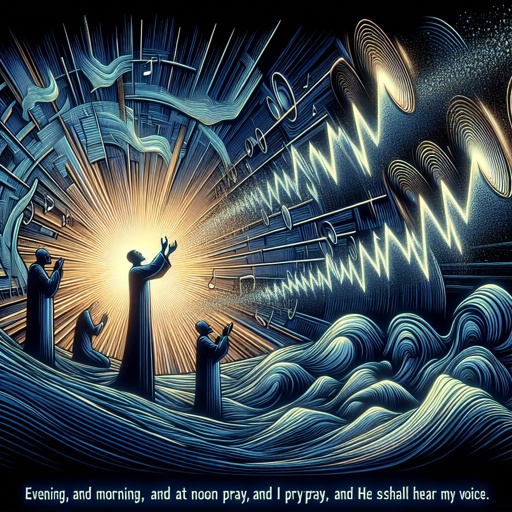
Psalms 55:17 - "Evening, and morning, and at noon, will I pray, and cry aloud: and he shall hear my voice."

Psalms 55:3 - "Because of the voice of the enemy, because of the oppression of the wicked: for they cast iniquity upon me, and in wrath they hate me."

Psalms 55:18 - "He hath delivered my soul in peace from the battle that was against me: for there were many with me."
!["And I said, Oh that I had wings like a dove! [for then] would I fly away, and be at rest." - Psalm 55:6](https://media.bible.art/9d515097-c842-4bc5-9097-08f5172bd910-thumbnail.jpg)
"And I said, Oh that I had wings like a dove! [for then] would I fly away, and be at rest." - Psalm 55:6

Psalms 55:20 - "He hath put forth his hands against such as be at peace with him: he hath broken his covenant."

Psalms 78:55 - "He cast out the heathen also before them, and divided them an inheritance by line, and made the tribes of Israel to dwell in their tents."

Psalms 55:19 - "God shall hear, and afflict them, even he that abideth of old. Selah. Because they have no changes, therefore they fear not God."

Psalms 55:15 - "Let death seize upon them, and let them go down quick into hell: for wickedness is in their dwellings, and among them."

Psalms 55:22 - "Cast thy burden upon the LORD, and he shall sustain thee: he shall never suffer the righteous to be moved."

Psalms 126:6

"But it was thou, a man mine equal, my guide, and mine acquaintance." - Psalms 55:13