What does Psalms 25:7 mean?
"Remember not the sins of my youth, nor my transgressions: according to thy mercy remember thou me for thy goodness' sake, O LORD." - Psalms 25:7
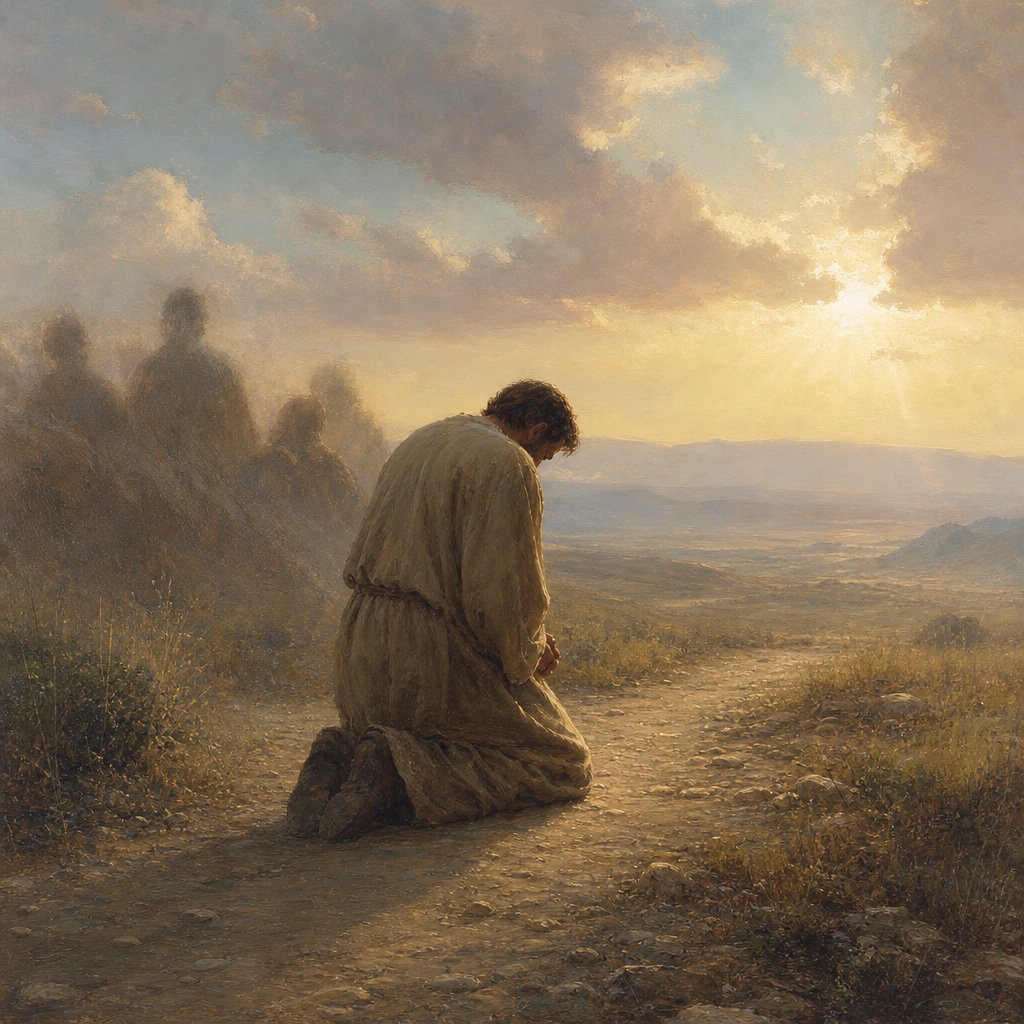
Psalm 25 is a prayer of David spoken in the language of covenant relationship: a man who belongs to the LORD, yet feels his need of mercy, guidance, and deliverance. It moves back and forth between asking God to teach and lead him and asking God to forgive and rescue him, and Psalm 25:7 sits at the emotional center of that movement, where the past becomes the burden he cannot carry without God’s grace.
The verse reads, in the KJV, “Remember not the sins of my youth, nor my transgressions: according to thy mercy remember thou me for thy goodness' sake, O LORD.” David is not merely asking God to overlook isolated mistakes. He is addressing a whole history: “the sins of my youth” suggests early patterns, old failures, and the kind of immaturity that clings to a person’s memory long after the season has passed. In Scripture, “youth” often implies a time when desire runs ahead of wisdom, when identity is still being shaped, and when choices can lay down tracks that later become painful to revisit. By naming “sins” and also “transgressions,” David gathers both the inner reality and the outward crossing of a line. “Sin” speaks of missing the mark and falling short; “transgressions” carries the sense of willful overstepping, a breach that disrupts relationship. He is confessing that what troubles him is not only weakness but culpability.
The pivotal word is “remember,” used twice but in opposite ways. In the Bible, God’s “remembering” is not about retrieving information, as though God forgets and then recalls. It is covenant language: to be “remembered” by God is to be regarded, attended to, acted toward, and dealt with. When David says, “Remember not,” he is asking God not to deal with him on the basis of his former sins, not to bring them forward as the measure of his present standing. When he says, “according to thy mercy remember thou me,” he asks God to deal with him on a different basis altogether—not on the record of David’s past, but on the character of God. This contrast is the heart of the verse: one kind of remembering ties him to guilt; the other kind of remembering anchors him in mercy.
The phrase “according to thy mercy” grounds forgiveness in what God is like, not in what David deserves. Mercy in the Psalms is not sentimental leniency; it is God’s covenant kindness toward the undeserving, His compassionate readiness to relieve misery and pardon guilt. David’s appeal is not, “Remember me according to my apologies,” but “according to thy mercy.” The verse therefore teaches that hope is located not in self-repair but in divine compassion. Even the structure of the sentence presses that point: David’s past is real and named, but it is placed under the greater reality of God’s mercy.
Then David adds, “for thy goodness' sake.” This lifts the prayer even higher. He does not ask God to forgive for the sake of David’s reputation, comfort, or future usefulness, but “for thy goodness' sake, O LORD.” God’s “goodness” in the Psalms includes His moral purity, His generosity, His faithfulness, and His inclination to do what is right. David is asking God to act consistently with His own nature. In other words, forgiveness is presented as an expression of God’s goodness rather than a reluctant exception to His justice. This does not minimize sin; it magnifies God. The logic is that God’s mercy is not random, and His forgiveness is not accidental—it flows from who He is.
In its immediate context, Psalm 25 is filled with requests for guidance: “Shew me thy ways, O LORD; teach me thy paths” and “Lead me in thy truth, and teach me.” That means Psalm 25:7 is not only about being cleared from guilt, but about being made fit to be led. The one who asks for God’s ways also must ask for cleansing, because sin distorts perception, damages trust, and entangles the conscience. The verse functions like an inner doorway: David cannot walk forward with God while his past stands as an unpaid debt between them. Thus, confession and forgiveness are not an aside; they are central to spiritual direction.
There is also symbolism in the tension between “youth” and the present moment of prayer. Youth represents beginnings, and beginnings often carry formative failures that echo. David brings those earliest stains into the light, implying that nothing is too old to confess and nothing is too early to need mercy. The verse suggests that time does not erase sin; only God’s mercy can address it. Yet it also suggests that God’s mercy is not bound by time. David’s request spans the years and asks God to deal with his whole life under the banner of divine goodness.
The significance of Psalm 25:7, taken in the KJV’s own terms, is that it teaches a distinctly biblical way of seeking forgiveness: honest acknowledgement of “sins” and “transgressions,” a plea that God would not “remember” them against the sinner, and an appeal that God would instead “remember” the person “according to thy mercy” and “for thy goodness' sake.” It is a verse that turns the weight of memory into a prayer, and it locates the answer not in human worthiness but in the LORD’s own merciful goodness.
Have questions about Psalms 25:7?
Dive deeper into this scripture with Bible Chat — an AI-powered tool for exploring God's Word through conversation. Ask questions, get context, and grow in your understanding of the Bible.
Get Our Apps


Psalms 25:7 Artwork

Psalms 25:7 - "Remember not the sins of my youth, nor my transgressions: according to thy mercy remember thou me for thy goodness' sake, O LORD."
"Remember not the sins of my youth, nor my transgressions: according to thy mercy remember thou me for thy goodness' sake, O LORD." - Psalms 25:7

Psalms 20 7

Psalms 107:25 - "For he commandeth, and raiseth the stormy wind, which lifteth up the waves thereof."

psalm 80:1-7

Psalms 98:7 - "Let the sea roar, and the fulness thereof; the world, and they that dwell therein."

"Redeem Israel, O God, out of all his troubles." - Psalms 25:22

"Good and upright is the LORD: therefore will he teach sinners in the way." - Psalms 25:8

Psalms 12:7 - "Thou shalt keep them, O LORD, thou shalt preserve them from this generation for ever."

"All sheep and oxen, yea, and the beasts of the field;" - Psalms 8:7

"Shew me thy ways, O LORD; teach me thy paths." - Psalms 25:4

"Unto thee, O LORD, do I lift up my soul." - Psalms 25:1

"Man did eat angels' food: he sent them meat to the full." - Psalms 78:25

Psalms 106:25 - "But murmured in their tents, and hearkened not unto the voice of the LORD."

"Look upon mine affliction and my pain; and forgive all my sins." - Psalms 25:18

"Of old hast thou laid the foundation of the earth: and the heavens are the work of thy hands." - Psalms 102:25

"Gebal, and Ammon, and Amalek; the Philistines with the inhabitants of Tyre;" - Psalms 83:7

Psalms 69:25 - "Let their habitation be desolate; and let none dwell in their tents."

"For he commandeth, and raiseth the stormy wind, which lifteth up the waves thereof." - Psalms 107:25

"He turned their heart to hate his people, to deal subtilly with his servants." - Psalms 105:25

Psalms 25:8 - "Good and upright is the LORD: therefore will he teach sinners in the way."

"So shall the congregation of the people compass thee about: for their sakes therefore return thou on high." - Psalms 7:7

Psalms 88:7 - "Thy wrath lieth hard upon me, and thou hast afflicted me with all thy waves. Selah."

Psalms 25:22 - "Redeem Israel, O God, out of all his troubles."

Psalms 25:21 - "Let integrity and uprightness preserve me; for I wait on thee."

Psalms 25:19 - "Consider mine enemies; for they are many; and they hate me with cruel hatred."

"The troubles of my heart are enlarged: O bring thou me out of my distresses." - Psalms 25:17

"So is this great and wide sea, wherein are things creeping innumerable, both small and great beasts." - Psalms 104:25

Psalms 25:11 - "For thy name's sake, O LORD, pardon mine iniquity; for it is great."

"We will go into his tabernacles: we will worship at his footstool." - Psalms 132:7