What does Psalms 137:7 mean?
"Remember, O LORD, the children of Edom in the day of Jerusalem; who said, Rase it, rase it, even to the foundation thereof." - Psalms 137:7
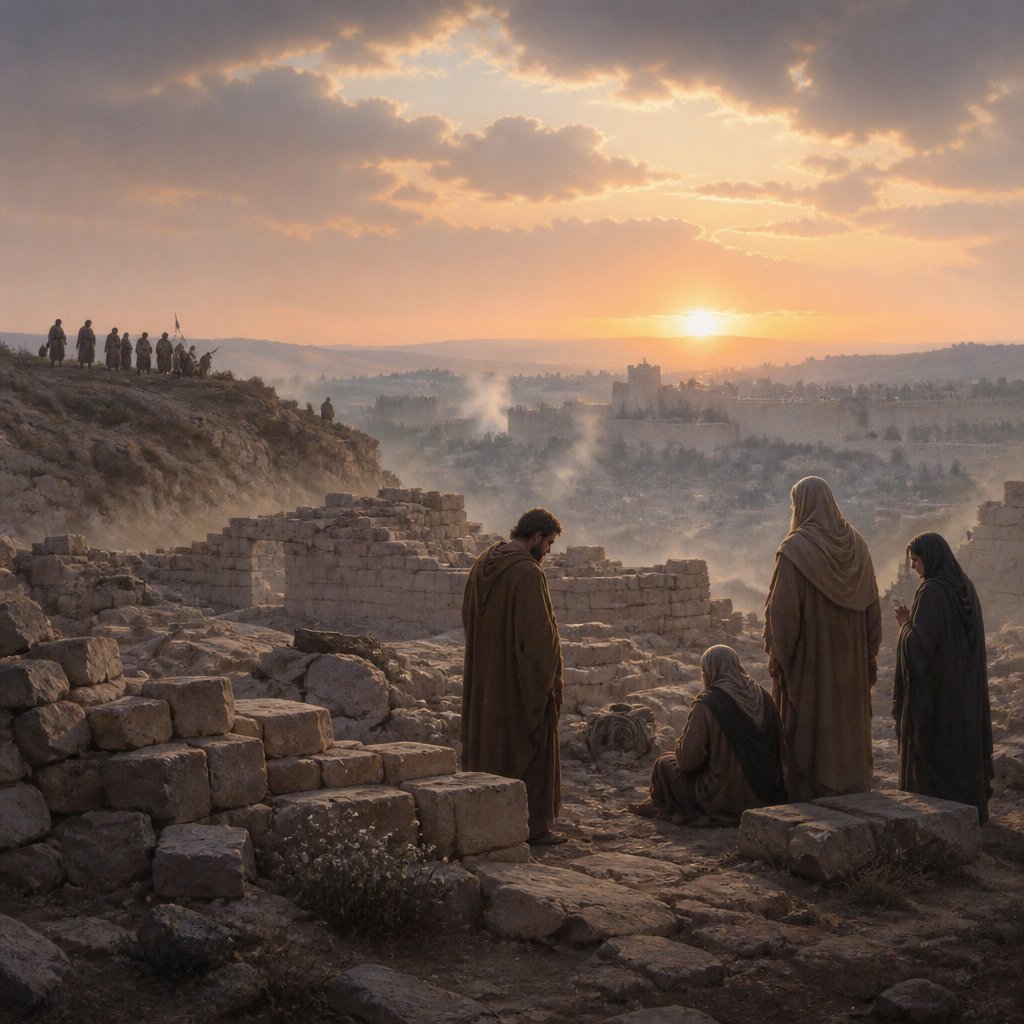
Psalms 137:7 from the King James Version of the Bible reads, "Remember, O Lord, the children of Edom in the day of Jerusalem; who said, Rase it, rase it, even to the foundation thereof."
This verse is part of the larger Psalm 137, which is a lament of the Jewish people during their exile in Babylon. The psalm reflects the deep sense of loss and longing felt by the Jewish people as they remember Zion and the devastation of their homeland. The verse specifically calls on the Lord to remember the actions of the Edomites, who were seen as enemies of the Jewish people.
The mention of Edom in this verse is significant because the Edomites were descendants of Esau, the twin brother of Jacob. Throughout the Bible, there is a long-standing rivalry between the descendants of Jacob (the Israelites) and the descendants of Esau (the Edomites). This rivalry is rooted in the struggle for power and dominance over the land of Canaan, which was promised to the Israelites by God.
In the context of Psalm 137:7, the reference to the children of Edom serves as a reminder of the betrayal and hostility shown by the Edomites towards the Jewish people. The Edomites are portrayed as actively participating in the destruction of Jerusalem, as they are said to have called for its complete demolition "even to the foundation thereof." This reveals the depth of the Jewish people's pain and anger, as they remember the role that their enemies played in the devastation of their beloved city.
The verse also reflects the theme of divine justice and retribution. The psalmist is calling on the Lord to remember the actions of the Edomites, implying a desire for them to be held accountable for their deeds. This reflects the broader theme of justice and the belief that God will ultimately punish the enemies of His chosen people. This theme is echoed throughout the Bible, particularly in the prophetic books, where the downfall of nations and individuals is often tied to their mistreatment of the Israelites.
Additionally, Psalm 137:7 highlights the theme of remembrance and the longing for restoration. The psalm as a whole is a poignant expression of the exile experience, as the Jewish people mourn the loss of their homeland and yearn for its restoration. The reference to the children of Edom serves as a reminder of the injustices suffered by the Jewish people, while also expressing a desire for God to remember their suffering and bring about a just resolution. This theme of remembrance is significant throughout the Bible, as the Israelites frequently call on God to remember His covenant and promises to them.
Moreover, the verse can be seen as a symbol of the enduring struggle between good and evil. The actions of the Edomites represent the destructive forces that seek to undermine God's plans and harm His people. The psalmist's plea for God to remember the children of Edom reflects the ongoing battle between righteousness and wickedness, with the hope that God will ultimately triumph over His enemies.
In conclusion, Psalm 137:7 is a powerful and evocative verse that encapsulates themes of pain, injustice, and longing for restoration. It serves as a potent reminder of the suffering endured by the Jewish people and their ultimate hope for divine justice and redemption. The verse also highlights the enduring struggle between good and evil, as the actions of the Edomites symbolize the destructive forces that seek to undermine God's plans. Overall, Psalm 137:7 is a poignant expression of the complex emotions and enduring faith of the Jewish people in the face of adversity.
Have questions about Psalms 137:7?
Dive deeper into this scripture with Bible Chat — an AI-powered tool for exploring God's Word through conversation. Ask questions, get context, and grow in your understanding of the Bible.
Get Our Apps


Psalms 137:7 Artwork

Psalms 137:7 - "Remember, O LORD, the children of Edom in the day of Jerusalem; who said, Rase it, rase it, even to the foundation thereof."
"Remember, O LORD, the children of Edom in the day of Jerusalem; who said, Rase it, rase it, even to the foundation thereof." - Psalms 137:7

"Righteous art thou, O LORD, and upright are thy judgments." - Psalms 119:137

Psalms 137:2 - "We hanged our harps upon the willows in the midst thereof."

Psalms 119:137 - "Righteous art thou, O LORD, and upright are thy judgments."

"How shall we sing the LORD'S song in a strange land?" - Psalms 137:4

"We hanged our harps upon the willows in the midst thereof." - Psalms 137:2

Psalms 137:4 - "How shall we sing the LORD'S song in a strange land?"

Psalms 137:9 - "Happy shall he be, that taketh and dasheth thy little ones against the stones."

"Happy shall he be, that taketh and dasheth thy little ones against the stones." - Psalms 137:9

"If I forget thee, O Jerusalem, let my right hand forget her cunning." - Psalms 137:5

Psalms 137:1 - "By the rivers of Babylon, there we sat down, yea, we wept, when we remembered Zion."

Psalms 137:5 - "If I forget thee, O Jerusalem, let my right hand forget her cunning."

"By the rivers of Babylon, there we sat down, yea, we wept, when we remembered Zion." - Psalms 137:1

Psalms 137:8 - "O daughter of Babylon, who art to be destroyed; happy shall he be, that rewardeth thee as thou hast served us."

PSALMS 137;5 SHOWING THE OLD CITY OF JERUSALEM

"O daughter of Babylon, who art to be destroyed; happy shall he be, that rewardeth thee as thou hast served us." - Psalms 137:8

Psalms 137:3 - "For there they that carried us away captive required of us a song; and they that wasted us required of us mirth, saying, Sing us one of the songs of Zion."

Psalms 137:6 - "If I do not remember thee, let my tongue cleave to the roof of my mouth; if I prefer not Jerusalem above my chief joy."

"If I do not remember thee, let my tongue cleave to the roof of my mouth; if I prefer not Jerusalem above my chief joy." - Psalms 137:6

"For there they that carried us away captive required of us a song; and they that wasted us required of us mirth, saying, Sing us one of the songs of Zion." - Psalms 137:3

Psalms 20 7
psalm 80:1-7

Psalms 98:7 - "Let the sea roar, and the fulness thereof; the world, and they that dwell therein."

Psalms 12:7 - "Thou shalt keep them, O LORD, thou shalt preserve them from this generation for ever."

"All sheep and oxen, yea, and the beasts of the field;" - Psalms 8:7

"Gebal, and Ammon, and Amalek; the Philistines with the inhabitants of Tyre;" - Psalms 83:7

"We will go into his tabernacles: we will worship at his footstool." - Psalms 132:7

"So shall the congregation of the people compass thee about: for their sakes therefore return thou on high." - Psalms 7:7

Psalms 88:7 - "Thy wrath lieth hard upon me, and thou hast afflicted me with all thy waves. Selah."