What does Psalms 127:1 mean?
"Except the LORD build the house, they labour in vain that build it: except the LORD keep the city, the watchman waketh but in vain." - Psalms 127:1
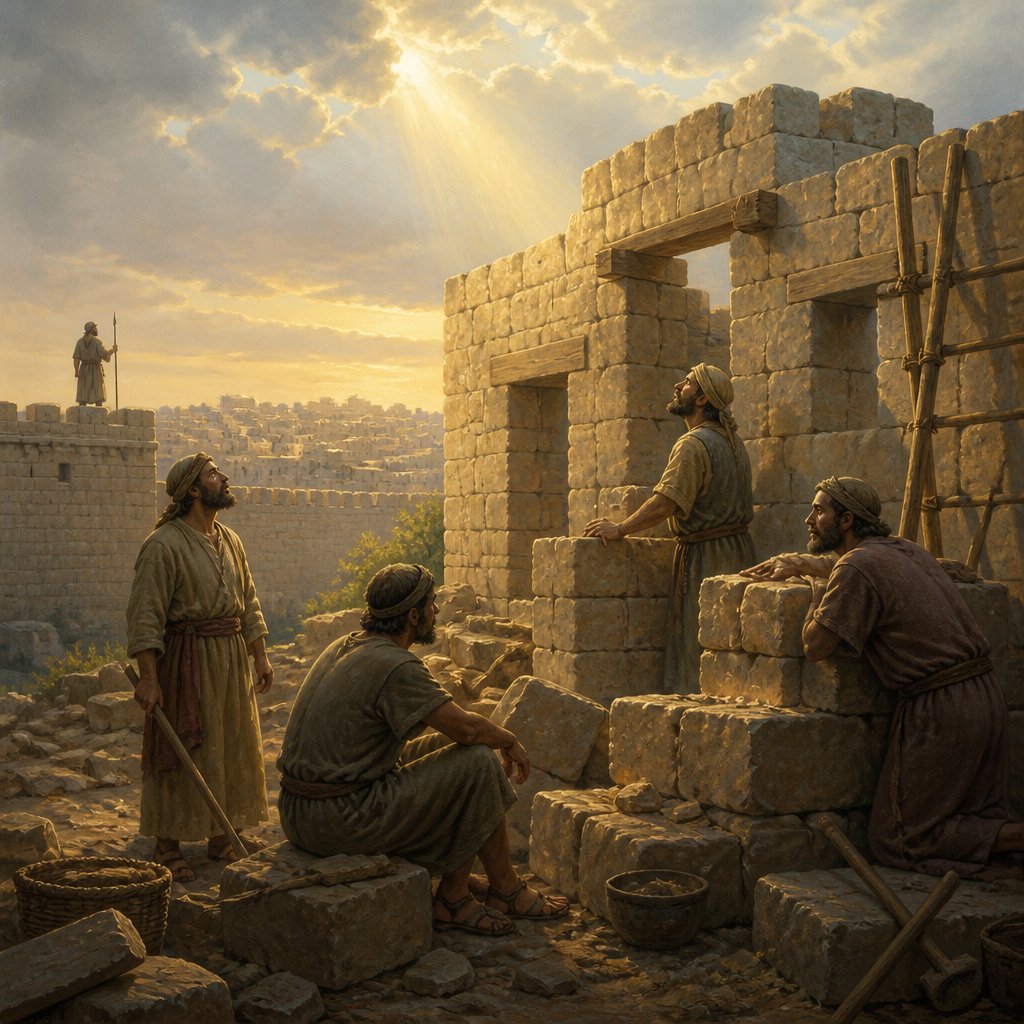
"Psalms 127:1 - Except the Lord build the house, they labour in vain that build it: except the Lord keep the city, the watchman waketh but in vain."
The book of Psalms, attributed to King David, is a collection of 150 poetic songs and prayers that have been a source of spiritual inspiration for believers for centuries. In Psalm 127, the author reflects on the importance of relying on God in all aspects of life, especially when it comes to building a home and keeping a city safe. The verse serves as a powerful reminder of the futility of human effort without the guidance and blessing of the Lord.
The verse begins with the assertion that "Except the Lord build the house, they labour in vain that build it." This statement serves as a metaphor for the idea that human efforts are ultimately fruitless without God's intervention and support. In ancient times, the construction of a house was a symbol of stability, security, and prosperity. However, the psalmist emphasizes that without God as the foundation, all the labor put into building a house is meaningless.
This idea is not only applicable to physical construction but also to all areas of life where we strive to achieve success through our own efforts. It speaks to the human inclination to rely solely on our own abilities, resources, and strategies, neglecting the significance of God's involvement in our endeavors. The verse challenges us to recognize our dependence on God and to seek His guidance and wisdom as we pursue our goals and plans.
The second part of the verse, "except the Lord keep the city, the watchman waketh but in vain," similarly highlights the importance of God's protection and care. In ancient times, the safety of a city relied heavily on the vigilance of its watchmen, who kept watch day and night to safeguard the inhabitants from potential threats. However, the psalmist asserts that even the most diligent efforts of the watchmen are futile without the divine protection of the Lord.
This imagery can be interpreted in a broader sense to encompass not only physical security but also spiritual and emotional well-being. It emphasizes the need for God's providence and safeguarding in all aspects of life, reinforcing the message that human efforts alone are insufficient to ensure true security and protection.
The themes of divine providence, trust, and dependence on God run deep throughout this verse. It speaks to the human experience of striving and toiling without recognizing the ultimate sovereignty of God. It challenges us to acknowledge our reliance on God's grace and to surrender our plans and ambitions to His divine will.
In addition to its thematic depth, the verse also carries strong symbolic significance. The house and the city serve as archetypal representations of human constructs and communities, while the Lord symbolizes the ultimate source of strength and security. This symbolism reinforces the idea that true prosperity and protection can only be attained through a steadfast connection with God.
In conclusion, Psalm 127:1 is a poignant reflection on the limitations of human effort and the necessity of trusting in God's guidance and provision. It challenges us to reassess our reliance on our own abilities and to recognize the significance of God's involvement in every aspect of our lives. The verse serves as a powerful reminder of the futility of striving without God and the importance of seeking His guidance and blessings in all our endeavors.
Have questions about Psalms 127:1?
Dive deeper into this scripture with Bible Chat — an AI-powered tool for exploring God's Word through conversation. Ask questions, get context, and grow in your understanding of the Bible.
Get Our Apps


Psalms 127:1 Artwork

Psalms 127:1 - "Except the LORD build the house, they labour in vain that build it: except the LORD keep the city, the watchman waketh but in vain."

"Except the LORD build the house, they labour in vain that build it: except the LORD keep the city, the watchman waketh but in vain." - Psalms 127:1
Psalm 127:1

Psalms 127:4 - "As arrows are in the hand of a mighty man; so are children of the youth."

"As arrows are in the hand of a mighty man; so are children of the youth." - Psalms 127:4

"Lo, children are an heritage of the LORD: and the fruit of the womb is his reward." - Psalms 127:3

Psalms 119:127 - "Therefore I love thy commandments above gold; yea, above fine gold."

Psalms 127:3 - "Lo, children are an heritage of the LORD: and the fruit of the womb is his reward."

"Therefore I love thy commandments above gold; yea, above fine gold." - Psalms 119:127

Psalms 127:5 - "Happy is the man that hath his quiver full of them: they shall not be ashamed, but they shall speak with the enemies in the gate."

Psalms 127:2 - "It is vain for you to rise up early, to sit up late, to eat the bread of sorrows: for so he giveth his beloved sleep."

"It is vain for you to rise up early, to sit up late, to eat the bread of sorrows: for so he giveth his beloved sleep." - Psalms 127:2

"Happy is the man that hath his quiver full of them: they shall not be ashamed, but they shall speak with the enemies in the gate." - Psalms 127:5

Psalm 127:1-2 - "Unless the Lord builds the house, the builders labor in vain. Unless the Lord watches over the city, the guards stand watch in vain. In vain you rise early and stay up late, toiling for food to eat— for he grants sleep to those he loves."

Psalms 128:1 - "Blessed is every one that feareth the LORD; that walketh in his ways."

Psalms 122:1 - "I was glad when they said unto me, Let us go into the house of the LORD."
psalm 80:1-7

Psalms 15:1 (KJVA) 1 A Psalm of David. LORD, who shall abide in thy tabernacle? who shall dwell in thy holy hill?

Psalms 15:1 (KJVA) 1 A Psalm of David. LORD, who shall abide in thy tabernacle? who shall dwell in thy holy hill?

Psalms 64:1 - "Hear my voice, O God, in my prayer: preserve my life from fear of the enemy."

Psalms 14:1 (KJVA) 1 To the chief Musician, A Psalm of David. The fool hath said in his heart, There is no God. They are corrupt, they have done abominable works, there is none that doeth good.

Psalms 14:1 (KJVA) 1 To the chief Musician, A Psalm of David. The fool hath said in his heart, There is no God. They are corrupt, they have done abominable works, there is none that doeth good.

Psalms 14:1 (KJVA) 1 To the chief Musician, A Psalm of David. The fool hath said in his heart, There is no God. They are corrupt, they have done abominable works, there is none that doeth good.

Psalms 14:1 (KJVA) 1 To the chief Musician, A Psalm of David. The fool hath said in his heart, There is no God. They are corrupt, they have done abominable works, there is none that doeth good.

Psalms 14:1 (KJVA) 1 To the chief Musician, A Psalm of David. The fool hath said in his heart, There is no God. They are corrupt, they have done abominable works, there is none that doeth good.

Psalms 14:1 (KJVA) 1 To the chief Musician, A Psalm of David. The fool hath said in his heart, There is no God. They are corrupt, they have done abominable works, there is none that doeth good.

Psalms 14:1 (KJVA) 1 To the chief Musician, A Psalm of David. The fool hath said in his heart, There is no God. They are corrupt, they have done abominable works, there is none that doeth good.

Psalms 14:1 (KJVA) 1 To the chief Musician, A Psalm of David. The fool hath said in his heart, There is no God. They are corrupt, they have done abominable works, there is none that doeth good.

"The LORD is my shepherd; I shall not want." - Psalms 23:1

Psalms 55:1 - "Give ear to my prayer, O God; and hide not thyself from my supplication."