What does Psalms 118:18 mean?
"The LORD hath chastened me sore: but he hath not given me over unto death." - Psalms 118:18

The verse Psalms 118:18 from the King James Version of the Bible reads, "The Lord hath chastened me sore: but he hath not given me over unto death." This verse is part of a psalm of thanksgiving and praise to God for his enduring love and faithfulness, and it expresses the psalmist's gratitude for deliverance from a place of distress and despair.
In order to fully understand the meaning and significance of this verse, it is important to examine the context in which it is situated. Psalms 118 is a hymn of praise and thanksgiving, attributed to King David, that celebrates the enduring mercies and faithfulness of God. The psalmist begins by declaring, "O give thanks unto the Lord; for he is good: because his mercy endureth for ever" (Psalms 118:1). The psalm then goes on to recount various trials and tribulations that the psalmist has faced, expressing confidence in God's deliverance and salvation.
In verse 18, the psalmist reflects on a period of chastening or correction from the Lord. The Hebrew word used here for "chastened" is "yasar," which conveys the idea of disciplining or instructing. It implies that the psalmist has undergone a time of difficulty or suffering, perhaps as a consequence of their own actions, or as a means of refining and purifying their character. The phrase "sore" emphasizes the severity or intensity of this chastening, suggesting that the psalmist has experienced significant hardship or affliction.
Despite this chastening, the psalmist affirms that the Lord has not given them over to death. This statement conveys a profound trust in God's faithfulness and protection, even in the midst of adversity. It reflects the psalmist's belief that God's correction is ultimately for their own good and that it will not lead to their destruction. In acknowledging the Lord's deliverance, the psalmist expresses gratitude and praise for God's mercy and steadfast love.
One of the key themes present in this verse is that of divine discipline and the redemptive nature of suffering. The concept of chastisement or correction is a recurring theme throughout the Bible, reflecting the idea that God lovingly disciplines those whom he loves, in order to bring about spiritual growth and maturity. The New Testament book of Hebrews reinforces this idea, quoting from the book of Proverbs: "My son, despise not thou the chastening of the Lord, nor faint when thou art rebuked of him" (Hebrews 12:5, Proverbs 3:11-12). The Apostle Paul also emphasizes the purpose of God's discipline in the book of Hebrews, stating that it "yieldeth the peaceable fruit of righteousness unto them which are exercised thereby" (Hebrews 12:11).
The theme of deliverance from death also carries significant symbolic weight in the broader context of biblical narrative. In the Old Testament, the theme of death and resurrection is often used as a metaphor for God's redemptive power and ability to bring new life out of despair and hopelessness. This theme finds its ultimate fulfillment in the New Testament with the death and resurrection of Jesus Christ, who conquered sin and death, offering the promise of eternal life to all who believe in him.
In conclusion, Psalms 118:18 is a verse that encapsulates the psalmist's gratitude for God's mercy and deliverance in the face of adversity. It celebrates the redemptive nature of suffering and the faithfulness of God to bring about deliverance and new life. As believers, we can find comfort and encouragement in this verse, knowing that God's discipline is ultimately for our good, and that he will not abandon us to despair or destruction.
Have questions about Psalms 118:18?
Dive deeper into this scripture with Bible Chat — an AI-powered tool for exploring God's Word through conversation. Ask questions, get context, and grow in your understanding of the Bible.
Get Our Apps


Psalms 118:18 Artwork

Psalms 118:18 - "The LORD hath chastened me sore: but he hath not given me over unto death."

"The LORD hath chastened me sore: but he hath not given me over unto death." - Psalms 118:18

Psalms 118:24 - "This is the day which the LORD hath made; we will rejoice and be glad in it."

"This is the LORD'S doing; it is marvellous in our eyes." - Psalms 118:23

Psalms 118:6 - "The LORD is on my side; I will not fear: what can man do unto me?"

Psalms 118:23 - "This is the LORD'S doing; it is marvellous in our eyes."

"This is the day which the LORD hath made; we will rejoice and be glad in it." - Psalms 118:24

"The LORD is my strength and song, and is become my salvation." - Psalms 118:14

Psalms 118:20 - "This gate of the LORD, into which the righteous shall enter."

Psalms 118:9 - "It is better to trust in the LORD than to put confidence in princes."

"Let Israel now say, that his mercy endureth for ever." - Psalms 118:2

"Let the house of Aaron now say, that his mercy endureth for ever." - Psalms 118:3

Psalms 118:14 - "The LORD is my strength and song, and is become my salvation."

Psalms 118:8 - "It is better to trust in the LORD than to put confidence in man."

Psalms 118:17 - "I shall not die, but live, and declare the works of the LORD."

Psalms 118:2 - "Let Israel now say, that his mercy endureth for ever."

Psalms 118:22 - "The stone which the builders refused is become the head stone of the corner."

Psalms 118:3 - "Let the house of Aaron now say, that his mercy endureth for ever."

Psalms 118:16 - "The right hand of the LORD is exalted: the right hand of the LORD doeth valiantly."

Psalms 118:19 - "Open to me the gates of righteousness: I will go into them, and I will praise the LORD:"

Psalms 118:4 - "Let them now that fear the LORD say, that his mercy endureth for ever."

Psalms 118:10 - "All nations compassed me about: but in the name of the LORD will I destroy them."

Psalms 118:15 - "The voice of rejoicing and salvation is in the tabernacles of the righteous: the right hand of the LORD doeth valiantly."
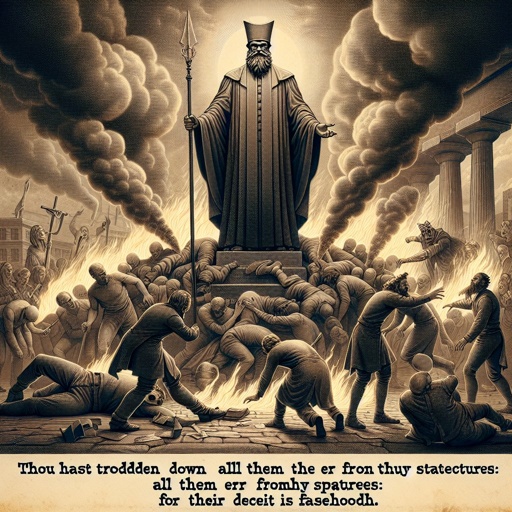
Psalms 119:118 - "Thou hast trodden down all them that err from thy statutes: for their deceit is falsehood."

Psalms 118:29 - "O give thanks unto the LORD; for he is good: for his mercy endureth for ever."

Psalms 118:13 - "Thou hast thrust sore at me that I might fall: but the LORD helped me."

Psalms 118:21 - "I will praise thee: for thou hast heard me, and art become my salvation."

Psalms 118:11 - "They compassed me about; yea, they compassed me about: but in the name of the LORD I will destroy them."

Psalms 118:1 - "O give thanks unto the LORD; for he is good: because his mercy endureth for ever."

Psalms 118:5 - "I called upon the LORD in distress: the LORD answered me, and set me in a large place."