What does Psalms 106:32 mean?
"They angered him also at the waters of strife, so that it went ill with Moses for their sakes:" - Psalms 106:32
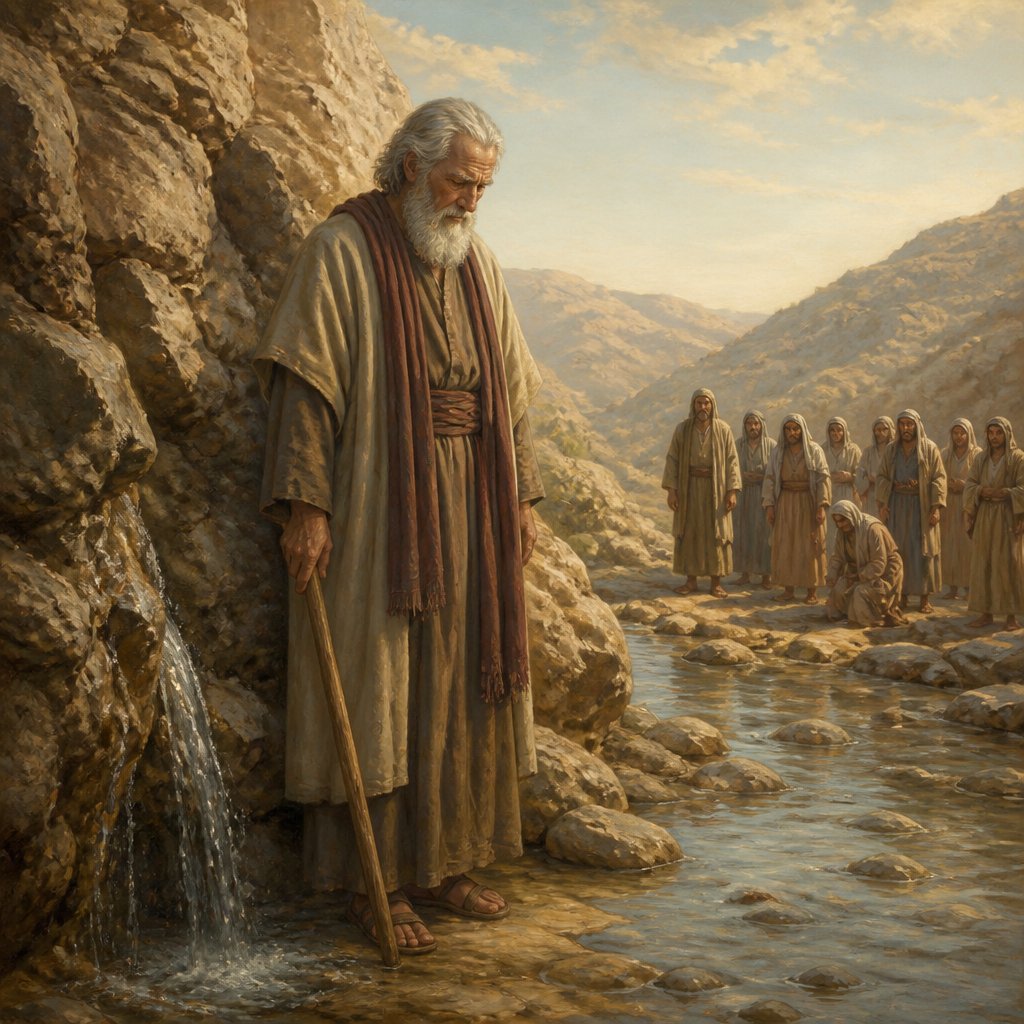
Psalms 106:32 (KJV) says, "They angered him also at the waters of strife, so that it went ill with Moses for their sakes."
This verse is found in a larger psalm that recounts the history of the Israelites' rebellion against God and the consequences of their actions. In this particular verse, the psalmist is referring to an incident that occurred during the Israelites' exodus from Egypt, when they complained and tested the Lord at a place called the waters of Meribah (also known as the waters of strife). This event is recorded in the book of Exodus, chapter 17, where the Israelites grumbled against Moses and God because they were thirsty and had no water to drink. As a result, Moses struck a rock, and water miraculously gushed forth to quench the people's thirst.
The phrase "it went ill with Moses for their sakes" refers to the fact that in response to the Israelites' rebellion, Moses disobeyed God by striking the rock instead of speaking to it as God had commanded. This act of disobedience led to Moses being denied entry into the Promised Land, as God deemed him unfit to lead the Israelites into the land flowing with milk and honey. Despite his faithful service to God and the Israelites, Moses' momentary lapse of faith and trust in God's provision had significant consequences for him personally.
This verse serves as a warning to the Israelites and future generations about the dangers of disobeying God and rebelling against His authority. It also illustrates the concept of divine discipline and the idea that our actions have both temporal and eternal consequences. In this case, Moses' failure to trust in God and honor Him before the people had lasting effects, even though he ultimately repented and sought forgiveness.
The broader context of this verse within Psalm 106 is one of confession and repentance. The psalmist acknowledges the Israelites' many transgressions and God's faithfulness despite their unfaithfulness. The psalm recounts how the Israelites repeatedly forgot God's works, rebelled against His commandments, and worshiped idols. In response, God often punished them, but He also showed mercy and delivered them from their distress. The psalmist's purpose is to remind the people of God's enduring love and faithfulness, even in the face of their unfaithfulness.
The theme of God's faithfulness and human disobedience is central to this verse and the entire psalm. It serves as a sobering reminder of the consequences of disobedience and the importance of trusting in God's provisions. It also highlights the high calling of those who are chosen to lead God's people, emphasizing the weight of responsibility that comes with such a role. Additionally, it speaks to the broader theme of God's sovereignty and the boundaries He sets for His chosen leaders.
Symbolically, the rock that Moses struck can be interpreted as a foreshadowing of Christ, who is often referred to as the spiritual Rock in the New Testament (1 Corinthians 10:4). In this sense, Moses' disobedience in striking the rock rather than speaking to it may represent a lack of faith in God's redemptive plan through Christ. This interpretation underscores the importance of faith and obedience in God's ultimate plan of salvation.
In conclusion, Psalm 106:32 (KJV) is a powerful reminder of the consequences of disobedience and the importance of trusting in God's provision. It serves as a cautionary tale for all believers, challenging us to remain faithful and obedient to God's commands. When we falter, the verse also reminds us of God's mercy and forgiveness, but it also highlights the lasting impact of our actions. It calls us to reflect on the weight of our decisions and the importance of honoring God in all that we do.
Have questions about Psalms 106:32?
Dive deeper into this scripture with Bible Chat — an AI-powered tool for exploring God's Word through conversation. Ask questions, get context, and grow in your understanding of the Bible.
Get Our Apps


Psalms 106:32 Artwork

Psalms 106:32 - "They angered him also at the waters of strife, so that it went ill with Moses for their sakes:"
"They angered him also at the waters of strife, so that it went ill with Moses for their sakes:" - Psalms 106:32

"Then believed they his words; they sang his praise." - Psalms 106:12

"Yea, they sacrificed their sons and their daughters unto devils," - Psalms 106:37

"They soon forgat his works; they waited not for his counsel:" - Psalms 106:13

"Thus they changed their glory into the similitude of an ox that eateth grass." - Psalms 106:20

"They envied Moses also in the camp, and Aaron the saint of the LORD." - Psalms 106:16

"Yea, they despised the pleasant land, they believed not his word:" - Psalms 106:24

"And he gave them their request; but sent leanness into their soul." - Psalms 106:15

"They did not destroy the nations, concerning whom the LORD commanded them:" - Psalms 106:34

Psalms 106:19 - "They made a calf in Horeb, and worshipped the molten image."

Psalms 106:14 - "But lusted exceedingly in the wilderness, and tempted God in the desert."

Psalms 106:35 - "But were mingled among the heathen, and learned their works."

"Wondrous works in the land of Ham, and terrible things by the Red sea." - Psalms 106:22

"The earth opened and swallowed up Dathan, and covered the company of Abiram." - Psalms 106:17

Psalms 106:37 - "Yea, they sacrificed their sons and their daughters unto devils,"

Psalms 106:11 - "And the waters covered their enemies: there was not one of them left."

Psalms 106:12 - "Then believed they his words; they sang his praise."

Psalms 106:25 - "But murmured in their tents, and hearkened not unto the voice of the LORD."

Psalms 106:20 - "Thus they changed their glory into the similitude of an ox that eateth grass."

Psalms 106:13 - "They soon forgat his works; they waited not for his counsel:"

Psalms 106:36 - "And they served their idols: which were a snare unto them."

"Then stood up Phinehas, and executed judgment: and so the plague was stayed." - Psalms 106:30

"They forgat God their saviour, which had done great things in Egypt;" - Psalms 106:21

Psalms 106:16 - "They envied Moses also in the camp, and Aaron the saint of the LORD."

Psalms 106:18 - "And a fire was kindled in their company; the flame burned up the wicked."

Psalms 106:15 - "And he gave them their request; but sent leanness into their soul."

Psalms 106:24 - "Yea, they despised the pleasant land, they believed not his word:"

"They joined themselves also unto Baal-peor, and ate the sacrifices of the dead." - Psalms 106:28

Psalms 106:31 - "And that was counted unto him for righteousness unto all generations for evermore."