What does Proverbs 31:14 mean?
"She is like the merchants' ships; she bringeth her food from afar." - Proverbs 31:14
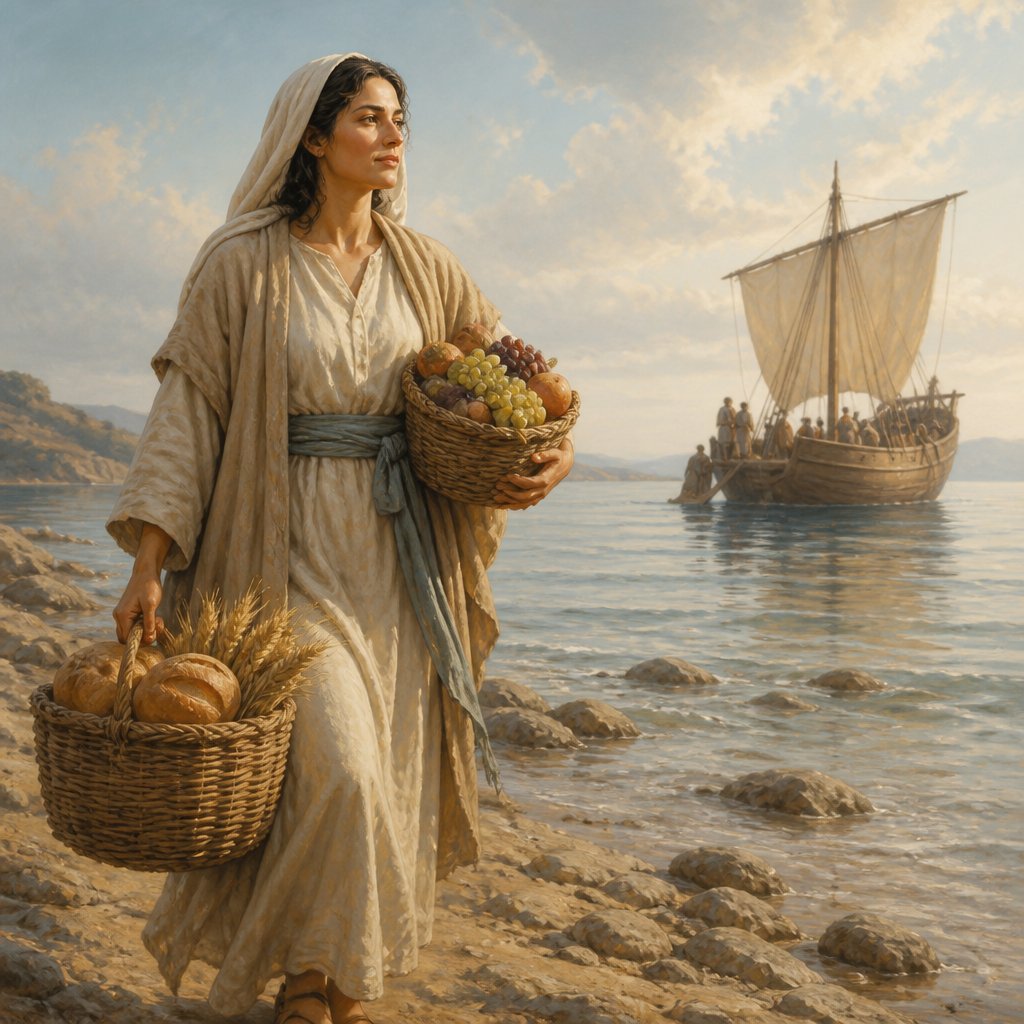
“Proverbs 31:14” in the King James Version says, “She is like the merchants’ ships; she bringeth her food from afar.” This line belongs to the closing chapter of Proverbs, the section often titled “The words of king Lemuel,” where a mother instructs her son about the kind of woman whose life is shaped by wisdom and the fear of the LORD. In that larger portrait, the woman described is not an ornament of wealth or a mere idealized figure of domestic charm; she is Wisdom lived out in daily life. The verse, therefore, is not chiefly about romance or status, but about character expressed through faithful, intelligent stewardship.
The immediate context is a continuous description of a “virtuous woman” whose “price is far above rubies” and whose works bless her household and reach beyond it. The verses around it speak of trust, benefit, diligence, and skill. “The heart of her husband doth safely trust in her,” and “she will do him good and not evil all the days of her life.” In that flow, “She is like the merchants’ ships” explains one practical aspect of how her goodness takes shape: she provides. Her care is not haphazard or limited to what is easiest; it is purposeful and thoughtful, aimed at the real well-being of those under her charge.
The central symbolism is the comparison to “merchants’ ships.” In the world behind the proverb, merchant ships were associated with enterprise, risk, planning, and the ability to obtain goods not available locally. A ship does not drift into profit; it must be prepared, provisioned, directed, and brought safely home. By likening her to such ships, the proverb gives her the dignity of capability and foresight. She is not portrayed as passive, waiting on whatever happens to be near at hand, but as one who understands value and is willing to labor for it. The point is not extravagance for its own sake, but wise procurement: she knows how to seek what is good, fitting, and beneficial, even when it requires effort, distance, and time.
When the verse says, “she bringeth her food from afar,” it can be heard on more than one level. On the literal level, it suggests that she supplies her household with provisions beyond the bare minimum. “Food” stands for sustenance, nourishment, and the practical needs of life. “From afar” highlights resourcefulness and initiative—she is not confined to the nearest option, nor ruled by scarcity-thinking. She looks ahead, compares, selects, and brings home what will truly feed and strengthen her household. This includes the idea of planning rather than reacting; she does not merely respond to hunger when it arrives, but anticipates it and prepares.
At the same time, Proverbs regularly uses physical images to communicate moral wisdom. “Food” can also suggest what sustains life more broadly: the ordering of a home, the steady provision of what is needed, and the cultivation of conditions in which others flourish. In that sense, she “bringeth” nourishment in more ways than one—through diligence, prudence, and faithful care. The “afar” can suggest the reach of wisdom beyond the obvious and the immediate, the willingness to learn, to seek, and to obtain what is best rather than what is simply close.
This verse also contributes to a larger theme in Proverbs: wisdom is active. The wise person does not merely avoid evil; the wise person builds, guards, and provides. The woman in Proverbs 31 embodies that constructive strength. Her activity is not presented as frantic striving, but as ordered, competent labor rooted in trustworthiness. Because “the heart of her husband doth safely trust in her,” her “bringing” is part of the stability of the household. What she does increases security and well-being, and it does so through wisdom applied to ordinary responsibilities.
There is also an implied theme of honorable commerce. Merchant ships represent trade, exchange, and the movement of goods that enrich a community. The proverb is comfortable portraying the virtuous woman with the imagery of economic activity, suggesting that wisdom is not at odds with productivity or profitable work. Her virtue is not fragile spirituality separated from daily life; it is holiness expressed in practical stewardship. In the full passage, she is shown working with hands, considering fields, planting vineyards, and making merchandise. Verse 14 fits that picture by presenting her as one who understands provisioning with the same kind of seriousness and skill that merchants bring to trade.
In significance, Proverbs 31:14 honors a kind of strength that can be overlooked: the strength of faithful provision. It portrays wisdom as the capacity to secure what is needed, to do so with foresight, and to bless others through one’s labor. The image of the merchant ship lifts everyday responsibility into a noble calling. The verse invites the reader to see that bringing “food from afar” is not merely about distance or variety; it is about a heart that serves, a mind that plans, and hands that work—so that those entrusted to one’s care are truly provided for.
Have questions about Proverbs 31:14?
Dive deeper into this scripture with Bible Chat — an AI-powered tool for exploring God's Word through conversation. Ask questions, get context, and grow in your understanding of the Bible.
Get Our Apps


Proverbs 31:14 Artwork

Proverbs 31:14 - "She is like the merchants' ships; she bringeth her food from afar."
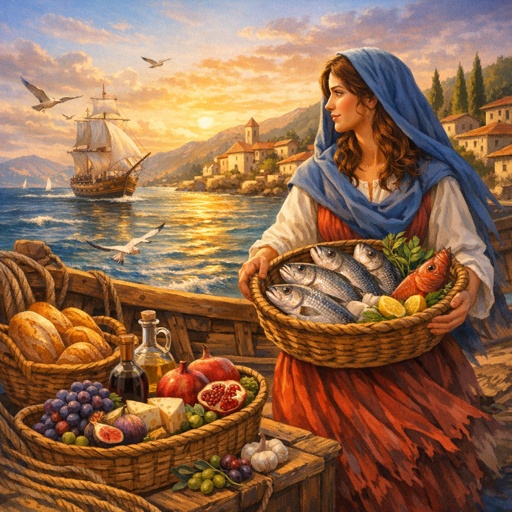
"She is like the merchants’ ships; she bringeth her food from afar." - Proverbs 31:14
"She is like the merchants' ships; she bringeth her food from afar." - Proverbs 31:14

Proverbs 14:31 - "He that oppresseth the poor reproacheth his Maker: but he that honoureth him hath mercy on the poor."
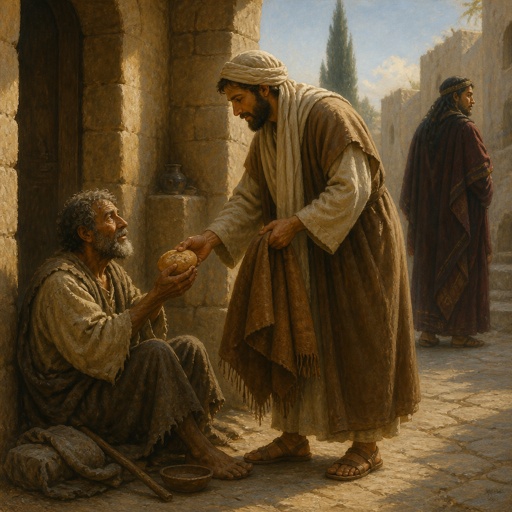
"He that oppresseth the poor reproacheth his Maker: but he that honoureth him hath mercy on the poor." - Proverbs 14:31

Proverbs:31:28

Proverbs 31:21

Proverbs 31:31 - "Give her of the fruit of her hands; and let her own works praise her in the gates."

Proverbs 8:22-31

Proverbs 21:31 - "The horse is prepared against the day of battle: but safety is of the LORD."

Proverbs 3:31 - "¶ Envy thou not the oppressor, and choose none of his ways."

Proverbs 15:31 - "The ear that heareth the reproof of life abideth among the wise."

Proverbs 16:31 - "The hoary head is a crown of glory, if it be found in the way of righteousness."

Proverbs 31:5 - "Lest they drink, and forget the law, and pervert the judgment of any of the afflicted."

Proverbs 31:1 - "The words of king Lemuel, the prophecy that his mother taught him."

Proverbs 31:17 - "She girdeth her loins with strength, and strengtheneth her arms."

Proverbs 31:13 - "She seeketh wool, and flax, and worketh willingly with her hands."

Proverbs 31:8 - "Open thy mouth for the dumb in the cause of all such as are appointed to destruction."

Proverbs 8:22-31 – Wisdom’s role in creation.

Mateo 14:31

Proverbs 1:31 - "Therefore shall they eat of the fruit of their own way, and be filled with their own devices."

Proverbs 30:31 - "A greyhound; an he goat also; and a king, against whom there is no rising up."

Proverbs 31:9 - "Open thy mouth, judge righteously, and plead the cause of the poor and needy."

Proverbs 31:19 - "She layeth her hands to the spindle, and her hands hold the distaff."

Proverbs 31:24 - "She maketh fine linen, and selleth it; and delivereth girdles unto the merchant."

Proverbs 31:25 - "Strength and honour are her clothing; and she shall rejoice in time to come."

Proverbs 31:26 - "She openeth her mouth with wisdom; and in her tongue is the law of kindness."

Proverbs 11:31 - "Behold, the righteous shall be recompensed in the earth: much more the wicked and the sinner."

Proverbs 31:29 - "Many daughters have done virtuously, but thou excellest them all."

Proverbs 31:12 - "She will do him good and not evil all the days of her life."