What does Proverbs 23:18 mean?
"For surely there is an end; and thine expectation shall not be cut off." - Proverbs 23:18

Proverbs 23:18 in the KJV reads, “For surely there is an end; and thine expectation shall not be cut off.” In plain sense it is a promise set against temptation and discouragement: the present moment, with all its pressures, is not the whole story, because God has appointed an “end,” and that end secures the believer’s “expectation.” The verse speaks to the heart that is asked to endure and to choose wisdom when folly looks immediately rewarding. It says that what seems delayed is not denied, and what seems threatened is not destined to fail, because there is a sure outcome under God’s ordering.
The immediate context in Proverbs 23 makes that point sharp. The surrounding sayings warn against envying sinners and being drawn into their company and their appetites. The chapter cautions about rulers’ dainties, about greed, about drunkenness and gluttony, about the deceitfulness of riches, about the seduction of sin, and it repeatedly calls the reader to discipline the heart and to “hear” and “apply” wisdom. Verse 17 says, “Let not thine heart envy sinners: but be thou in the fear of the LORD all the day long.” Then verse 18 follows as the reason the fear of the LORD is worth maintaining “all the day long”: “For surely there is an end; and thine expectation shall not be cut off.” In other words, envy rises when sinners appear to prosper without consequence, but the proverb insists that their seeming advantage is temporary, because God brings matters to an “end,” and that end is not random; it is moral and righteous. The verse therefore comforts the godly and corrects the jealous: do not measure life only by what can be seen now.
The word “end” carries more than the idea of mere termination; it points to an appointed outcome, a final settling, a conclusion that reveals what is true. In wisdom literature, the “end” is where the real meaning of a path is exposed. A life built on indulgence may look sweet at the beginning, but its “end” is bitter; a life ordered by the fear of the LORD may be costly in the moment, but its “end” is peace. Proverbs often teaches that the path and its destination belong together, and this verse anchors that teaching in certainty: “surely” there is such an end. The proverb is not offering wishful thinking; it speaks as moral reality under God’s government.
The other key word is “expectation.” In KJV diction, “expectation” is not mere optimism; it is a hope that is looking toward something, waiting for it as a rightful outcome. In the flow of Proverbs 23, the righteous person’s expectation is tied to living in the fear of the LORD rather than chasing the short-lived rewards of sin. That hope includes God’s vindication of wisdom, the preservation and blessing that attend righteous living, and the inward stability that comes from walking in truth. It is an expectation that can survive delay, because its foundation is not the speed of results but the certainty of God’s “end.”
The imagery in the phrase “shall not be cut off” is vivid. To be “cut off” in biblical speech suggests a hope that is severed like a cord, removed like a branch, or ended abruptly like a line of life or inheritance. The proverb reassures the faithful that their hope will not be truncated by the apparent power of evil or the unpredictability of circumstances. It also hints at a contrast: the sinner’s prospering is often “cut off” suddenly, while the godly expectation endures. In that way the verse functions as a quiet reversal of envy; it asks the reader to look beyond the glittering present to the stability of what God sustains.
There is also an implicit call to patience and integrity. Because there is “surely” an end, the wise person can refuse quick compromises. Many of the temptations in the chapter are immediate and bodily—food, drink, wealth, sensuality, status. Proverbs 23:18 lifts the eyes from the table and the cup and the glitter of gain to a longer horizon. The symbolism is the horizon itself: life is a journey with a terminus, and wisdom is choosing the path whose end is good. The proverb therefore teaches that self-control is not merely restraint; it is faith in a promised outcome.
In significance, Proverbs 23:18 is a stabilizing sentence in a world where evil can seem to win and discipline can seem unrewarded. It assures the reader that the fear of the LORD is not an empty posture but a way of life that leads somewhere real. It does not deny that the present can be confusing; it insists that the conclusion will not be. The “end” is certain, and because it is certain, the believer’s “expectation” is secure: it “shall not be cut off.”
Have questions about Proverbs 23:18?
Dive deeper into this scripture with Bible Chat — an AI-powered tool for exploring God's Word through conversation. Ask questions, get context, and grow in your understanding of the Bible.
Get Our Apps


Proverbs 23:18 Artwork

Proverbs 23:18 - "For surely there is an end; and thine expectation shall not be cut off."

"For surely there is an end; and thine expectation shall not be cut off." - Proverbs 23:18

"For surely there is an end; and thine expectation shall not be cut off." - Proverbs 23:18

Proverbs 18:23 - "The poor useth intreaties; but the rich answereth roughly."
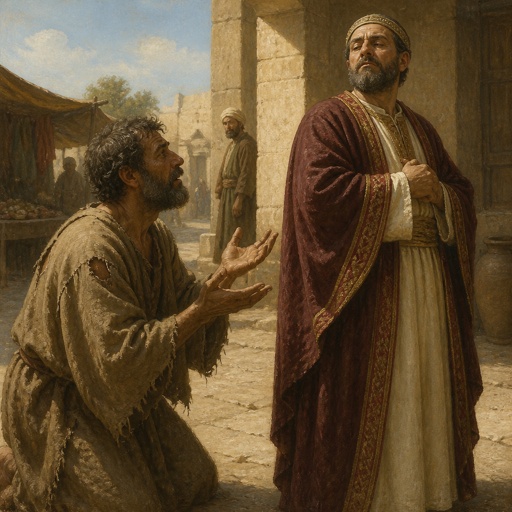
"The poor useth intreaties; but the rich answereth roughly." - Proverbs 18:23

Proverbs 4:23

Proverbs 4:23

Proverbs 4:23

Proverbs 4:23

Proverbs 4:23

Proverbs 4:23

Proverbs 23:23 - "Buy the truth, and sell it not; also wisdom, and instruction, and understanding."

Proverbs 18:21
Proverbs 18:21

Proverbs. 4:23

Proverbs 18:21

Proverbs 18:21

Proverbs 18:21

Proverbs 18:21

Proverbs 18:21

Proverbs 18:21

Proverbs 18:21

Proverbs 18:21

Proverbs 18:21

Proverbs 18:21

Proverbs 18:18 - "The lot causeth contentions to cease, and parteth between the mighty."

Proverbs 18 10

Proverbs 18 10

Proverbs 23:3 - "Be not desirous of his dainties: for they are deceitful meat."

Proverbs 23:10 - "Remove not the old landmark; and enter not into the fields of the fatherless:"